
THE ASV BLOG
— by JANICE NINAN


CROSSING THE THRESHOLD
Threshold Thursdays | From Employee Mindset to Business Ownership.
There are decisions that feel incremental—and then there are decisions that quietly redraw the architecture of your life.
On the surface, it looks like a professional development choice. In reality, it marked a threshold: a conscious shift from a 9–5 mindset to a business-owner mindset.
Not hustling harder.
Not adding more hours.
But fundamentally changing how I relate to time, value, and authorship.
The 9–5 Mindset I’m Leaving Behind
The 9–5 framework teaches us to:
Be useful rather than valuable
Exchange time for money
Wait for clarity instead of creating it
Measure success by busyness and approval
This framework is not inherently wrong—but it is limiting when you want autonomy, flexibility, and financial agency.
For a long time, I carried that conditioning into my creative work. I focused on execution, over-delivery, and staying adaptable. What I did not focus on was the thing that actually creates freedom: a clear, well-designed offer.
The Business Owner Mindset I’m Stepping Into
Business ownership is not freedom first—it is responsibility first.
Responsibility to:
Define scope (what I do and what I do not do)
Price my work based on value, not effort
Create structure so creativity can be sustained
Treat my time as a finite, intentional resource
Structure is not the opposite of freedom.
It is what makes freedom durable.
A Note on Thresholds
Thresholds are uncomfortable by nature. They ask you to release familiar identities before the new one feels fully formed.
I am no longer optimizing my life around a job.
I am designing a business that reflects my values, intellect, and lived experience.
This is not a leap of faith.
It is a step into authorship.
CLOSING THOUGHTS
I don’t know exactly what the business will look like three months from now—but I know this: I will not be thinking like an employee waiting for permission.
I am building with intention now.
And once you cross a threshold like this, there is no real way back.
INSTRUMENTS OF SERVICE
Studio Saturdays | How Architects communicate Vision…
Every profession has its instruments.
Musicians have sound.
Writers have words.
Surgeons have scalpels.
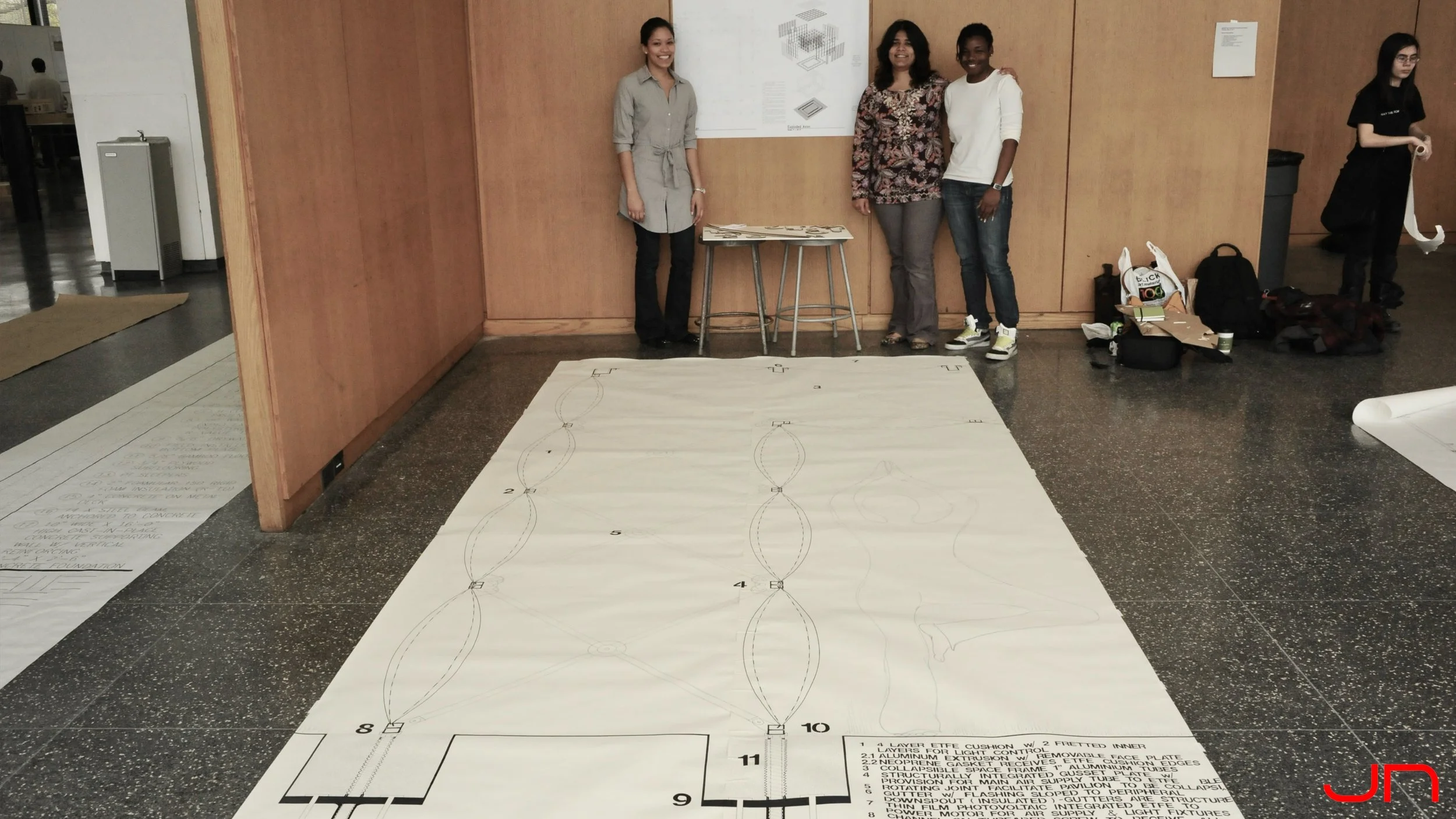
For architects, the instrument isn’t bricks or mortar — it’s the drawings, models, and documents we create to bring ideas into the world.
In architectural practice, these are formally called “instruments of service.” They’re the sketches on trace paper, the CAD files on a glowing screen, the renderings that sell a vision, the construction documents that guide a builder’s hand. They’re not the building itself — but they’re the essential bridge that connects imagination to construction.
What Are Instruments of Service?
Legally, the American Institute of Architects defines instruments of service as any representation an architect produces: sketches, plans, specifications, models, or digital files. These are protected intellectual property — meaning they belong to the architect who created them, even if a client commissions the work.
This protection matters because architecture is both art and service. Our instruments are how we speak our design language. They can’t be copied, repurposed, or built upon without the author’s permission.
Why They Matter
When I first encountered the term, it sounded abstract — almost clinical. But over time, I realized just how central these instruments are to architectural practice.
1. They Protect Vision
An architect’s instruments of service are a safeguard. They ensure that your design intent isn’t misinterpreted or altered without your input.
2. They Define Scope
Instruments of service clarify what a client is paying for and how those deliverables can be used. They make the invisible — design labor — visible.
3. They Shape Process
Every drawing, sketch, or file is a step in a larger story. Instruments of service are iterative, evolving as ideas move from concept to construction.
From Studio to Practice
I think of all the tools I’ve used in my own journey: ink drawings, watercolor sketches, cardboard models cut late at night, and now the digital languages of CAD, Rhino, and Revit.
Each one was an instrument — some quick and messy, some precise and technical. In studio, they were part of the creative process. In practice, they became legally binding documents.
What struck me is how fluid the boundary is: the same pencil sketch that sparks a concept can eventually live inside a contract drawing. Both are instruments of service, just speaking at different volumes.
Beyond the Legal Definition
But instruments of service aren’t just about protection or liability. They’re about storytelling.
A sketch persuades.
A rendering inspires.
A set of documents instructs.
They’re how we share imagination with others — translating thought into form, and form into reality. They’re also how we collaborate: with clients, with engineers, with builders, and with each other.
Looking Ahead
As tools evolve, so does the definition of instruments of service. Today, they include BIM models, VR walkthroughs, parametric scripts, and even AI-assisted visualizations. Tomorrow, who knows?
The challenge for architects is to keep authorship while embracing innovation. Because no matter the medium, the core truth remains: instruments of service are the language we use to communicate design.
Reflections
Buildings may last centuries, but before the first stone is laid, they begin as fragile lines on paper, pixels on a screen, or models held together with glue.
That’s the power of instruments of service: they are not the building itself, but the bridge between imagination and construction. They protect, they persuade, they inspire.
And like any instrument — a violin, a pen, a chisel — they demand both skill and care to be played well.