
THE ASV BLOG
— by JANICE NINAN

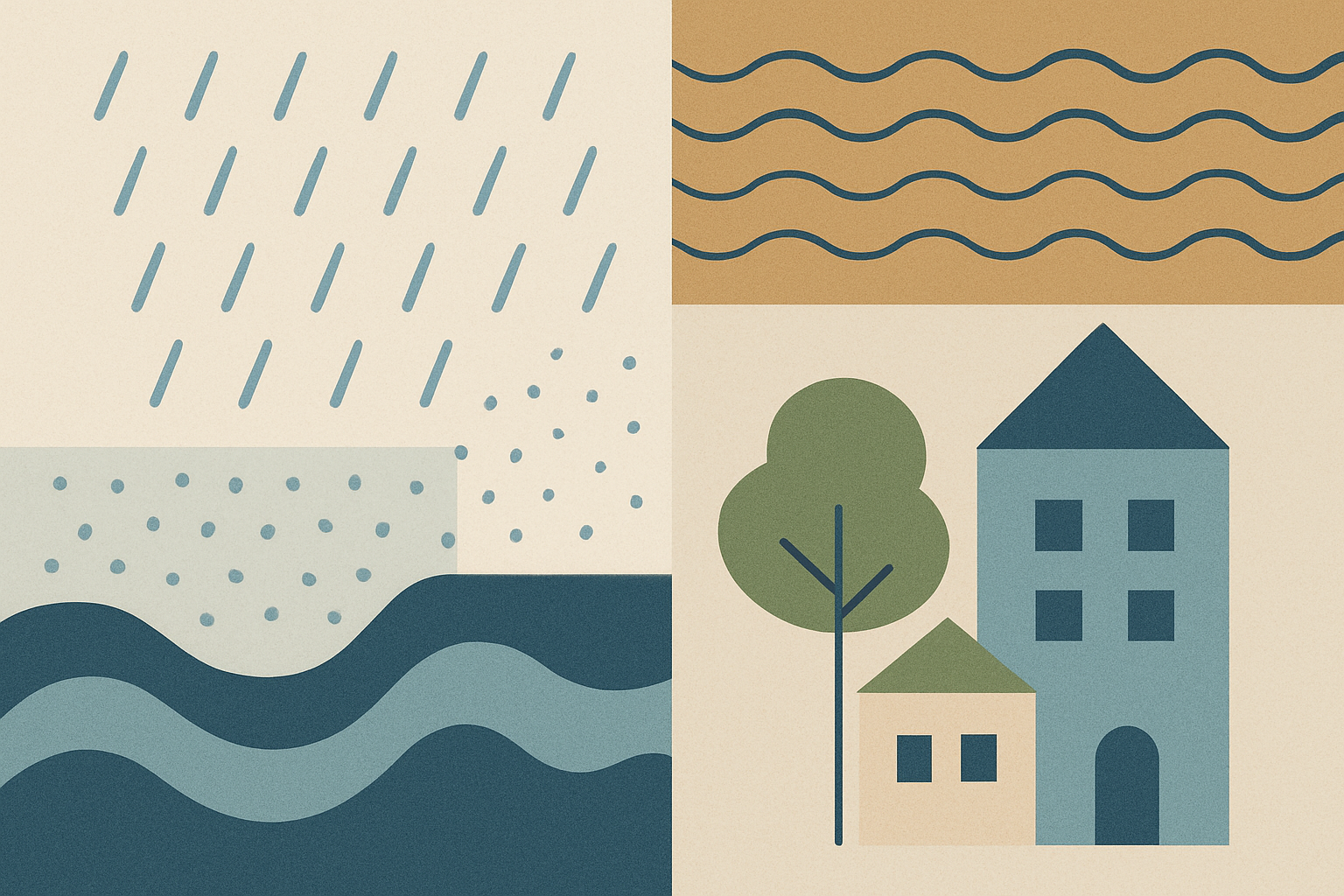
When Water Has Nowhere to Go
Texas Floods and the Urgency of Porous Design
Texas Floods and the Urgency of Porous Design
This past week, parts of Texas saw water rise faster than the land could hold it. Flash floods turned roads into rivers, submerged homes, and forced families to evacuate with little warning. These kinds of images have, unfortunately, become familiar. We call them “natural disasters”—but in truth, many are shaped and intensified by the way we build.
Flooding is a natural event, yes. But the disaster part? That’s often man-made.
The Hard Truth About Hard Surfaces
We’ve paved over so much of our world that when the rain comes, it has nowhere to go. Concrete, asphalt, and other impermeable materials block the earth’s natural ability to absorb water. Instead, water rushes over these surfaces, gaining speed and volume until it overwhelms drainage systems, floods streets, and threatens lives.
In many Texas cities, rapid development has outpaced thoughtful planning. Subdivisions sprawl. Parking lots multiply. Natural wetlands and open ground are erased. The more we harden our environment, the less capacity it has to receive the water that falls.
Porosity: The Quiet Hero
In architecture and landscape design, porosity is the ability of a material or a site to let water pass through. It’s the soft spaces between the hard ones. The unbuilt within the built. Porosity slows water down. It absorbs shock. It protects.
When cities integrate porosity into their design, they become resilient.
When they ignore it, they become brittle.
Consider:
• Permeable paving that allows rain to soak through
• Green roofs that absorb rainfall before it runs off
• Bioswales that collect and filter water through vegetation
• Setback requirements that preserve unbuilt land
• Even simple gravel paths and unpaved driveways can make a difference
The most successful examples are “sponge cities”—urban environments that are designed to absorb, retain, and reuse rainwater. Cities in China are leading in this area, investing in green infrastructure to adapt to their own climate crises. Singapore, New York and Toronto are few other urban cities leading the conversation in the adoption and implementation of ‘sponge city principles’ in their urban planning and development projects.
We Need to Design With The Elements in Mind
This isn’t about aesthetics. It’s about survival. The effects of climate change are here. Rain is heavier. Storms are more intense. And the built environment must adapt.
Whether you’re a designer, a homeowner, or simply someone who cares about the place you live, ask:
Where does the water go?
And more importantly: Where can it go, if we make room?
Porosity isn’t just a technical solution—it’s a design ethic. It’s humility in built form. It’s a willingness to leave space for the forces bigger than us.
At ASV, We Believe the Land Should Breathe
Architecture Speaks Volumes exists at the intersection of materiality, aesthetic design, ecology, and care. We’re not just designing objects or buildings—we’re designing relationships: between water and land, built and unbuilt, human and environment.
Flash floods don’t have to be inevitable.
But they will be—if we keep sealing off the very earth that’s trying to save us.
Let’s build differently.
Let’s build with softness, with space, with porosity.
With intention,
Janice Ninan
Founder | Creative Director
Architecture Speaks Volumes
CROSSING THE THRESHOLD
Threshold Thursdays | From Employee Mindset to Business Ownership.
There are decisions that feel incremental—and then there are decisions that quietly redraw the architecture of your life.
On the surface, it looks like a professional development choice. In reality, it marked a threshold: a conscious shift from a 9–5 mindset to a business-owner mindset.
Not hustling harder.
Not adding more hours.
But fundamentally changing how I relate to time, value, and authorship.
The 9–5 Mindset I’m Leaving Behind
The 9–5 framework teaches us to:
Be useful rather than valuable
Exchange time for money
Wait for clarity instead of creating it
Measure success by busyness and approval
This framework is not inherently wrong—but it is limiting when you want autonomy, flexibility, and financial agency.
For a long time, I carried that conditioning into my creative work. I focused on execution, over-delivery, and staying adaptable. What I did not focus on was the thing that actually creates freedom: a clear, well-designed offer.
The Business Owner Mindset I’m Stepping Into
Business ownership is not freedom first—it is responsibility first.
Responsibility to:
Define scope (what I do and what I do not do)
Price my work based on value, not effort
Create structure so creativity can be sustained
Treat my time as a finite, intentional resource
Structure is not the opposite of freedom.
It is what makes freedom durable.
A Note on Thresholds
Thresholds are uncomfortable by nature. They ask you to release familiar identities before the new one feels fully formed.
I am no longer optimizing my life around a job.
I am designing a business that reflects my values, intellect, and lived experience.
This is not a leap of faith.
It is a step into authorship.
CLOSING THOUGHTS
I don’t know exactly what the business will look like three months from now—but I know this: I will not be thinking like an employee waiting for permission.
I am building with intention now.
And once you cross a threshold like this, there is no real way back.
ARCHITECTURE BEFORE ARCHITECTURE
Story Sundays | The stone building that raised ME…
In 2025, I realized something quietly astonishing: it had been twenty-five years since I graduated 10th grade.
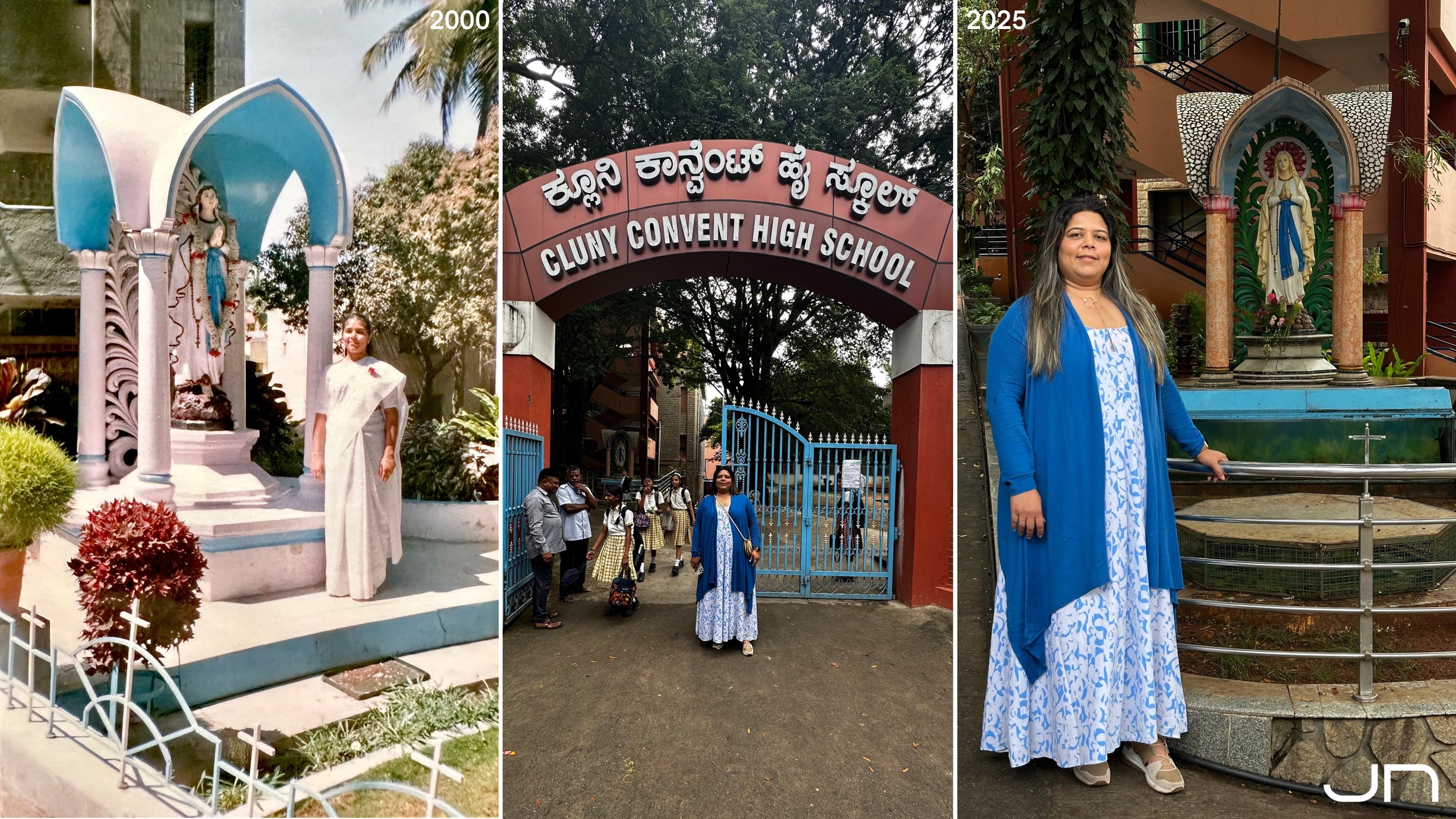
I belonged to the millennial batch of 2000, the cohort that stepped into the new millennium from the gates of St. Joseph’s Cluny Convent Girls’ School, Malleswaram, Bangalore—certain that life was just beginning, unaware of how profoundly those gates had already shaped us.
In September 2025, I returned.
I stood once again before the gates of the school that held me from kindergarten through 10th grade. Twelve years of mornings that began too early, afternoons that ended too late, and years of growing slowly—and then all at once.
The moment I stepped inside, time softened, folding decades of memory over the present—a palimpsest of the girl I had been, and the woman I had become.
Palimpsest | Layers of Memory
Cycling to school, the weight of my bag balanced against the rhythm of pedaling, I remembered the tamarind tree at the entrance, its pods scattered beneath, sticky and sour-sweet in our fingers. We would gather beneath it, cracking the fruit, savoring the fleeting rebellion before the bell rang.
Mornings were a ritual: early assemblies, the air still cool, voices rising together in synchrony. Once a week, march pasts measured our steps, teaching unity long before we understood the lesson.
As we made our way from the assembly to our classrooms in the three-storey stone building, a teacher’s voice would rise above the chatter:
“Heads up! Shoulders back! Walk like ladies!”
At the same time, house captains patrolled the staircases, calling out:
“Hands off the banisters!”
Uniforms inspected, collars straight, skirts tucked, buttons accounted for, shoes polished, hair tied, nails clean—no short skirts above the knee, no jewelry, no rolled up socks, no nail polish, no fancy ribbons or hairstyles, no exceptions. Discipline was inscribed into our bodies as indelibly as the grooves in the stone steps we climbed.
During breaks I would linger past the music room, drawn to the notes a friend played on the piano. I never took lessons myself till later in life—but I learned to listen, to let music fill a hallway, and to carry its echo long after the final note faded.
Evenings were no less regimented. Sports practice—volleyball, throwball, javelin, discus, shot put—taught strength, focus, and release. Later, karate, sweat and repetition, earned me a black belt, first dan. Then my sister and I would cycle home, tired, exhilarated, the sky soft with fading light, laughter trailing behind us.
Reverie | Lingering in Time
The three-storey stone building still stands—dignified, quiet, unchanged in spirit. As a child, I did not have words for why it mattered. As an architect, I now understand. That building held us. It taught rhythm, patience, and order. It absorbed our voices and returned them as echoes.
Standing before the chapel and St. Mary’s statue, camera in hand, I photographed not just the structure, but the feeling it carried—the thresholds crossed unconsciously, the small rituals that shaped a lifetime.
New wings and modern additions surround the old stone, necessary, perhaps, but quieter in soul. They do not speak the same language as the original. And yet, the heart of the campus, layered in memory, remains intact.
Continuum | Life in Motion
Returning after twenty-five years was not about longing. It was about honoring.
Before architecture school. Before theory. Before vocabulary.
There was movement, discipline, sound, and stone. There were rituals that shaped me, thresholds that guided me, and echoes that lingered across time.
As I walked out of the gates again—once in 2000, and again in 2025—I felt gratitude rise quietly. For the girl I once was. For the rhythms that formed her. For the place that raised me, patiently and completely.
Some buildings do more than house memories.
They become them, stitched into the continuum of our lives.
GOODBYE 2025 | WELCOME 2026
As the final blog of 2025, I pause here with gratitude—and curiosity. I look forward to 2026, to the stories that will unfold as I delve into memories, bringing them back to life with photographs, reflections, and the architecture of the everyday.
Happy New Year!
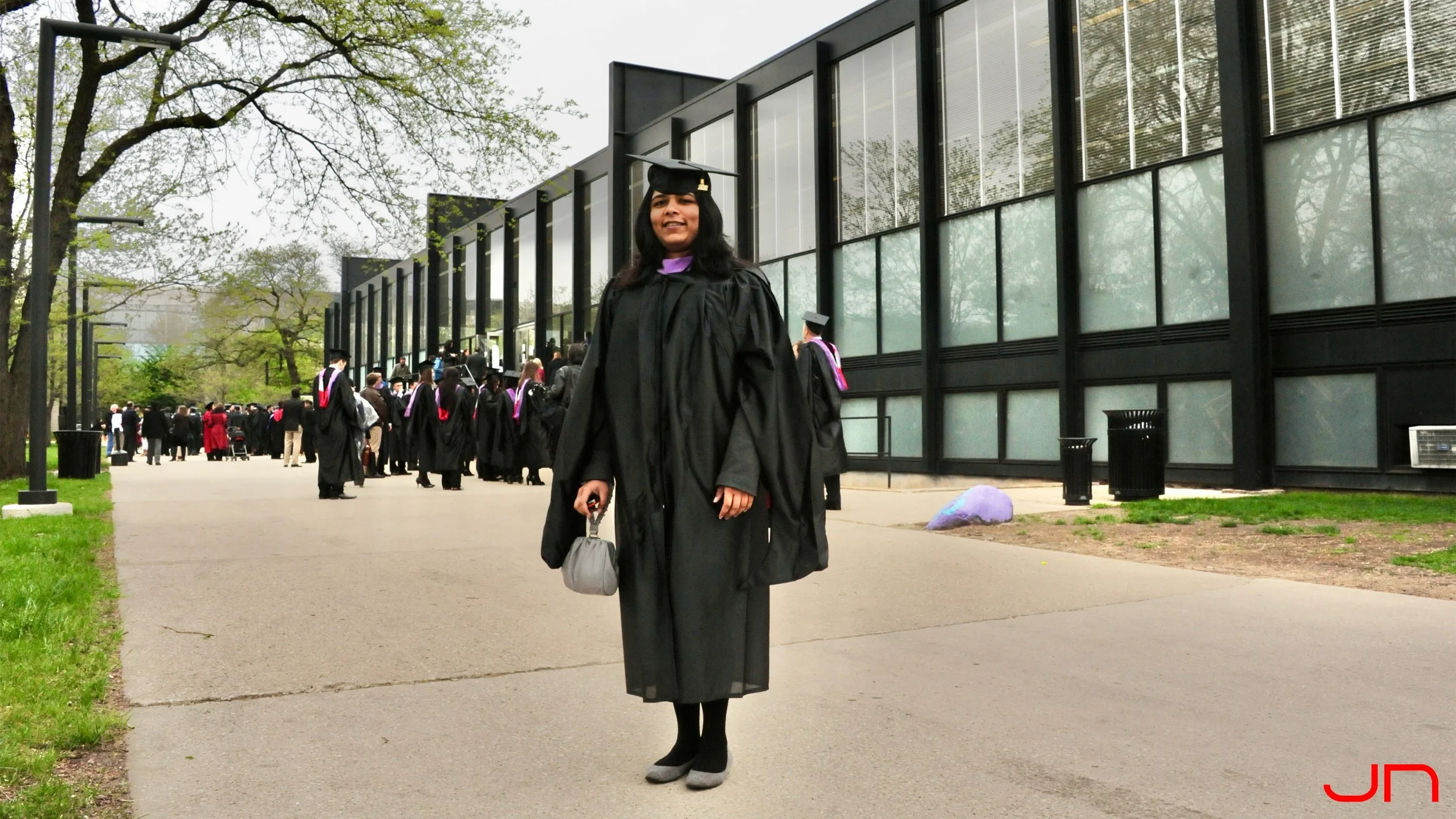
LESSONS THAT OUTLAST STUDIO
Studio Saturdays | What we carry forward from Architecture school isn’t just technique - it’s a way of seeing the world.
Architecture school ends long before architecture leaves you.
Degrees are framed, studios are cleared out, and life moves on — into offices, job sites, solo practices, or parallel creative paths. But long after the final jury, there are things we carry forward quietly. Not resumes or portfolios, but habits of mind, ways of seeing, and deeply ingrained rituals that continue to shape how we work and how we live.
I earned my Bachelor of Architecture at MSRIT, Bangalore, and later my Master of Architecture at IIT Chicago. Two different continents, cultures, climates, and pedagogies — yet remarkably similar studio truths. What I carry forward from architecture school has less to do with buildings, and everything to do with practice.
1. The Discipline of Showing Up
Architecture school teaches you to show up — even when you’re tired, uncertain, or uninspired. Studio doesn’t wait for perfect conditions. Deadlines arrive whether the idea is ready or not.
That discipline stays with you.
It becomes the quiet ability to sit down and begin. To open the sketchbook. To draft the first imperfect line. To return to the work again and again, trusting that clarity emerges through engagement, not avoidance.
2. Seeing Before Solving
Before architecture school, I thought design was about answers. School taught me it’s about questions.
At MSRIT, site visits trained my eye to context — climate, material, scale, human movement. At IIT Chicago, studying within the rigor of Crown Hall sharpened my understanding of structure, logic, and spatial discipline. Together, they instilled a habit of looking deeply before responding.
This way of seeing extends beyond architecture. You start noticing how light enters a room, how people occupy space, how cities reveal their histories in fragments. Observation becomes instinct.
3. Comfort with Critique
Few experiences shape you like a studio critique.
Standing beside your work while others dissect it teaches resilience, humility, and discernment. You learn that critique is not rejection — it’s conversation. You learn how to listen without collapsing, how to defend ideas without ego, and how to extract value even from difficult feedback.
That ability to separate yourself from your work becomes invaluable — in practice, collaboration, and life.
4. The Power of Process Over Perfection
Architecture school rewards thinking out loud. Sketches, diagrams, trace overlays, models — all evidence of a mind at work.
What stays with you is the understanding that the process matters as much as the final outcome. That unfinished drawings can be more revealing than polished renders. That iteration is not failure, but fluency.
This belief becomes grounding in a world obsessed with finished images. You learn to value the work-in-progress.
5. Time Pressure as a Creative Tool
Studio deadlines are unforgiving — and oddly transformative.
Under time pressure, you learn to prioritize. To let go of unnecessary complexity. To trust intuition. Those late nights train you to make decisions with incomplete information — a skill essential to real-world practice.
Even today, I often return to timed sketching and constrained exercises. Not as nostalgia, but as a way to reconnect with creative clarity.
6. Community as Catalyst
Architecture school is never a solitary experience.
From all-nighters to site visits, shared meals to shared panic before juries — studio creates a unique form of collective learning. You grow not just from your own work, but from watching others struggle, experiment, and succeed.
That sense of creative community is something I consciously seek to recreate today — through initiatives like Studio Saturdays and Thursday Throw Downs. Architecture thrives in circles, not silos.
7. A Lifelong Relationship with Learning
Perhaps the most enduring thing architecture school teaches you is that you will never finish learning.
Every project introduces new constraints, materials, regulations, and human needs. School doesn’t prepare you with all the answers — it prepares you to keep asking better questions.
That mindset stays with you whether you remain in traditional practice or forge your own path.
Carrying It Forward
What we carry forward from architecture school isn’t just technique — it’s temperament.
The patience to observe.
The courage to iterate.
The discipline to show up.
The humility to listen.
The belief that design is a form of service.
These are the invisible tools that continue to shape my work through Architecture Speaks Volumes and The ASV Atelier — long after graduation ceremonies have faded into memory.
Architecture school may end, but studio never really does.
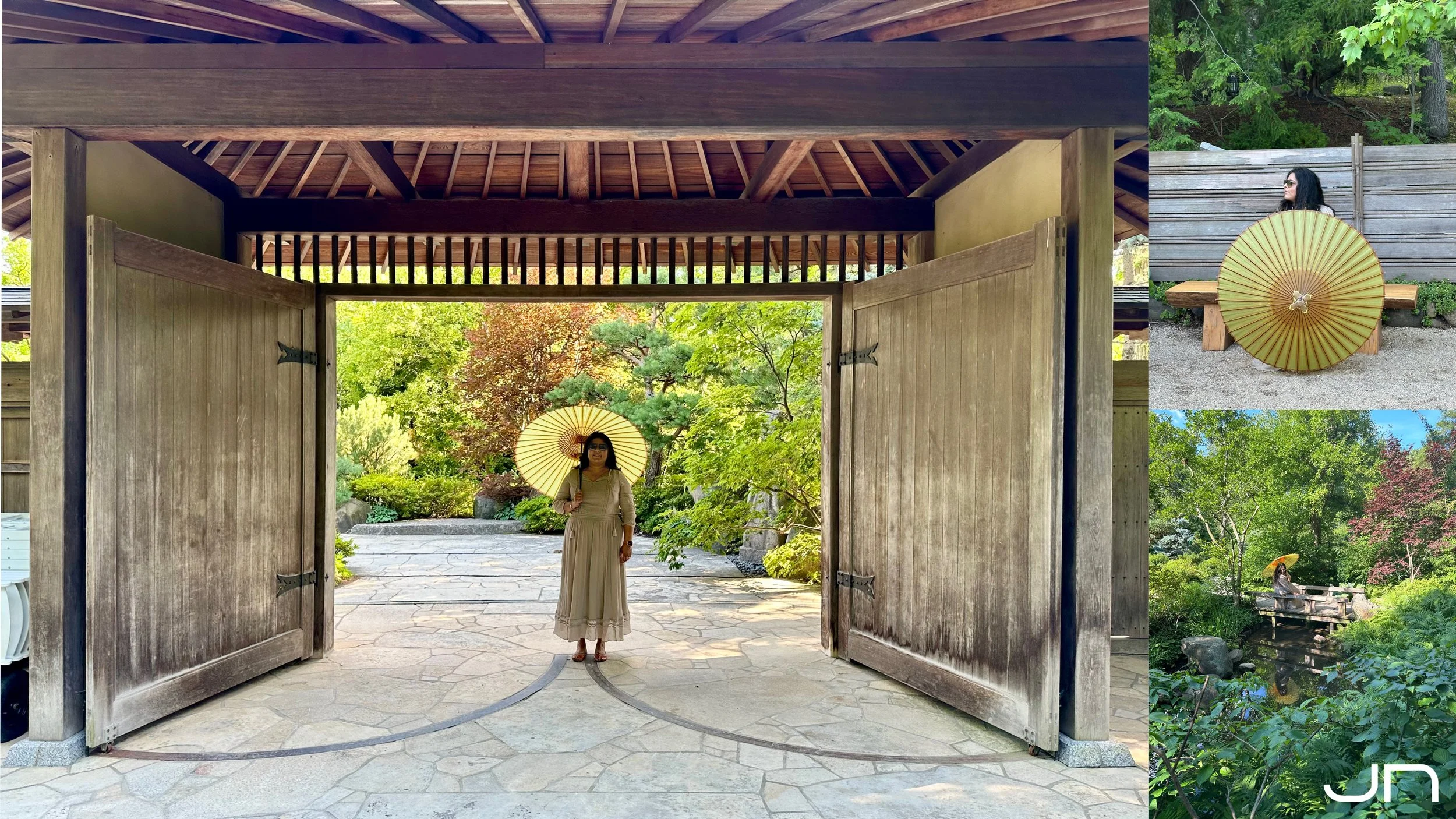
LANDSCAPE AS A THRESHOLD
Threshold Thursdays | The Anderson Japanese Garden unfolds as a quiet threshold - guiding the body from movement into mindful stillness.
I did not enter Anderson Japanese Gardens all at once.
I crossed into it.
That distinction matters—because this landscape does not announce itself loudly or demand attention. Instead, it reveals itself gradually, teaching you how to move, how to pause, and how to see. From the moment you step inside, the garden functions as a sequence of thresholds—each one subtle, deliberate, and deeply intentional.
Arrival: Leaving the Ordinary Behind
The first threshold at Anderson Japanese Gardens is not marked by gates or signage. It is marked by a change in rhythm.
The noise of the outside world softens. Footsteps slow. Paths narrow. Views are carefully framed so that you never see too far ahead. This controlled unfolding creates anticipation—not of spectacle, but of presence. The garden does not rush you toward a destination; it draws you inward.
Here, landscape replaces architecture as the primary guide.
Paths as Transitional Devices
Every path in the garden is a lesson in movement. Stone underfoot changes in size, texture, and alignment, quietly instructing the body to adjust its pace. Curves obscure what lies ahead, turning each step into a moment of discovery rather than efficiency.
These paths are thresholds in motion—never static, never abrupt. You are constantly transitioning: from light to shade, from openness to enclosure, from sound to silence.
The garden reminds you that thresholds do not have to be doors.
Water as a Threshold Element
Water is everywhere, but never intrusive. Streams, waterfalls, and still ponds act as psychological and spatial boundaries. Crossing a bridge—even a small one—feels ceremonial. It marks a shift, not just in location, but in attention.
Reflections blur the line between what is real and what is perceived. Sky becomes water. Stone becomes shadow. In these moments, the garden asks you to look twice—and then to slow down even more.
Water here is not decoration. It is transition made visible.
Framed Views and Borrowed Scenery
One of the most powerful threshold moments in the garden comes through what is revealed—and what is withheld. Trees, rocks, and structures frame views deliberately, often borrowing distant scenery and pulling it into the immediate experience.
You never receive the entire garden at once. Each reveal feels earned. Each pause feels necessary.
This is landscape as narrative: a carefully paced sequence of spatial chapters.
Structures That Do Not Dominate
The garden’s built elements—pavilions, bridges, tea-house-inspired forms—do not interrupt the landscape. They exist within it, as moments of shelter rather than control.
These structures feel less like objects and more like punctuation marks—commas rather than exclamation points. They provide rest, reflection, and orientation without ever breaking the spell of continuity.
Architecture, here, becomes a threshold itself.
Silence as a Designed Condition
Perhaps the most striking threshold at Anderson Japanese Gardens is internal.
Somewhere along the path, you realize you are listening differently. You hear wind in leaves. Water against stone. The subtle crunch of gravel beneath your feet. The garden has shifted your sensory priorities.
This is not accidental. It is design working at its deepest level—changing how you perceive rather than what you see.
Crossing Back
Leaving the garden feels different than entering it. The return path does not undo the experience; it carries it forward. You exit slower than you arrived. Quieter. More aware.
The final threshold is not physical—it is the moment you re-enter the world, carrying the garden’s calm with you.
And that, perhaps, is the highest achievement of this landscape:
It does not end at its boundary.
Landscape as Threshold
At Anderson Japanese Gardens, landscape is not background or ornament. It is the primary architectural device. It mediates between states of being—between noise and stillness, movement and pause, outside and inside.
This garden does not ask to be consumed.
It asks to be crossed.
And in doing so, it reminds us that the most powerful thresholds are not the ones we see—but the ones we feel.

PRESERVED IN PROGRESS
WIP Wednesday | The Cathedral that never stops being Built — Preservation Lessons from Cologne’s Kölner Dom.
Some works in progress last a day. Some last a season.
And then there are works in progress that stretch across centuries — becoming living testaments to endurance, craft, and care.
Few buildings embody this better than the Kölner Dom in Cologne, Germany: a Gothic masterpiece that survived the bombings of World War II, outlasted six centuries of construction stops and starts, and continues to be preserved stone by stone even today.
After the war, restoration teams faced a monumental question:
How do you repair a building that took 600 years to build?
The answer became a multi-decade—and now ongoing—project:
shattered tracery rebuilt
stone vaults stitched and anchored
stained glass painstakingly reassembled or redesigned
cracked piers reinforced internally
roofs reconstructed from charred fragments
I knew all of this intellectually before I visited — the Gothic engineering, the war damage, the perpetual restoration — but nothing prepared me for the experience of walking it, touching it, and ascending into its voice.
This is not just a building.
It is a living architectural being — a work in progress that has never stopped evolving, watching, remembering, and speaking.
Walk around the exterior today and you can see the cathedral’s physical memory: areas of lighter, younger sandstone inserted beside centuries-old, soot-darkened originals. Every color shift represents a moment in its repair story.
Architecture as Witness and Memory Keeper
The cathedral’s survival became a symbol of resilience for post-war Germany. Photographs from 1945 show the spires rising above a flattened city — a reminder of endurance when everything else felt lost.
The building is not just architecture.
It is witness.
It is memory.
It is a record of what humanity chooses to preserve, even after destruction.
A STONE Giant That Refused to Fall
Cologne was one of the most heavily bombed cities of WWII. More than 90% of the inner city was destroyed. Yet the cathedral — hit by fourteen bombs, pierced by shrapnel, shaken by shockwaves — remained standing.
Its survival was not luck.
Its survival was design.
The pointed arches, ribbed vaults, flying buttresses, and thick piers formed a skeletal system so resilient that even modern warfare could not collapse it. When the city was flattened around it, the spires rose defiantly above the rubble.
The architecture spoke the only words possible in such devastation:
I am still here.
My experience began in the plaza — a vast stone forecourt alive with thousands of people moving, pausing, circling, meeting, admiring. The cathedral dominates this space not just visually but energetically. Every step feels like entering a gravitational field.
The rhythmic bustle of the crowd contrasts with the stillness of the façade, a stone tapestry stretching impossibly high. The steps leading to the main portal are worn by centuries of feet — pilgrims, tourists, worshippers, students, the curious, the hurried, the lost.
Architecture speaks here through scale, presence, and human movement around it.
Standing at the base of the façade, I felt small in the best possible way — grounded, humbled, welcomed into a story larger than myself.
Inside the Nave — Darkness, Light, and Vertical Silence
Stepping inside, the cathedral’s interior felt like entering a different atmosphere. Cool stone. Soft shadows. Light filtering through stained glass like diffused whispers in color.
But the moment that changed everything wasn’t at floor level.
It was above.
Climbing the Spire — Architecture as Physical Experience
The ascent to the top of the spire is not glamorous. It is physical, narrow, steep, and deliciously disorienting. The spiral staircase coils upward like the inside of a shell. The walls thicken. The air cools. The sound of the plaza fades until there is only breath and stone.
Architecture speaks here through compression — a lesson in how movement shapes emotion.
Reaching the open-air walkways encased in steel mesh felt like stepping into the cathedral’s lungs. Wind rushed through the openings. The city appeared below me in fragments. The stonework — tracery, gargoyles, moldings — revealed itself up close with a level of detail that the plaza could never show.
This is where I truly understood the building as a living organism, perpetually repaired, cleaned, monitored, and honored by the team at the Dombauhütte.
Every lighter stone is a sentence added later.
Every darker stone is an older part of the story.
The Bell Tower — Where Architecture Vibrates
And then came THE BELL!
Seeing the largest bell — St. Peter’s Bell, one of the world’s biggest free-swinging bells — is breathtaking. But hearing it? Feeling the vibration move through the metal grate beneath my feet, through the walls, through my ribs?
That was architectural sound.
Not metaphor.
Not poetic imagery.
Actual sound.
Stone translating vibration into feeling.
Architecture speaking literally.
Looking Down Into the Cathedral
One of the most surreal moments was standing above the nave, looking down into the interior from high above. From this vantage, the ribbed vaults presented themselves like an intricate stone web. People on the ground appeared like moving points of color.
This perspective rewired my understanding of Gothic ambition.
It’s one thing to admire the vaults from below.
It’s entirely another to see how they lock together from above — structure, geometry, light, gravity, all held in exquisite tension.
Preservation as a 700-Year-Long Conversation
Kölner Dom is arguably one of the most continuously maintained structures in Europe. Constantly monitored. Constantly renewed. Its sandstone erodes quickly, turning conservation into a full-time calling.
Its governing body, the Dombauhütte—a medieval-style workshop dedicated solely to the cathedral—still operates today. Stonemasons, glaziers, structural engineers, art historians, and scaffolding specialists work every day — literally every single day — to keep the building alive.
This is where the philosophy crystallizes:
Architecture that speaks volumes cannot ever be “finished.”
Its voice is shaped by:
war scars
pollution stains
newly cut stones
medieval carving traditions
contemporary engineering
weathering
human hands
time
The building evolves, and that evolution becomes its message.
What the Kölner Dom Taught Me About How Architecture Speaks
Walking the plaza…
Climbing the stairs…
Standing beside the bells…
Looking down into the nave…
Watching sunlight move across stone…
All of it converged into a single lesson:
Architecture speaks through endurance, presence, and lived experience.
It is not frozen.
It is not silent.
It is actively communicating — if we take the time to listen.
The Kölner Dom speaks volumes about:
resilience
craftsmanship
continuity
memory
community
faith (in both the spiritual and architectural sense)
the long arc of human effort
And most importantly:
that some works in progress are meant to last forever.
A Final Thought: The Cathedral as a Living Conversation
As I descended back to the plaza, reentering the movement of the crowds, I realized something profound:
Every person who touches this cathedral becomes part of its ongoing story.
Every stone replaced continues the dialogue.
Every footstep on the plaza acknowledges its presence.
Every preservation effort is an act of care, not completion.
The Kölner Dom does not ask to be admired.
It asks to be understood.
And through its walls, its scars, its bells, its views, and its never-ending restoration, it reminds us — especially those of us who design — that architecture speaks volumes when it is allowed to live, adapt, and endure.
Why This Matters for Designers Today
In our contemporary world of fast timelines and faster demolitions, Kölner Dom challenges us to rethink what “preservation” means:
What does it look like to design for centuries, not decades?
How do we plan materials that can be repaired, replaced, and honored over time?
What does stewardship mean in an era obsessed with speed?
How do we let a building age authentically, while protecting it from irreversible loss?
Preservation isn’t about freezing a building in time.
It’s about allowing it to change—carefully, deliberately, respectfully.
Kölner Dom is a masterclass in this mindset.
A reminder that architecture isn’t a final product.
It’s a relationship.
And some relationships are meant to last forever.
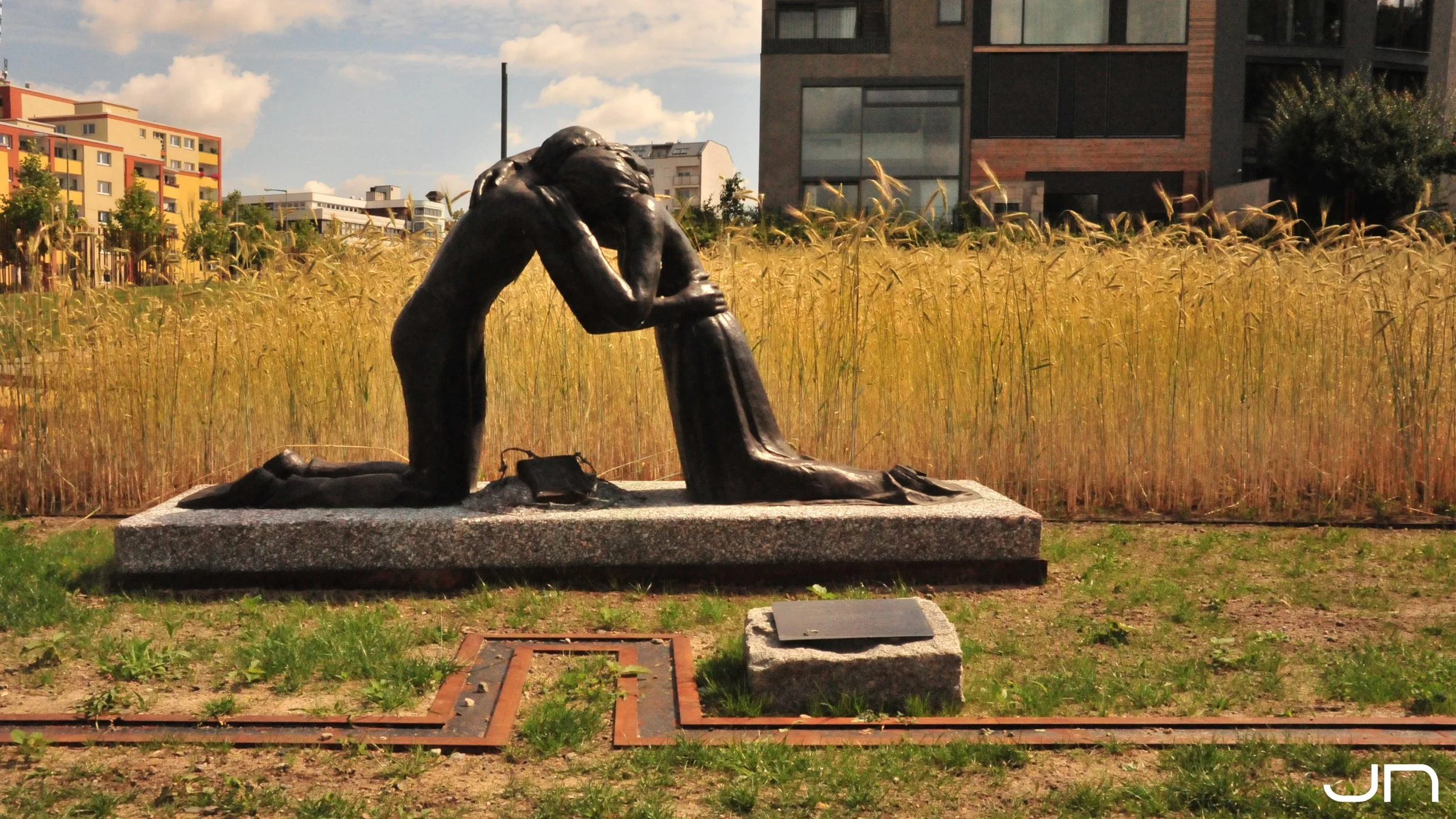
TOUCHING HISTORY
Tactile Tuesdays | The Material Memory of the Berlin Wall
Some architectures are built to shelter.
Some to monumentalize.
And some — like the Berlin Wall — are built to divide.
But decades after its fall, what remains of the Wall is no longer a symbol of separation. Today it exists as a tactile archive, a material landscape where memory is embedded in concrete, steel, earth, and scar. Walking along the former border, you don’t just see history — you feel it. Across textures, voids, fragments, and surfaces, Berlin reveals a city continuously stitching itself back together.
Material Fragments as Memory Fragments
The Berlin Wall no longer appears as a single structure. It survives through scattered remnants — some monumental, others almost invisible:
Reinforcement bars emerging from the ground like exposed ribs
Concrete stumps eroded down to their aggregates
Metal bands and stone strips marking the Wall’s original path
New steel partitions aligned exactly where the border once stood
Museum installations mapping both its presence and absence
Together, these pieces form a constellation of material memory. Touching the concrete’s rough, porous face feels like reading an archive carved by weather, conflict, and time. The Wall persists not as an object, but as a series of tactile encounters.
Concrete as Witness
Berlin’s concrete holds its history unapologetically.
Up close, its surface reveals:
Years of weathering
Graffiti that once protested division
Scratches and pits from attempted escapes
Imperfections from rushed construction
Concrete is usually considered hard, cold, and inert — yet here it behaves almost like skin. It absorbs stories. It carries trauma. It softens at the edges but hardens in meaning. The exposed rebar, now rusted and delicate, reveals the internal anatomy of a structure that once defined geopolitical reality. Its material honesty is disarming.
New Steel Against Old Concrete: A Dialogue of Eras
In several stretches, Berlin places a new metal wall directly beside the original concrete.
The contrast is intentional:
Old concrete is rough, heavy, and absorptive.
New steel is smooth, cool, and reflective.
Together, they form a quiet architectural dialogue — a threshold between what was and what is. The pairing is not about reconstruction; it is about recognition. The city chooses to remember through juxtaposition rather than erasure. In this layered condition, the tactile story becomes richer.
The Church of Reconciliation: Architecture as Healing
One of the most moving sites along the former border is the Church of Reconciliation, rebuilt on the footprint of a church destroyed in 1985 when it stood stranded in the death strip.
The new church, made of rammed earth mixed with clay from the site, carries fragments from the ruins within its walls — brick pieces, stones, glass shards. You can see them embedded in the material. You can touch them. The building becomes an act of architectural healing, binding fragments of the past into a grounded present.
Outside, a sculpture of a kneeling man and woman embraces along the ghosted outline of the original church walls. Their gesture mirrors the city’s own — a collective bending toward reconciliation.
Graffiti, Stamps, and Collective Imprint
Large reassembled segments of the Wall stand today as open-air galleries. These surfaces — once instruments of oppression — have transformed into vibrant layers of public participation.
Graffiti, signatures, checkpoint stamps, stickers, and drawings cover the concrete. Each mark is a personal encounter, a moment of contact. The Wall no longer enforces division; instead, it gathers a global community around it.
In these installations, materiality becomes democratic. People touch the Wall, take photographs before it, and imprint their own stories onto its surface. The concrete accepts it all, becoming an evolving canvas of collective memory.
Touching History: Materiality as Sensory Archive
What makes the Berlin Wall so affecting today is not only its history, but its tactility. The city allows you to experience memory through touch, scale, texture, and presence.
You feel history when:
Your fingers skim a pitted concrete surface
Your palm rests against cool, new steel
Your feet follow the stones tracing the Wall’s old path
Your eyes read the layered graffiti and markings
Your body stands in the void where a building once stood
This is architecture as sensory record.
Materiality becomes a vessel for memory — not abstract, but embodied.
Why the Berlin Wall Still Matters to Designers
For architects and designers, the Berlin Wall offers a profound lesson:
Materials remember.
Concrete can carry trauma.
Steel can articulate clarity.
Earth can hold grief and healing simultaneously.
Graffiti can become a people’s archive.
The Wall demonstrates that architecture holds emotional resonance long after its political use fades. Rebuilding is not only technical — it is cultural, tactile, and deeply human.
Walking these remnants, photographing their layers, and tracing their textures is a reminder that cities metabolize pain through material decisions. Berlin teaches us that memory lives not only in monuments, but in fragments, scars, and deliberate acts of reconstruction.
Closing Reflection
The Berlin Wall once divided a city.
Today, its remnants connect people across time.
Through concrete, earth, steel, and public inscription, Berlin transforms conflict into tactile memory. It invites us to touch history, to read it through materials, and to witness how architecture can carry the stories we cannot afford to forget.
Some walls fall.
But the materials remain — offering tangible lessons in resilience, reconciliation, and the quiet power of design.
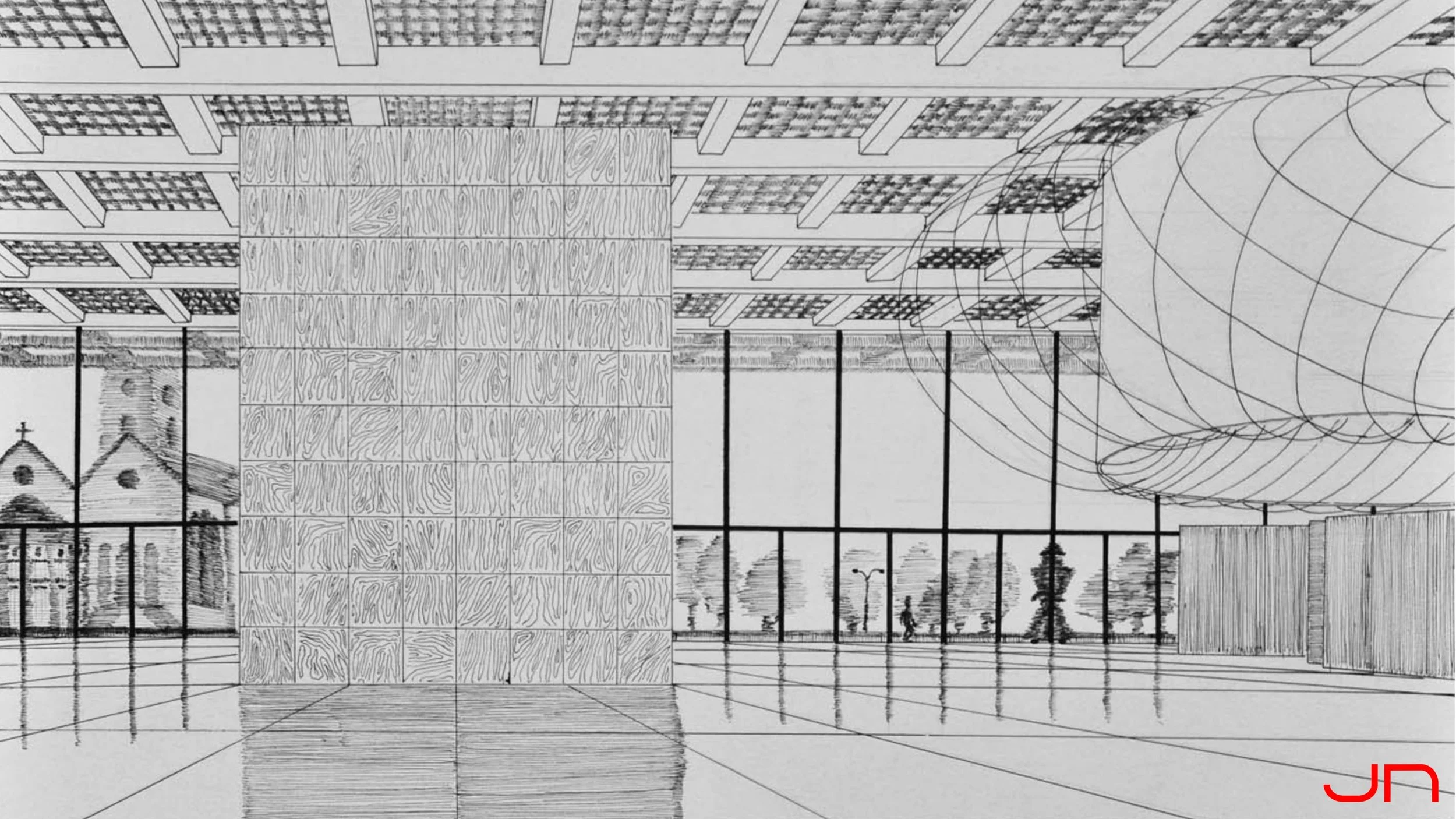
THE ARCHITECT’S MARK
Mark Mondays | Seeing, Thinking and Sketching by hand
There are tools that help us design, and then there are tools that shape the way we think.
For architects, the simplest and most sacred of these is the hand-drawn line.
We live in a world where software is fast, AI is accelerating, and entire buildings can be modeled before a pencil ever touches paper. It’s efficient, powerful, and essential. But in this rush toward the digital, something quieter—but foundational—is slipping away:
The art of hand-marking.
That first intuitive gesture on a page.
That quick, imperfect line that reveals how you see.
That moment where thought and hand move at the same speed.
Hand-marking is not nostalgia. It’s literacy.
Why the Hand Still Matters in an AI World
Ask any architect you admire: long before their projects became icons, their ideas lived as tiny marks inside sketchbooks. Those marks trained their eyes, their instincts, their sense of proportion and space.
Hand-marking does three critical things no software can replace:
1. It strengthens perception.
A freehand sketch forces you to truly see—shadow, proportion, void, rhythm, balance.
Your hand becomes an extension of your eye.
2. It sharpens decision-making.
A line has direction. A gesture has intent.
You learn to commit, adjust, refine—developing confidence with each mark.
3. It slows the mind down just enough.
In architecture, slowness is not inefficiency.
Slowness is discernment.
A chance to absorb, understand, and interpret space with clarity.
Hand-marking is less about the drawing itself and more about the designer it builds.
Europe, Sketchbooks, and the Practice of Seeing
During my Europe study abroad program, I filled entire sketchbooks with drawings. Churches, courtyards, narrow streets, fragments of facades—each captured quickly, quietly, instinctively.
I wasn’t trying to make them perfect.
I was trying to make them true.
Those sketches taught me more about architecture than hours of lectures:
The weight of stone in a Romanesque arch.
The rhythm of a colonnade in Florence.
The way morning light slides across a Berlin facade.
The humility of a doorway in a small German town.
The pause before stepping into a public square.
Travel sharpened my senses, but sketching trained my mind to hold onto the moments that mattered.
Looking back, those drawings were not souvenirs.
They were exercises in presence—my earliest “instruments of service.”
Why Architects Must Keep Hand-Marking Alive
We risk losing something vital if we stop teaching young architects how to draw by hand—not for beauty, but for clarity.
Hand-marking:
• reconnects architects to the fundamentals of space
• anchors the design process in observation rather than shortcuts
• strengthens the connection between imagination and articulation
• makes ideas personal, embodied, and human
A hand-drawn line carries intention, memory, and emotion.
It carries you.
Digital tools make us efficient.
Hand-marking makes us authors.
Both are needed.
But only one builds the quiet confidence of knowing that your mind, hand, and eye are in conversation.
The Mark as Threshold
Every sketch—no matter how small—marks a threshold.
A moment where something unseen becomes possible.
A spark of an idea becoming form.
Keeping the art of hand-marking alive is not a sentimental act.
It’s a commitment to the craft, the discipline, and the way architects learn to think.
In a future shaped by screens, the soul of architecture may still be shaped by the hand.
So on this Mark Monday, here’s an invitation:
Pick up a pen. Make a mark.
Draw what you see. Draw what you feel.
Draw—not to impress, but to understand.
Your hand still remembers how to see.
Let it speak.
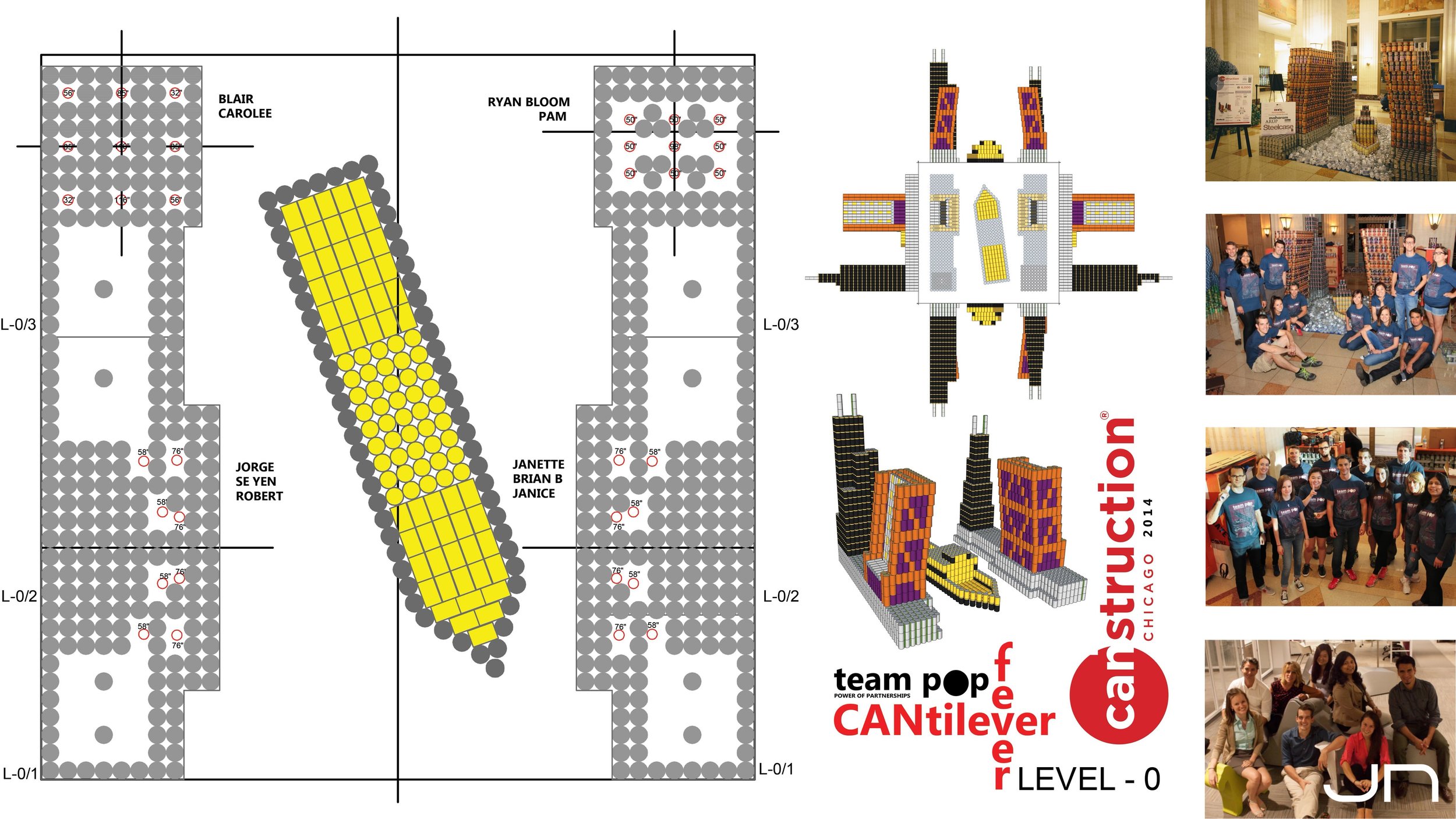
‘CAN’-tilever Fever
Story Sundays | How we replicated a snippet of Chicago’s iconic Architectural Skyline in Cans of Food — and Built Community along the way.
In 2014, I had the privilege of leading a team of AEC professionals in one of the most joyful, purpose-driven design challenges of my career: CANstruction Chicago. Each year, architects, engineers, contractors, interns, vendors, and volunteers come together to build massive 10’ x 10’ structures entirely out of canned food—all of which is later donated to the Greater Chicago Food Depository.
That year, our team proudly christened ourselves Team POP — Power of Partnerships, and we set out to create something unmistakably Chicago. What began as sketches, planning meetings, can-testing experiments, and spirited design debates eventually became our installation:
CANtilever Fever — a playful structural tribute to Chicago’s riverfront and skyline.
We built a Chicago scene featuring:
• the iconic Chicago River complete with the iconic Chicago Boat Taxi,
• a pair of Chicago’s signature open-position bascule bridges,
• and a distilled skyline with the Sears Tower and John Hancock Tower rising behind it.
It was Chicago, reimagined in cans—to be built with intention.
Why CANstruction Matters ?
CANstruction is design with purpose.
It challenges the AEC community to think with discipline and heart—using material, scale, gravity, and coordination to create something beautiful that ultimately becomes something essential: food.
It transforms architecture into an instrument of service—literally. The cans donated after each exhibition become meals for families across Chicagoland.
Architecture becomes nourishment.
Design becomes generosity.
TESTING The Design Concept:
Chicago’s Iconic Bridges Reimagined in Cans
Chicago’s bascule bridges—frozen in dramatic open positions—are some of the most recognizable symbols of the city. We knew from the start they had to be the centerpiece.
The challenge?
Building sloped, cantilevered geometry out of cylindrical cans with no adhesives, no friction control, and limited structural tolerance. Every angle required experimentation:
• Which cans had the structural consistency to bear load?
• Which colors worked for legibility at scale?
• How do you maintain incline without collapse?
• How do you balance sloped geometry using only gravity, density, and teamwork?
We prototyped, stacked, tested, rebuilt.
We sketched elevations and stacking sequences.
We calculated loads based on baked beans vs. chili vs. pasta. (For the record: pasta cans are deceiving—they’re heavier than you expect.)
Somewhere between the prototyping and the recalculations, the build design stopped being merely a sculpture and became an expression of teamwork.
Build Day:
When the City Rose in Cans
Build day felt like controlled chaos—in the best way.
We arrived with pallets of cans stacked taller than we were, multiple booklets of color coded floor plans for every horizontal ‘plate of cans’, and a volunteer army ready to build.
The team divided instinctively:
• the Bridge Crew,
• the Skyline Crew,
• the River and Boat Team,
• and the all-important QC leads, calling out every misalignment and micro-lean.
Calls echoed across the build site:
“Check that slope!”
“Swap these labels—color gradient’s off!”
“Bring a lighter can—we’re tipping!”
“Check the alignment!”
“Hold the load—reset that row!”
The build forces you to reconsider materiality, stability, and structural behavior through an unconventional medium.
Can by can, our build rose,
The skyline stretched upward.
The river curved into place using bottled water.
The bridges found their balance and locked into their open sculptural stance as they cantilevered over the Chicago boat taxi below.
And suddenly, there it was:
CANtilever Fever, complete—whimsical, structural, unmistakably Chicago and undeniably ours.
Local news stations like NBC Chicago visited to film the installations, including ours. Watching visitors point, smile, and take photos reminded me why we build: to create connection.
After the exhibition closed, every can became nourishment for families across Chicagoland.
Architecture became care.
And CANS of food a fundamental form of shelter.
Project Stats (from our official team sheet)
CANtilever Fever — CANstruction Chicago 2014
• 6,000 cans used
• Building blocks : Cans of -
• Dakota’s Pride Baked Beans (Original & Maple)
• Bon Italia Pasta & Meatballs
• Happy Harvest Peas
• Chilli Man Chili
• Bottled water for the river
• Benefiting: Greater Chicago Food Depository
• Presented by: Whole Foods Market & Chase
• Built by: Team POP — Power of Partnerships
• Sponsors included: FGM Architects, Arup, Trendway, Herman Miller, Maharam, Office Concepts, (re)group, and more.
• Exhibited : Aug 14 – Sept 8, 2014
Power of Partnerships: The Heart of the Build
CANstruction projects live or die by the strength of the team. Our roster included architects, engineers, designers, vendors, interns, and volunteers from across multiple firms of Chicago’s AEC community:
FGM Architects / Arup / Trendway / The Dobbins Group / Maharam / Herman Miller / Office Concepts / (re)group
Each person contributed something irreplaceable:
• the engineer who recalculated a leaning tower section,
• the architect who refined the bridge slope for stability and perfected the skyline proportions,
• the designer who designed the build plans and graphics for T-shirts and build day info boards,
• the vendors who helped co-ordinate storage of 6000 cans and provided spaces for meetings and mockups,
• the volunteers who lifted palettes, stacked cans, adjusted them, and kept morale high throughout build night.
Partnerships built the project.
Partnerships held it together.
Partnerships made it meaningful.
When Architecture FEEDS
After the exhibition closed, every single can— all six thousand of them—went straight to the Greater Chicago Food Depository.
Our skyline dismantled itself into meals.
Our design transformed into nourishment.
Our architecture became service.
The most meaningful transformation wasn’t the skyline we built.
It was the impact it became.
The T-Shirt:
When Architecture Is Literally Built Out of People
Team POP believed collaboration was our greatest material—and I wanted our team shirts to reflect that spirit.
I designed a graphic of the open bridge constructed entirely out of the names of every team member. No lines, no strokes—only typography arranged to form the silhouette of the bridge.
The bridge wasn’t merely a symbol.
It was a portrait of collaboration and partnership.
When we submitted the design to CustomInk for printing, something unexpected happened:
Our shirts were featured in CustomInk’s “Ink of the Week” which gave our project visibility in the community.
That recognition wasn’t about the shirt—it was about the spirit behind it. Design resonates when people are its foundation.
Looking Back:
What CANtilever Fever Taught Me
CANstruction taught me something fundamental:
Architecture isn’t only about creating buildings.
It’s about creating impact.
Whether it’s volunteering for Open House Chicago, designing a hotel, writing a blog post, or leading a team in a competition where structure becomes service—every act of design shapes how people live, move, feel, gather, or eat.
Sometimes architecture speaks in glass and steel.
Sometimes it speaks in cans.
Leading Team POP affirmed that architecture lives in:
• collaboration,
• community impact,
• creative problem-solving,
• and the joy of building something that matters.
Design can be playful and purposeful, structural and symbolic—
and sometimes, it can win “Ink of the Week” while feeding thousands.
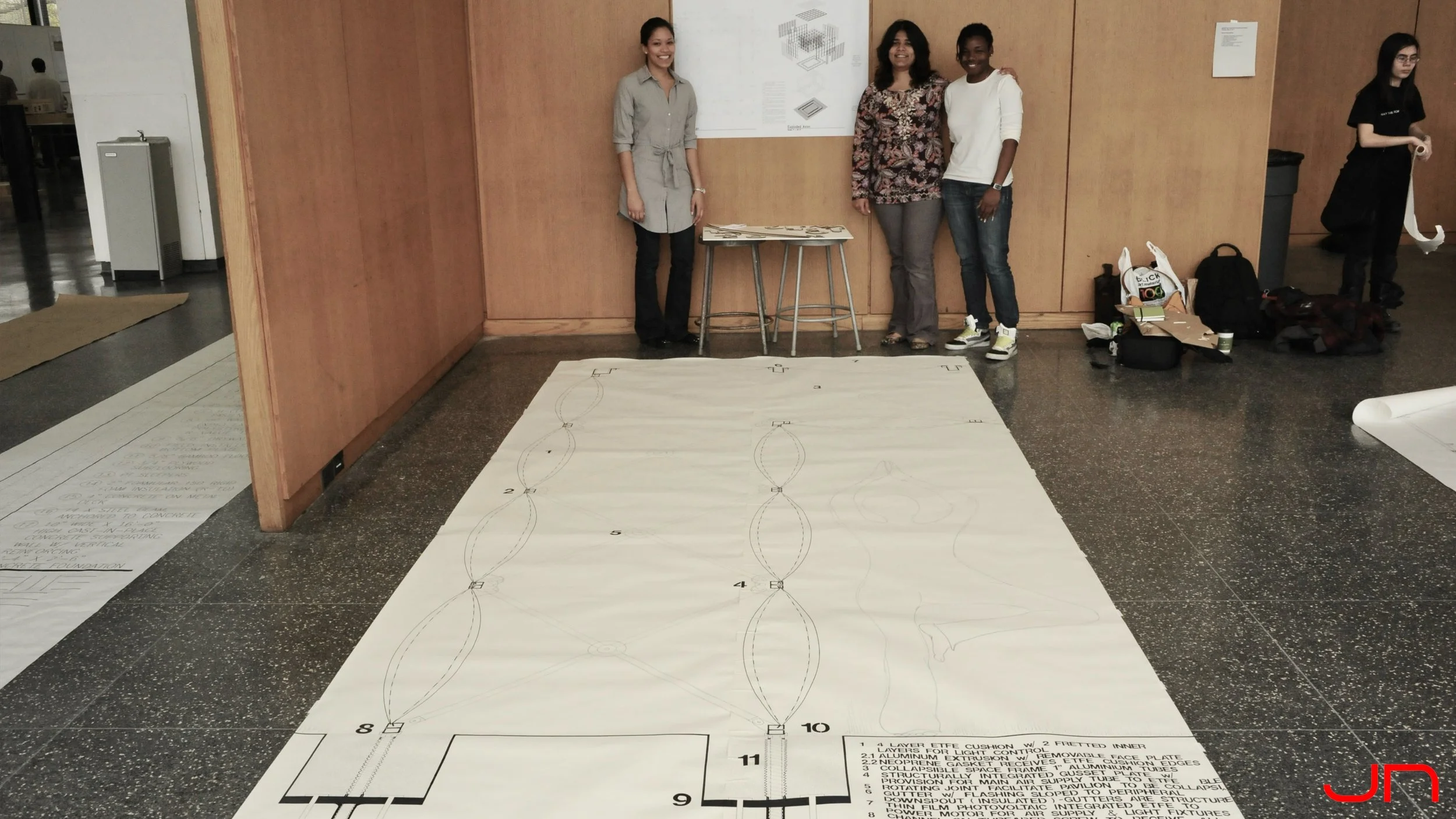
INSTRUMENTS OF SERVICE
Studio Saturdays | How Architects communicate Vision…
Every profession has its instruments.
Musicians have sound.
Writers have words.
Surgeons have scalpels.
For architects, the instrument isn’t bricks or mortar — it’s the drawings, models, and documents we create to bring ideas into the world.
In architectural practice, these are formally called “instruments of service.” They’re the sketches on trace paper, the CAD files on a glowing screen, the renderings that sell a vision, the construction documents that guide a builder’s hand. They’re not the building itself — but they’re the essential bridge that connects imagination to construction.
What Are Instruments of Service?
Legally, the American Institute of Architects defines instruments of service as any representation an architect produces: sketches, plans, specifications, models, or digital files. These are protected intellectual property — meaning they belong to the architect who created them, even if a client commissions the work.
This protection matters because architecture is both art and service. Our instruments are how we speak our design language. They can’t be copied, repurposed, or built upon without the author’s permission.
Why They Matter
When I first encountered the term, it sounded abstract — almost clinical. But over time, I realized just how central these instruments are to architectural practice.
1. They Protect Vision
An architect’s instruments of service are a safeguard. They ensure that your design intent isn’t misinterpreted or altered without your input.
2. They Define Scope
Instruments of service clarify what a client is paying for and how those deliverables can be used. They make the invisible — design labor — visible.
3. They Shape Process
Every drawing, sketch, or file is a step in a larger story. Instruments of service are iterative, evolving as ideas move from concept to construction.
From Studio to Practice
I think of all the tools I’ve used in my own journey: ink drawings, watercolor sketches, cardboard models cut late at night, and now the digital languages of CAD, Rhino, and Revit.
Each one was an instrument — some quick and messy, some precise and technical. In studio, they were part of the creative process. In practice, they became legally binding documents.
What struck me is how fluid the boundary is: the same pencil sketch that sparks a concept can eventually live inside a contract drawing. Both are instruments of service, just speaking at different volumes.
Beyond the Legal Definition
But instruments of service aren’t just about protection or liability. They’re about storytelling.
A sketch persuades.
A rendering inspires.
A set of documents instructs.
They’re how we share imagination with others — translating thought into form, and form into reality. They’re also how we collaborate: with clients, with engineers, with builders, and with each other.
Looking Ahead
As tools evolve, so does the definition of instruments of service. Today, they include BIM models, VR walkthroughs, parametric scripts, and even AI-assisted visualizations. Tomorrow, who knows?
The challenge for architects is to keep authorship while embracing innovation. Because no matter the medium, the core truth remains: instruments of service are the language we use to communicate design.
Reflections
Buildings may last centuries, but before the first stone is laid, they begin as fragile lines on paper, pixels on a screen, or models held together with glue.
That’s the power of instruments of service: they are not the building itself, but the bridge between imagination and construction. They protect, they persuade, they inspire.
And like any instrument — a violin, a pen, a chisel — they demand both skill and care to be played well.
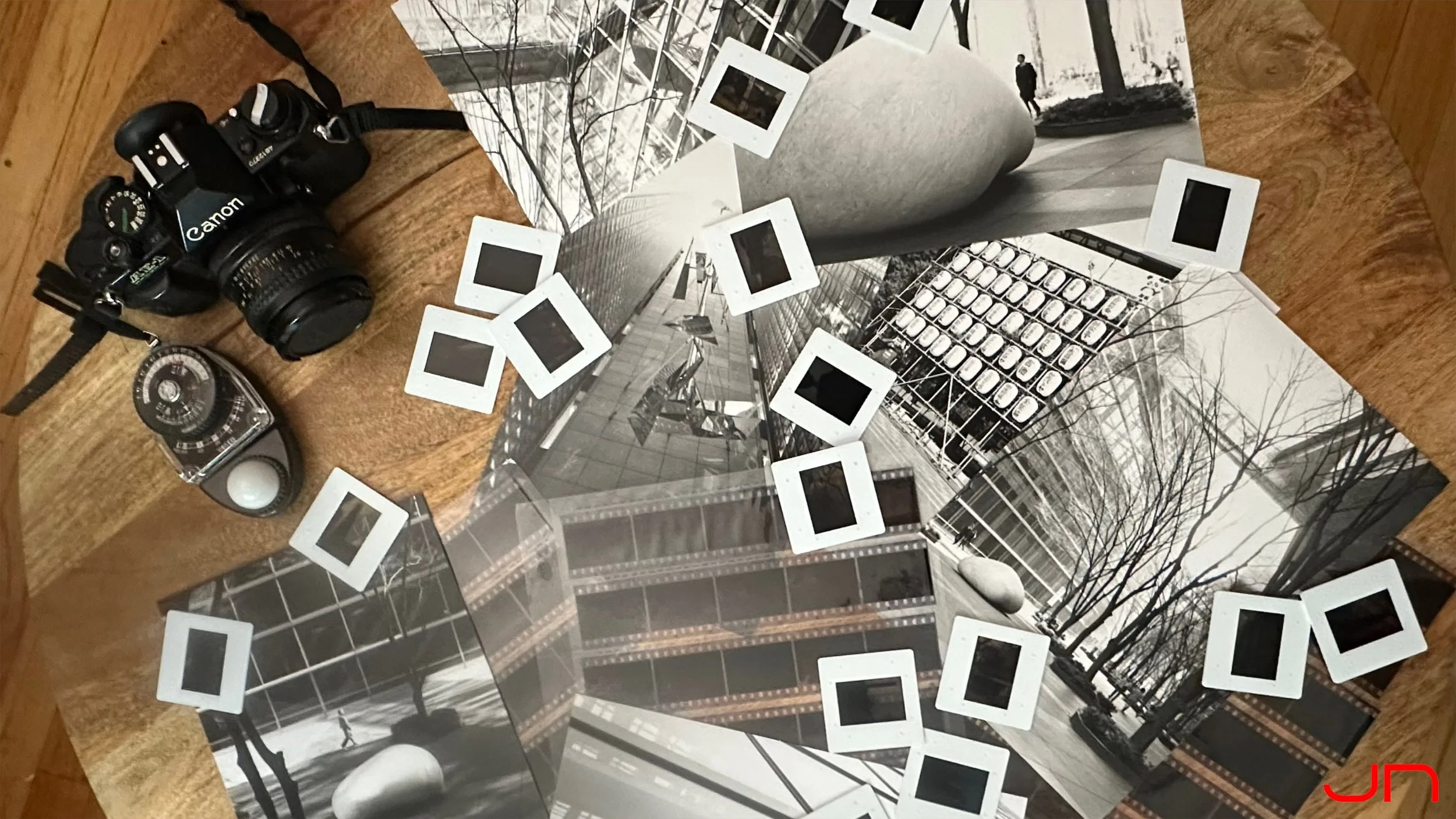
THE CAMERA AS A THRESHOLD
Threshold Thursdays | Framing, Exclusion, and the Architecture of Narrative
In architecture, thresholds mark transitions—between inside and outside, light and shadow, public and private. Photography works the same way. Every time a photographer picks up a camera, they draw an invisible border around a moment. What falls inside the frame becomes the story. What falls outside becomes speculation, imagination, or omission.
A photograph is never just a record.
It is a constructed threshold.
The Photographer as Architect of the Frame
Just as architects orchestrate a person’s first impression of a built space, photographers orchestrate what a viewer will encounter when they step into an image. The frame becomes an intentional piece of authorship—a portal designed by the photographer.
Tilt the camera slightly, and the scene becomes unstable.
Shift left a few inches, and a new character enters the story.
Crop out a background element, and the emotional charge changes completely.
The photographer is not simply a documentarian; they are a designer of narrative space through the images they capture.
What the Frame Reveals—and Conceals
Every photograph is a negotiation between presence and absence.
What is included becomes evidence.
What is excluded becomes silence.
This is where photography and architecture meet. Both disciplines manipulate:
Edges
Sightlines
Boundaries
Perspective
Interpretation
A photograph of a serene street corner may hide the chaos outside the frame. A portrait might capture vulnerability while concealing the world pressing in just beyond the lens. The viewer steps through the threshold and fills in the missing context from their own experiences, biases, and fantasies.
The Viewer as Co-Author
Once a photograph is released into the world, its meaning expands beyond the photographer’s intent. Viewers bring their own memories, cultures, and emotional histories to the frame. They fill the negative space with their own narrative.
This is the quiet power of photography:
Two people can stand before the same image
and walk away with two entirely different stories.
The frame is fixed,
but the interpretation is fluid.
Photography as a Narrative Tool in Design
For architects and designers, photography becomes more than documentation. It becomes a method of storytelling—of guiding how others see our work or our world.
A tight crop might focus on texture and materiality.
A wide shot may reveal relationships, boundaries, or context.
A long exposure might whisper something about time, movement, or ritual.
When we photograph architecture, we are not merely recording the built environment. We are shaping how others will enter it—through our lens and our chosen threshold.
Conclusion: The Ethical Threshold
With authorship comes responsibility.
Just as architects consider the social and cultural impact of their designs, photographers must ask: What stories am I choosing to make visible? What am I leaving out—and why?
Every frame is an ethical decision.
The camera is not neutral.
The threshold is not accidental.
And the narrative is never singular.

MATERIALITY OF A BUILDING IS CODE, TOO
Tactile Tuesdays | On durability, disaster, and why material choices of core and shell matter.
We often think of code in architecture as something abstract — a checklist of fire ratings, egress paths, and accessibility clearances.
But there’s another kind of code, one that speaks directly to the body, the land, and the climate: material.
Material is code, too.
And it’s time we start treating it that way.
What Are We Really Building For?
Architects are taught that our foremost responsibility is to ensure the health, safety, and welfare of the public.
It’s written into building codes, ethics guidelines, and design handbooks.
But I keep coming back to a deeper question:
What are we really building for — and for how long?
As flash floods, hurricanes, wildfires, and rising tides disrupt lives across the U.S., I’m struck by the disconnect between our codes and our materials.
Why do we speak of resilience in abstract terms while continuing to build with wood studs and gypsum board in regions repeatedly devastated by water, wind, or fire?
We wouldn’t accept seat belts made of cardboard in our cars.
So why are we okay with homes that buckle under the same storms that return every decade?
Materiality of a Home
A structure’s core and shell — its bones and skin — aren’t just aesthetic or budget-driven decisions. They are life-safety choices.
They determine whether a space survives, breathes, protects, or collapses. They define thermal comfort, structural integrity, water resistance, and even emotional security in times of crisis.
When flash floods drown neighborhoods, when hurricanes strip roofs to rafters, when wildfires turn towns to ash — the material story becomes painfully clear:
wood frame construction simply isn’t enough anymore.
Not in coastal zones. Not in floodplains. Not in wildfire belts.
Durability Is Safety
In architecture school, we often talk about “100-year buildings” — structures that stand the test of time both physically and culturally.
Yet this mindset rarely extends to the everyday home.
In the U.S., the dominant model for residential construction remains light wood framing — fast, inexpensive, and standardized.
But it’s also vulnerable.
To rot. To termites. To wind shear. To fire. To time.
Not all wood, however, performs the same way.
Heavy timber construction — using large, solid wood members like columns and beams — tells a different story.
When exposed to flames, its outer layer chars, forming a protective barrier that insulates the core. This slow, predictable burn rate means the structural core often remains intact far longer than steel, which can lose strength rapidly under heat.
Beyond fire, heavy timber offers mass, thermal stability, and longevity. Its volume resists warping, absorbs and releases moisture gradually, and regulates interior temperature through natural insulation. It’s a material that breathes with its environment — and ages gracefully within it.
Light-frame homes may meet code, but they don’t necessarily meet the moment — a moment defined by climate volatility and recurring disaster.
Durable materials — whether reinforced concrete, precast panels, masonry, structural steel, or heavy timber — have long been proven in seismic zones, flood-prone regions, and dense urban cores.
The question is not whether they work, but why we aren’t using them more widely, especially in housing where the stakes are personal and perpetual.
The Cost Question
The answer, of course, is cost — or at least, perceived cost.
Wood framing is cheap to install, fast to assemble, and deeply embedded in American building culture. Developers prioritize margins. Municipalities prioritize code minimums. And homeowners often don’t know what questions to ask.
But initial cost shouldn’t be the only metric.
What about life cycle value?
What about the cost of rebuilding, again and again, after every storm season?
Yes, concrete emits carbon.
But so does rebuilding entire subdivisions every time a hurricane levels stick-built homes.
Shouldn’t we be calculating the environmental cost of repeated loss?
Is “cheap” construction really affordable if it has to be replaced every decade?
Code Is Not Enough
Building code should be the floor — not the ceiling.
It tells us what we’re allowed to do, not what we ought to do.
The climate is changing.
Our material habits must evolve with it.
As architects and designers, we are responsible not just for meeting code, but for reading context — climate, geography, time, and memory.
And in the face of rising sea levels, record-breaking heat waves, and billion-dollar weather disasters, material choices are no longer aesthetic or economic preferences.
They are ethical decisions.
What if we began to treat materiality as a civic duty?
What if we honored the land by building for its cycles — not against them?
Building for Generations
We admire centuries-old structures for their endurance — their ability to stand as testaments to both material and cultural longevity.
We must start holding our homes to the same standard.
If we value sustainability, care, and cultural continuity, our buildings should be designed not for the duration of a mortgage, but for generations.
Because every material we choose doesn’t just support a structure —
It tells a story.
It carries memory.
Durable homes are sustainable homes.
They are safer, more equitable, and more resilient homes.
They speak to a future that values care over convenience.
So What Can We Do?
As architects, designers, and citizens:
🚩 Advocate for stronger material standards in vulnerable zones.
🚩 Educate clients about the long-term value of durable construction.
🚩 Question when “value engineering” starts to mean “short-term thinking.”
🚩 Design for repair, not just replacement.
Let’s Build Like the Land Matters
Architecture Speaks Volumes is founded on the belief that design is not just shelter — it’s storytelling.
It holds memory, intention, and presence.
When we choose materials with integrity — when we design with durability, context, and care — we’re not just protecting buildings.
We’re protecting lives.
We’re protecting the stories those lives carry.
Let’s build with care.
Let’s build with memory.
Let’s build like the land matters.
Because material is code, too.
And we have the tools to choose better.
ARCHITECTURE WITHOUT CONSENT
Mark Mondays | When the form of THE White House is not the form of democratic process.
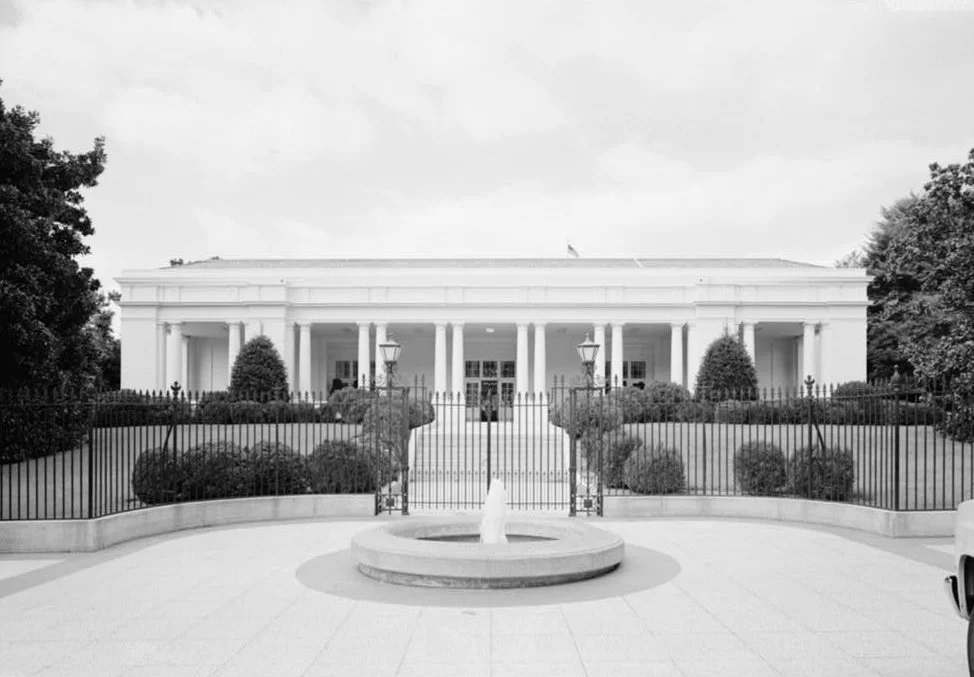
Every first Monday of a month, I look at the marks architecture leaves behind — sometimes through what is built, sometimes through what is lost. This week’s mark is one of absence. The East Wing of the White House — a space steeped in history, ceremony, and civic symbolism — has been erased. What eventually rises in its place will not just be a new gilded ballroom, but a new question: what happens when architecture moves forward without democratic consent?
The Mark of Erasure
The White House has never been static. It has burned, been rebuilt, expanded, reinforced, and reimagined over two centuries — each transformation leaving its own architectural signature. Yet the recent demolition of its East Wing and the proposed privately funded ballroom rising in its place mark a rupture, not a continuation.
This is the mark of erasure — a physical void where a historic structure once stood, and a conceptual one where public voice has fallen silent. The East Wing was more than service corridors and offices; it was the connective tissue between the ceremonial and the domestic, the public and the private. To remove it without conversation is to edit history without annotation.
The Mark of Omission
For the first time in the modern era, a significant alteration to the architecture of the People’s House has proceeded without visible public or professional engagement. There were no open design discussions, no advisory reviews from the Committee for the Preservation of the White House, no national dialogue about what this change represents. The process unfolded quietly, swiftly, and underwritten by private wealth.
This absence is its own kind of mark — the mark of omission. The silence around this project speaks volumes about a shift in how power operates: architecture once used to symbolize democracy is now deployed to bypass it.
The Mark of Power
Architecture is never neutral. It encodes hierarchy, ideology, and values into form. When a building as symbolic as the White House changes shape, the act reverberates far beyond its walls. The East Wing’s demolition is not merely a spatial alteration — it is a statement about governance and authority: who holds the right to alter a national symbol, and whose vision that change serves.
Throughout history, even the most drastic White House renovations — from Truman’s total interior reconstruction to Roosevelt’s creation of the West Wing — involved architects, historians, preservationists, and public oversight. They were changes made through process, however imperfect. What distinguishes this moment is not the scale of construction but the erosion of transparency — the mark of power overtaking process.
The Mark of Patronage
The proposed ballroom, reportedly funded by wealthy businessmen, compounds the unease. Public architecture derives legitimacy from public trust. When a national monument is reshaped by private money, it shifts from civic representation to personal projection. The funding itself leaves the mark of patronage — a return to an older, pre-democratic model of building, when architecture served donors rather than citizens.
The White House, long an emblem of the collective, risks becoming an estate of the few. The very space meant to host the public narrative may soon echo with private applause.
The Mark of Memory
And then there is what remains — memory. Architecture is temporal; every renovation overwrites another, layering time into space. But when change comes without consent, memory becomes resistance. Photographs, drawings, and stories of the East Wing now hold what the structure no longer can: evidence of a public ethos. The mark of memory is fragile, yet it endures — a quiet archive of what once stood for inclusion, transparency, and civic participation.
The Mark This Monday Leaves
Architecture speaks in silences as much as in structures. When the conversation between government, architects, and citizens is muted, design stops being democratic — it becomes declarative. The mark this Monday leaves is a reminder that architecture, like democracy, depends on participation.
When we stop being invited into the process, we are no longer represented in the result.
And the White House — the most visible house of the people — can only remain so if it continues to bear the mark of our collective voice.
Blogpost Cover Image Credit - East Wing; view of East Elevation, circa 1985–1992 - Library of Congress, Prints & Photographs Division, DC,WASH,134-207
OPEN HOUSE CHICAGO
Story Sundays | From Volunteer to Participant in Chicago’s Architectural Story
Every October since 2011, Chicago has offered the world a free backstage pass to experience the architecture that shapes its skyline and urban fabric. For one weekend, Open House Chicago transforms the city into a vast stage of discovery, opening the doors of buildings and spaces rarely accessible to the public. It’s an invitation to see the city not just as residents or tourists, but as explorers.
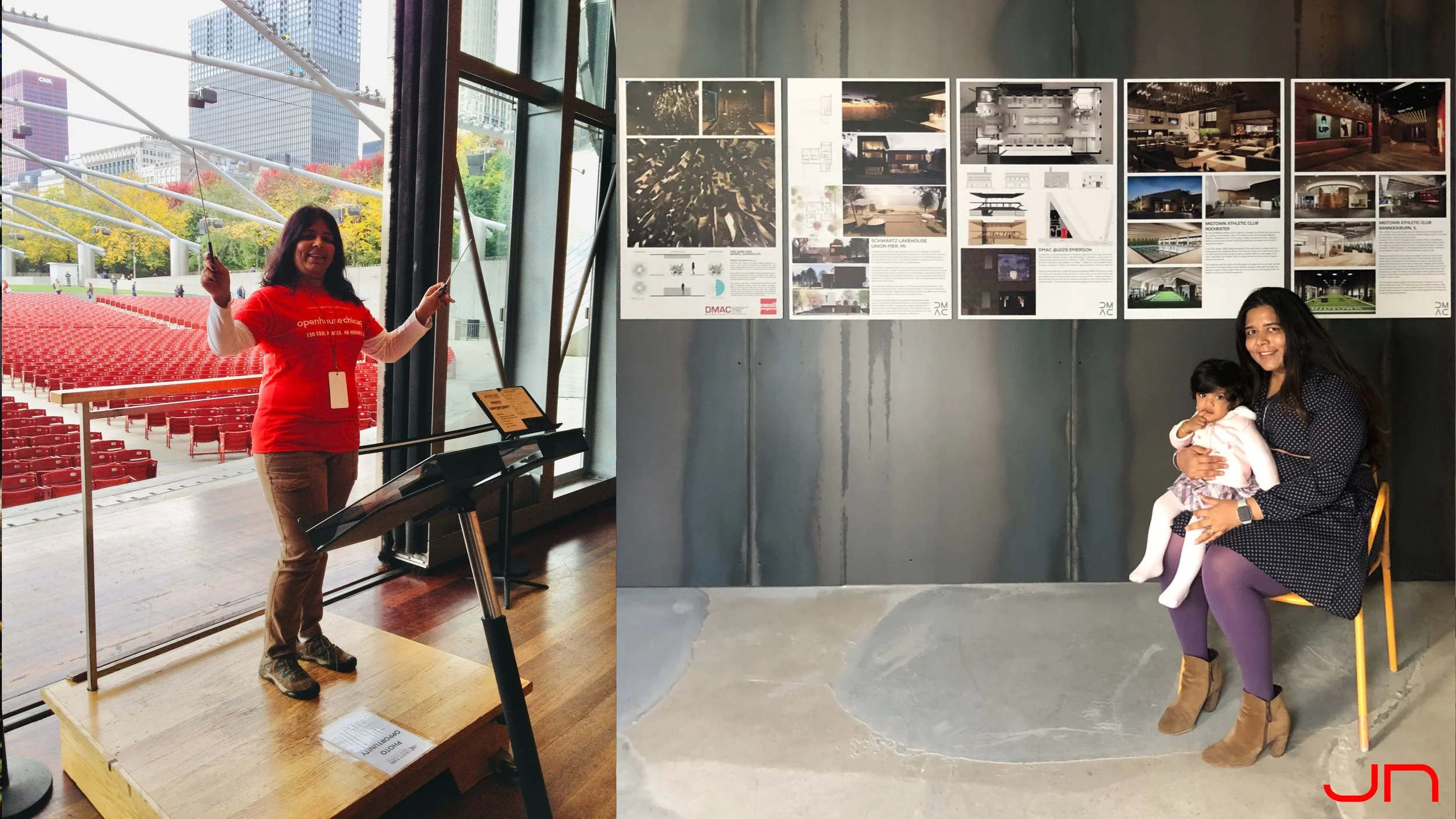
For me, Open House Chicago has always been more than an event — it has been a thread woven into my own architectural journey. I began as a volunteer nearly 15 years ago, and later returned as a participant while working at DMAC Architecture and Interiors, sharing my designs and perspectives with fellow enthusiasts.
My First Open House: The Tribune Tower
My very first assignment as a volunteer was at the Tribune Tower, the neo-Gothic landmark completed in 1925. On the exterior, I marveled at fragments of historic structures embedded into its façade — a tradition begun by publisher Colonel Robert R. McCormick that continues to fascinate visitors.
Inside, the experience unfolded like a private tour through Chicago’s architectural memory. In the lobby, inscriptions celebrated the “free press.” In the cavernous press room, grooves carved into the floor marked where massive rolls of paper once fed the Tribune’s presses.
From there we rode the elevator to the 24th floor, where the conversation among my fellow passengers drifted to Pulitzer Prize–winning critic Blair Kamin. At the top, we entered the Tribune boardroom — once called the Colonel’s Quarter — the executive suite of McCormick and his co-publisher Joseph M. Patterson.
Then came the revelation. Behind a paneled wall, a hidden door revealed a narrow wooden staircase. On the blueprints, it was disguised as a “file room.” Known as the “escape tower,” the secret passage was designed for McCormick, who feared an angry mob might one day storm the building. Whether paranoia or prudence, the eccentricity of it stayed with me.
That first glimpse behind the curtain taught me that architecture is never just form and function — it is also personality, eccentricity, and myth. It shaped the way I have experienced Open House Chicago ever since: with curiosity about the stories buildings hold.
A year later, I had another unforgettable moment at the Tribune Tower, standing on the open-air observatory on the 25th floor during an AIA event. From beneath its soaring flying buttresses, the views of the Chicago River and the Loop were nothing short of surreal.
The Tribune left the tower in 2018, and the building has since been transformed into luxury residences, earning a 2023 Driehaus Prize for preservation and adaptive reuse from Landmarks Illinois.
Volunteering: Witnessing Curiosity Firsthand
As a volunteer, I stood at thresholds, welcoming visitors into spaces of history and innovation. I watched as they entered with wide eyes, connecting what they saw to their own lives, memories, and imaginations. Through their questions and reactions, I learned something invaluable: architecture lives beyond its walls. It becomes complete through the stories people carry into it.
Participating: Joining the Dialogue
Later, with DMAC Architecture and Interiors, I returned not as a volunteer, but as a participant. Sharing my work was not simply about displaying drawings — it was about entering a dialogue. Visitors asked about my process, my inspirations, the meaning behind the designs. In those conversations, my role shifted: I was no longer only a guide, but a storyteller — one voice among many in the collective conversation Open House Chicago fosters .
The Gift of Participation
Over the years the participation has grown, drawing visitors from across the globe. I still remember welcoming a group of 67 guests from France - all eager to experience the city’s architecture firsthand!
Moments like these remind me that architecture is never solitary. It thrives on participation — on people being curious, engaging, questioning, and responding. Open House Chicago embodies that principle: it dissolves the boundary between architect and audience, insider and outsider, designer and explorer.
Looking Ahead: Open House Chicago 2025
This year’s Open House Chicago takes place October 18–19, 2025, with more than 200 sites opening across the city and surrounding neighborhoods. Last year, the festival launched a photography competition with four categories — Interior, Exterior, Detail, and Black & White. This year, a fifth has been added: People & Buildings, a fitting way to capture the event’s spirit through the eyes of its visitors.
An Invitation
From volunteer to participant, my journey with Open House Chicago continues to shape how I see the city and how I practice architecture. It is a reminder that architecture speaks volumes when it becomes a shared story.
If you’re in Chicago next weekend, I encourage you to take part — wander, explore, and maybe even bring your camera.
Open House Chicago is more than an event; it’s a conversation. One that we’re all invited to join.
📖 Read more stories on Architecture Speaks Volumes Blog THE ASV BLOG
📸 Join me on Instagram @architecturespeaksvolumes
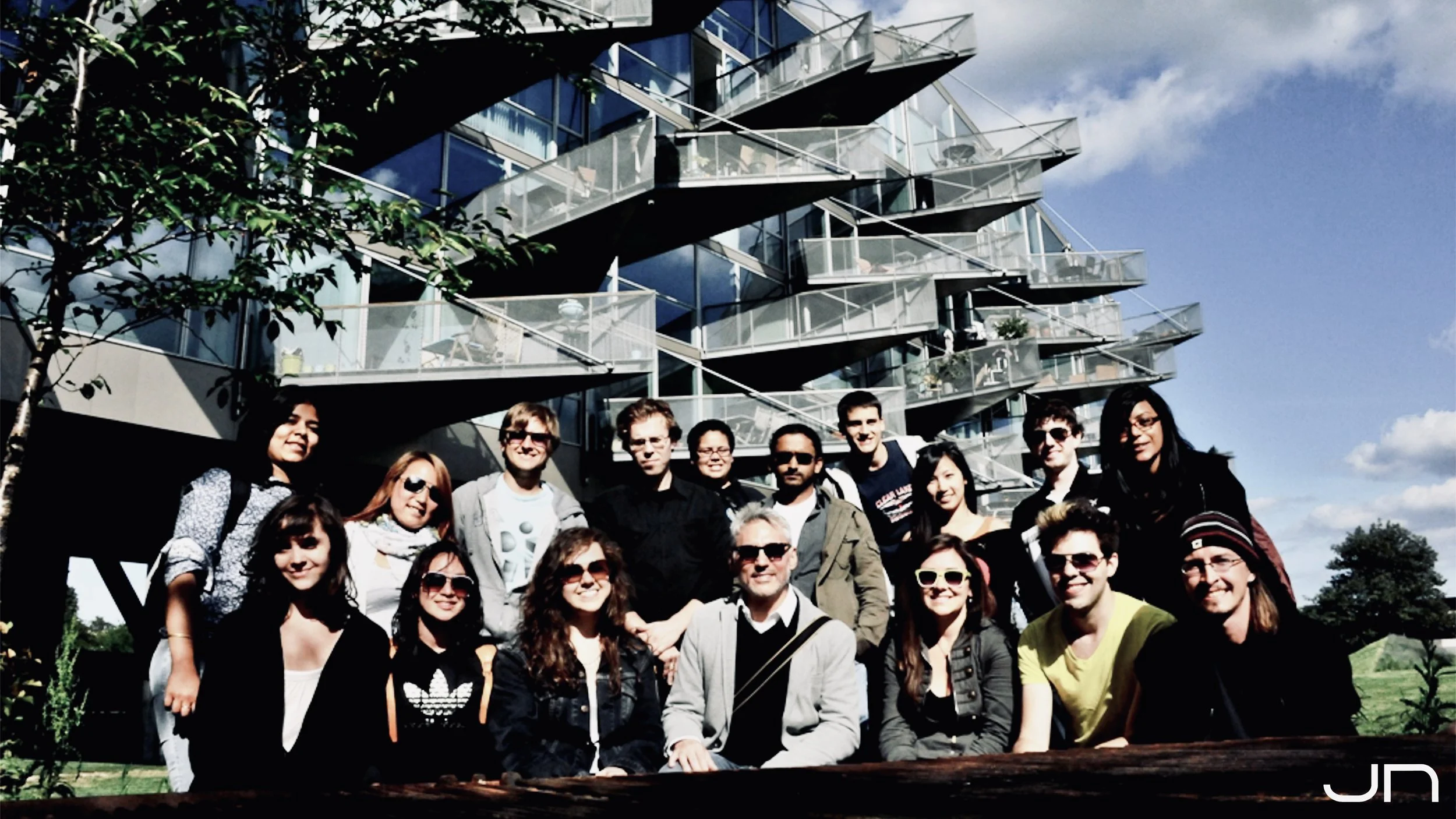
THE PLEIN AIR STUDIO
Studio Saturdays | Architecture lessons from Travel.
For architecture students, the city is the most profound classroom. Its buildings, streets, and public spaces hold lessons no model or textbook can fully capture. This is why traveling studios and study abroad programs are so transformative—they immerse us in both the artistry and the mechanics of design, while teaching us to read the architecture that speaks volumes.
Drawing as a Way of Reading
In my European travel studio, one of our courses was devoted entirely to sketching. Armed with pencils, ink, charcoal, pastel, and watercolors, we spent our days on site, translating cities into marks on paper. Each medium became a different voice: the precision of ink, the softness of charcoal, the immediacy of watercolor.
Sketching trained us to read architecture like a text—the rhythm of windows, the weight of stone, the cadence of light across a façade. Each line became a sentence; each shadow, a paragraph. To sketch was to enter into dialogue with buildings, to discover how architecture speaks if we slow down enough to listen.
Technology as Translation
Running parallel to sketching, our second course explored building technologies. Here, we learned to decode the structural and material systems behind the spaces we admired: masonry vaults, thermal mass, glazing, spans. If sketching taught us to hear the poetry, technology revealed the grammar—the framework that makes meaning possible.
This dual focus—art and science, hand and detail—reminded us that architecture is both language and logic, expression and execution.
Learning in Context
The studio experience extended beyond coursework. Traveling together through unfamiliar cities, we learned collaboration in its most organic form: critiquing sketches at café tables, passing charcoal across a piazza, or discussing systems and spans on a train ride between stops. Each city became a new chapter to interpret, each sketchbook page a translation of what we saw and felt.
Why It Endures
Traveling studios teach us that architecture is not abstract—it is lived narrative. To sketch by hand is to hear its voice; to study technologies is to understand how that voice is carried. Together, these courses revealed that the built environment is never silent. If you know how to look, every building, every street, every material speaks.
When I look back at our final presentation—a plethora of mixed media sketches distilled from weeks of travel—I see more than drawings. I see the first attempts at fluency in the very language that defines my practice: Architecture Speaks Volumes.
A Call to Future Architects
If the chance comes to join a traveling studio, take it. You will return not only with a sketchbook and technical knowledge, but with the ability to read architecture as text, as voice, as memory.
Because architecture does not whisper. Architecture Speaks Volumes.
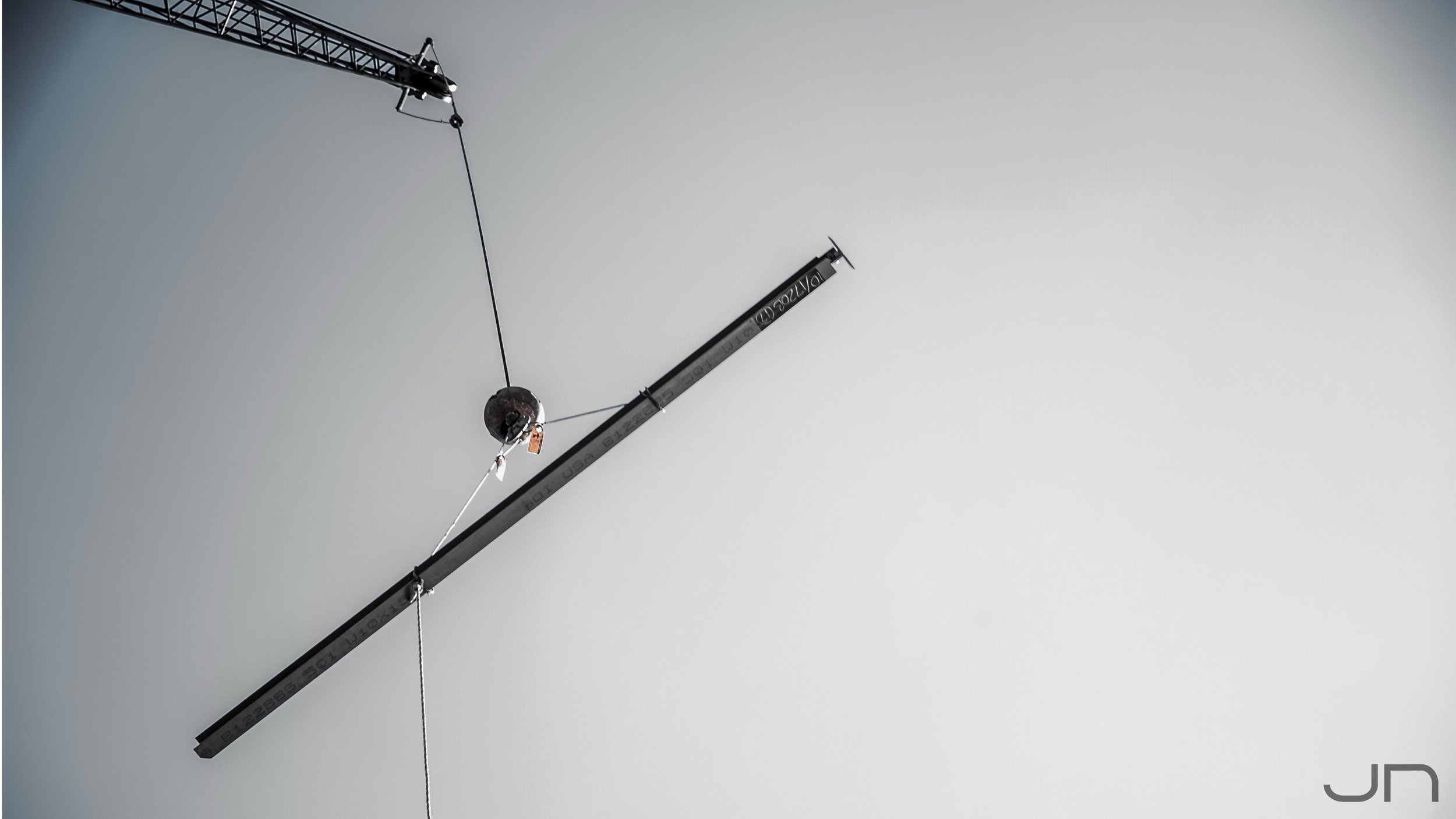
GUARDIANS OF PROJECT THRESHOLDS
Threshold Thursdays | How Architecture Projects cross from Vision to Reality
In architecture, thresholds are more than doors or passages. They are transitions—moments of pause, decision, and transformation. But thresholds exist not only in physical buildings. Every architectural project process itself is a sequence of thresholds, each one carrying a vision forward into reality. From idea to realization, we pass through stages—each one demanding clarity, leadership, and decision-making.
As I study for my ARE Project Management exam, I’ve been struck by how crucial it is for an architectural project manager to serve as a guardian of thresholds. They ensure that each phase of a project is navigated smoothly, protecting both design intent and practical execution. Without careful stewardship, the vision risks getting lost in translation.
Let’s walk through these project thresholds—moments where ideas shift, details sharpen, and the paper project begins to breathe.
1. Conceptual Design → Schematic Design
Threshold of vision. Ideas become drawings. A dream begins to take form.
Every project begins in the realm of imagination—sketches, conversations, big ideas. Crossing into schematic design means translating that spark into something tangible. It’s the moment when dreams gain structure, when a vision can finally be communicated beyond words.
A project manager ensures this threshold is crossed with clarity—capturing intent while keeping scope, budget, and client expectations aligned.
2. Schematic Design → Design Development
Threshold of refinement. Big moves give way to detail. Choices of material, systems, and budget become real.
At this stage, the work deepens. Materials, systems, and spatial relationships are defined. What was once broad strokes now becomes a composition of interlocking parts.
It is a threshold where the romance of an idea meets the rigor of decision-making. A project manager coordinates disciplines—structural, mechanical, electrical—ensuring integration without compromise.
3. Design Development → Construction Documents
Threshold of precision. The project shifts from “what if” to “this is how.” Drawings become instructions.
Here, design becomes instruction. The drawings evolve from expressive to exacting, offering a roadmap for those who will bring the building into being.
Crossing this threshold requires absolute discipline. Every line must be intentional, every detail coordinated. The project manager oversees deliverables, timelines, and accuracy—because a missed detail now can snowball into a costly mistake later.
4. Construction Documents → Bidding and Negotiation
Threshold of translation. The design must be read, priced, and trusted by those who will build it.
This is where design leaves the architect’s desk and enters the marketplace. Drawings must be legible not just as ideas, but as commitments—costed, priced, and scheduled by contractors.
The project manager acts as interpreter, ensuring that the design intent is understood, that bids are competitive and fair, and that no misstep erodes the integrity of the project.
5. Bidding → Construction Administration
Threshold of execution. The paper project becomes built reality. The PM ensures alignment of design intent, budget, and schedule.
Now, the paper world becomes material. The ground is broken, steel rises, concrete sets.
This is a turbulent threshold—full of change orders, unforeseen conditions, and the push-pull of budgets and deadlines. Here, the project manager is a constant presence, balancing client expectations, contractor realities, and architect intentions. Without them, the project risks losing its center.
6. Construction → Occupancy
Threshold of life. A building is handed over and begins its dialogue with the people it was made for.
The final threshold is not an end, but a beginning. A building is handed over. Lights turn on. People move in.
At this moment, the project ceases to be drawings and details—it becomes lived experience. The architecture speaks, and its volumes are measured not just in square feet, but in the lives it holds.
Why Project Managers Matter
Each of these thresholds is fragile. They are points of transition where missteps can derail progress or compromise intent. A skilled project manager is more than a scheduler—they are the bridge between vision and execution. They hold space for both the dream of the architect and the realities of construction by implementing a Standard of Care.
Without them, projects stall. With them, projects thrive.
The Project Manager is the steward of these thresholds. They ensure smooth passage through each stage, holding the vision steady while navigating time, cost, and scope.
Not every threshold is easy—but each is necessary. Without crossing them carefully, the project risks losing its integrity.
👉 Question : Which project threshold feels most critical to you: vision, detail, execution, or life? Share your comments below.
Closing Reflection
Thresholds remind us that architecture is never static. It is a continual act of becoming—on paper, in construction, and in life. As designers, builders, and managers, our role is to guide projects through these passages with care.
Because every threshold crossed is one step closer to the realization of architecture that speak volumes!
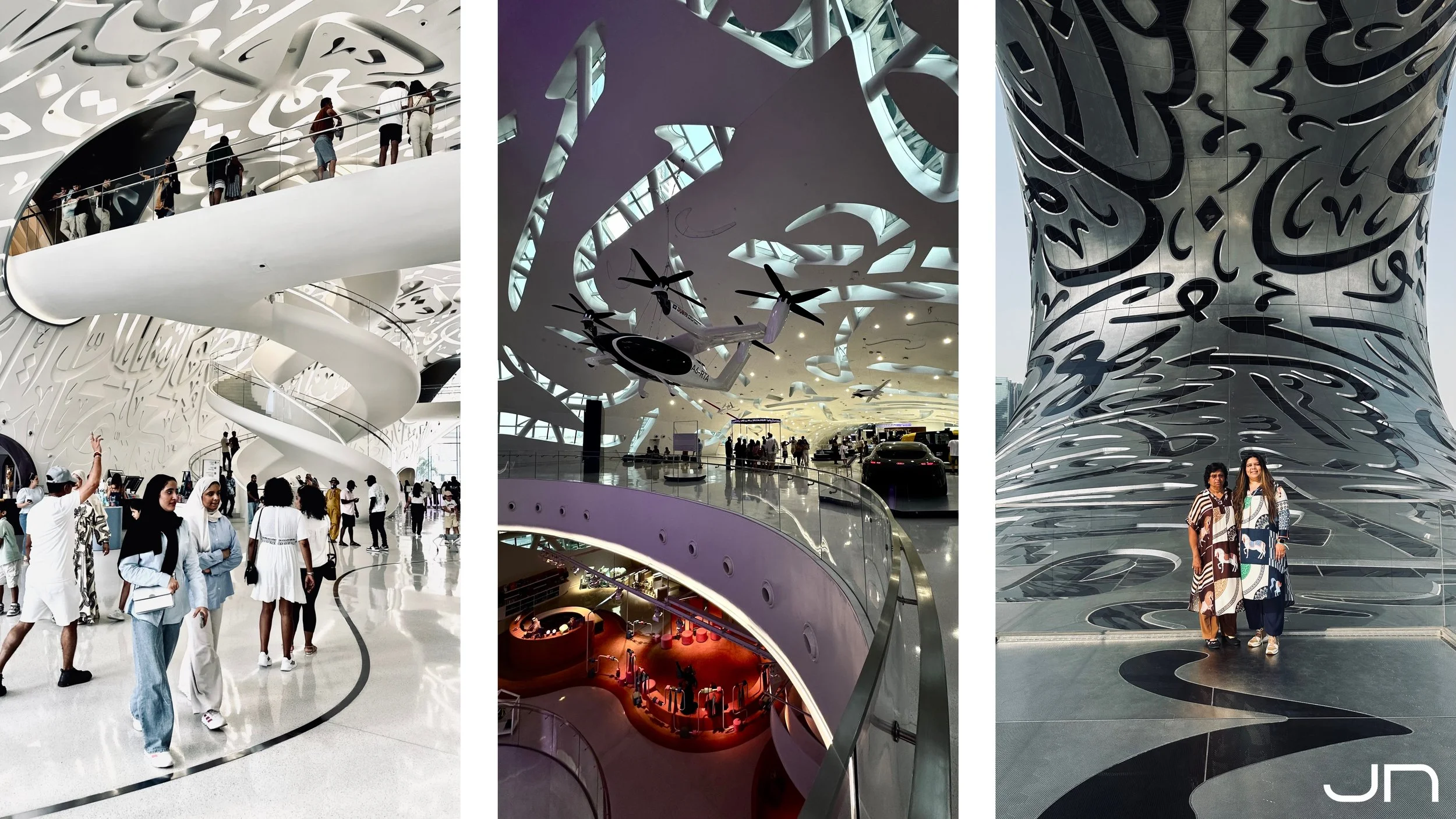
TEXT AS TEXTURE. LIGHT AS DIALOGUE.
Tactile Tuesdays | The Tactile Poetry of the Museum of the Future.
The Museum of the Future in Dubai stands as a paradox — at once monumental and weightless, solid yet fluid. Its torus-like form, sheathed in polished stainless steel, mirrors the shifting desert sky. What appears as permanence reveals itself to be constantly in dialogue with light, reflection, and time.
Text as Texture
The façade’s flowing Arabic calligraphy transforms written language into architectural matter. Cut through the steel skin, each stroke forms a physical incision, giving words a tangible depth. This is text as texture — script that becomes surface. The calligraphy doesn’t just decorate the building; it defines its material presence. The words are no longer flat symbols on a page — they are architectural, tactile, inhabiting the skin of the structure. Each curve and line rises from the surface like embossed language, transforming script into material.
In daylight, the façade reads like a metallic membrane. The glazed calligraphy appears opaque in the desert sun but casts soft shadows across the curvature of the interior volume, changing subtly as the sun moves. This interplay of light and shadow turns the surface into a living, breathing material — one that blurs the boundaries between inscription and construction, ornament and structure.
The façade becomes an interface between body and meaning, inviting us to imagine what it might feel like to trace a finger across its cool metal surface, following the rhythm of words as though they were woven into fabric. But the shift from reading the calligraphy on the exterior to sensing the atmosphere created on the interior makes the building more than an object of sight. Here, text does not merely communicate — it embodies.
The Ephemeral Museum
Inside, the experience continues in this tension between the tangible and the intangible. Light filters through the calligraphic openings, scattering patterns that move gently across interior walls. The result is a space defined as much by lightness as by material — an architecture that aspires toward the immaterial while remaining rooted in form.
The Museum of the Future captures a rare balance: a building made of the heaviest of materials — metal, glass, concrete — yet one that feels as though it could dissolve into light at any moment. It reminds us that the essence of architecture is not only in what is built, but in what is felt — in the fleeting moments when surface, light, and air converge to create atmosphere.
Here, materiality and ephemerality coexist. The steel skin may endure, but its meaning is in constant motion — rewritten each day by the desert sun and re-illuminated each night by light’s quiet conversation with form.
Lighting as Dialogue
As night falls, light slips into the carved calligraphy, transforming the building from an object of reflection into one of revelation. Embedded LEDs trace the script from within, making each word glow softly against the dark sky. In this moment, light becomes a dialogue — not merely illumination, but communication.
It is as if the building begins to speak through its own skin. The glowing script recasts the metal’s rigidity into something ephemeral, weightless. Architecture, often thought of as static and permanent, becomes transient, responsive — alive to the rhythms of dusk and atmosphere.
If the calligraphy is texture by day, by night it becomes dialogue. Light embedded within the strokes animates the words, turning them into luminous sentences that float across the building’s curved body.
This interplay of illumination and shadow creates a conversation: between inside and outside, between viewer and surface, between word and world. The glowing script is not static; it pulses with atmosphere, altering how the building feels as the desert sun sets and the night takes hold.
In this way, the Museum of the Future reminds us that light in architecture is never neutral. It can act as a voice — not just revealing form, but giving it expression. When the façade speaks through light, it is not only decoration, but narrative, presence, and mood.
Atmosphere Beyond Sight
The genius of this building lies in how it extends architecture beyond visual spectacle. Words, normally confined to pages or screens, are lifted into three-dimensional space; light, normally an afterthought, becomes an active participant. Together, they create a sensory atmosphere that is at once physical and poetic.
The result is a building that doesn’t just house exhibitions about the future — it embodies a vision of what architecture itself can be: a place where texture and dialogue replace silence, and where language and light shape not only what we see, but how we feel.
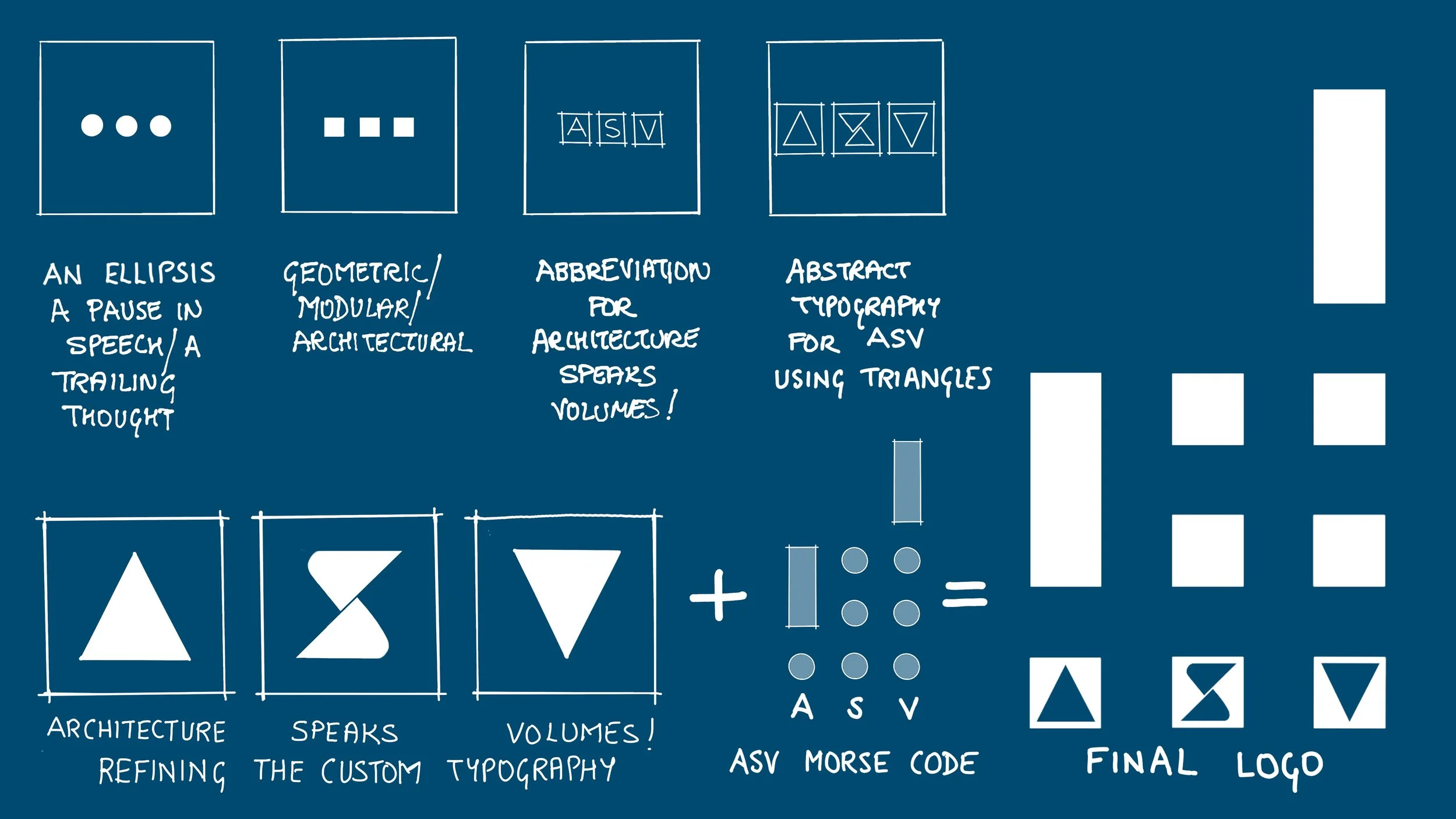
Idea to Identity
Mark Mondays | The Birth of the ASV Mark - The Logo Speaks
Every identity begins with a mark.
Before a brand, before a website, before even a name finds its full expression — there is a moment of pause where meaning seeks form. That was the beginning of Architecture Speaks Volumes.
When I first began to imagine the visual identity of ASV, I knew it had to do more than look appealing — it had to speak. The word “speaks” itself became my starting point, a conceptual key that unlocked everything that followed.
From Ellipsis to Architecture
Language often finds its pauses in the ellipsis — three dots suspended in continuity, holding the promise of something more to be said. That sense of continuation resonated deeply with me. Architecture, too, speaks in continuities: between material and memory, between structure and story.
So I began with three dots. Simple. Symbolic. A visual echo of speech waiting to unfold.
But as the design evolved, those dots took on form — transforming into three squares that could hold space, volume, and structure. Within each square, I began constructing the abbreviation A S V using triangles — the most elemental architectural form, the basis of strength and stability.
It was a small but significant shift — from punctuation to geometry, from language to architecture.
When Language Becomes Code
As I continued to refine the mark, I found myself drawn to the rhythm of Morse code — a system of dots and dashes that translates thought into signal. It was an elegant metaphor for communication itself: invisible, coded, yet universal.
Through Morse, I could abstract “A S V” into a vertical arrangement that merged my studio’s name with my own initials — embedding personal and professional identity into a singular architectural form.
The result resembled volume bars, rising and falling like waves of sound or the skyline of a city. It felt right — Architecture speaking volumes, visually and conceptually.
The Blueprint of an Idea
The final decision was color. I wanted the logo to evoke origins — not the polished finish of a completed project, but the process of design. The chosen hue, a deep blueprint blue, grounds the mark in the world of architecture: sketches, drafts, ideas, and construction lines.
Blueprints, after all, are not just technical documents. They are promises of something to come — much like an ellipsis, still unfolding.
More Than a Logo
In the end, the ASV mark is more than a logo. It’s a distilled conversation between language and form, speech and structure, identity and architecture.
It began as a whisper — three dots on a page.
It now stands as a statement — Architecture Speaks Volumes.
Closing Note
Every Mark Monday in the Atelier Diaries will return to this idea — how a mark, whether drawn, designed, or built, becomes the first word in a larger dialogue between vision and space.
JAPAN, 2011 - AND THE ECHO I FEEL TO THIS DAY
Story Sundays | When memory, myth, and the ground beneath us converge.
When memory, myth, and the ground beneath us converge
Some memories are so visceral, they never leave the body. They live in the bones, in the breath, in the quiet moments before something shifts again.
On March 11, 2011, I was in Tokyo, walking temple grounds just before the Sakura Festival. The air was cool, expectant—cherry blossoms just beginning to stir in their buds. White tents dotted the paths between wooden towers and shrines, vendors preparing their wares for the coming season of celebration. I had just made a purchase and was stepping into one of those tents to collect my item when the ground began to move.
At first, I thought it was a chariot passing by. That’s how smooth the rumble was at the start—low, rolling, like a procession approaching. But then I saw the expression on the vendor’s face. He looked at me, eyes wide, mouth slightly open. He didn’t speak English, but fear needs no translation. He motioned for me to step out of the tent. I did.
And that’s when it hit.
The Ground Moved Like Water
The towering wooden structures of the temple began to sway—elegantly, rhythmically, and terrifyingly, like trees in a storm. Their bells rang, not from any human hand, but from the sheer violence of the earth shifting beneath us.
People emerged from the tents, silent. Phones in hand, they began recording, not out of detachment but perhaps as a way of witnessing, of proving: yes, this is happening. No one was running. But we were all holding on—some to railings, some to one another. The earth felt like a boat at sea, rocking without rhythm, refusing to settle.
We couldn’t stand still. The tremors went on and on. And through it all, I kept thinking: This shouldn’t be happening. But it was.
July 5th, 2025
I woke to headlines about a manga artist’s prediction—a tsunami, forecast for today. It stirred something I hadn’t felt in a long time. Not fear exactly, but an echo. A bodily memory. The uneasy stillness before a wave.
There may be nothing to it. A prediction. A coincidence. A media cycle feeding on myth. But something about the prediction won’t let go of me.
I find myself back in Tokyo, standing beneath those temple towers, watching them bend but not break. I remember the way beauty and terror coexisted—bells ringing over fear, spring blossoms refusing to pause their bloom.
The Architecture of Memory
I founded Architecture Speaks Volumes not just because I love buildings or design. I founded it because I believe space carries memory. Because architecture is not just structure—it’s story. And some stories shake us. Some never stop reverberating.
That earthquake changed how I understood space. It taught me that permanence is an illusion, and that even sacred ground can move. But it also taught me the resilience of stillness. The steadiness in strangers. The way culture, craft, and human connection hold us up—when the earth won’t.
If July 5th Felt Strange to You Too…
…you’re not alone.
Maybe it’s the power of suggestion. Or maybe we’re just more tuned in than we think. But whether anything happens today or not, I’m remembering what it’s like to stand in the middle of still-moving ground and feel time split in two: before and after.
This post is just one piece of a larger memoir I’m writing—a story of place, loss, stillness, and what came next.
Thank you for reading. For remembering. For standing still with me.
With care,
Janice Ninan
Founder | Creative Director
Architecture Speaks Volumes
📖 A memoir-in-progress, unfolding in chapters here.
✉️ Subscribe to be the first to read the next piece.
Birthing a Design Practice with Many Voices
Studio Saturdays | Janice’s vision for Architecture Speaks Volumes
It didn’t begin with a business plan.
It began with a feeling.
A quiet realization that the work I wanted to do — the architecture I wanted to practice — wouldn’t quite fit into the molds that already existed. I wasn’t just trying to start a firm. I was trying to build something that could carry more than drawings and deadlines. I wanted to create a design practice that could speak in multiple voices — through space, through story, through objects — and still feel like one clear, resonant truth.
This is how Architecture Speaks Volumes was born.
Listening for a New Kind of Practice
As a trained architect, I’ve spent years learning how to think spatially — how to listen to a site, a material, a brief. But what school never quite teaches you is how to listen to yourself, or how to design a life that feels as intentional as the buildings you create.
I began to sense that I wanted more than project cycles and client calls. I wanted a practice that could carry personal memory, cultural complexity, and emotional resonance. I wanted space to write, to reflect, to share. I wanted a studio where slow design, sensory experience, and story were just as central as structure and form.
That’s where the weaving began — between design thinking, entrepreneurship, and personal storytelling.
Scaling with Intention
Too often, the idea of “scaling” a business is reduced to growth for growth’s sake — more clients, bigger teams, higher fees. But for me, scaling meant deepening, not just expanding.
That’s why I structured Architecture Speaks Volumes as a practice with multiple distinct but connected voices:
• The ASV Atelier: My design studio — where I work on design projects grounded in slowness, care, and material storytelling.
• The ASV Edit: A boutique for designed objects, scarves, and photographs — each item an archive of memory and meaning.
• ASV blogs & Podcasts: A space for memoir, design writing, and reflections — where I can explore the edges of architecture, culture, and emotion.
Each branch is its own channel, but together, they speak to a shared belief: that architecture is not just built — it is felt, remembered, experienced and expressed.
The Need for Multiple Streams — Not Just for Profit
In today’s world, many of us are waking up to the fact that a single stream of income is no longer sustainable — especially for creatives. But I didn’t create The ASV Edit just to diversify revenue. I created it to give form to ideas that couldn’t live inside floor plans.
Sometimes a scarf carries more meaning than a structure. Sometimes a photograph captures more memory than a model. The boutique allows me to share fragments of my design language in tactile, intimate ways. It also invites those who may never commission a building to still be part of this story — to wear, hold, or gift a piece of the practice.
In this way, income and impact become intertwined. Not in a transactional sense, but in a meaningful exchange of value and vision.
Building a Community that Listens
The real reason I built ASV in this way — across multiple modes — is because I didn’t want to simply launch a brand. I wanted to build a community.
A community of thinkers, feelers, makers, and quiet rebels. People who believe that the built environment is never neutral. People who notice the curve of a stair, the softness of a wall, the stillness in a courtyard. People who understand that architecture is never just structure — it is memory, language, and care.
I write for them. I design for them. I edit for them.
And I share my stories — including the difficult ones — because I believe that vulnerability is part of architecture too. We build from who we are.
In Closing: Architecture Speaks Volumes
What does it mean to birth a design practice in this moment?
For me, it means resisting narrow definitions. It means allowing architecture to speak through drawings, yes — but also through short film, curated objects, essays, poems, materiality, vision and small moments of shared wonder. It means embracing the many voices that live inside me — the architect, the writer, the daughter, the wife,the witness — and letting them all have a place in the room.
Because I still believe that architecture speaks.
And if we listen carefully enough,
it speaks volumes.