
THE ASV BLOG
— by JANICE NINAN

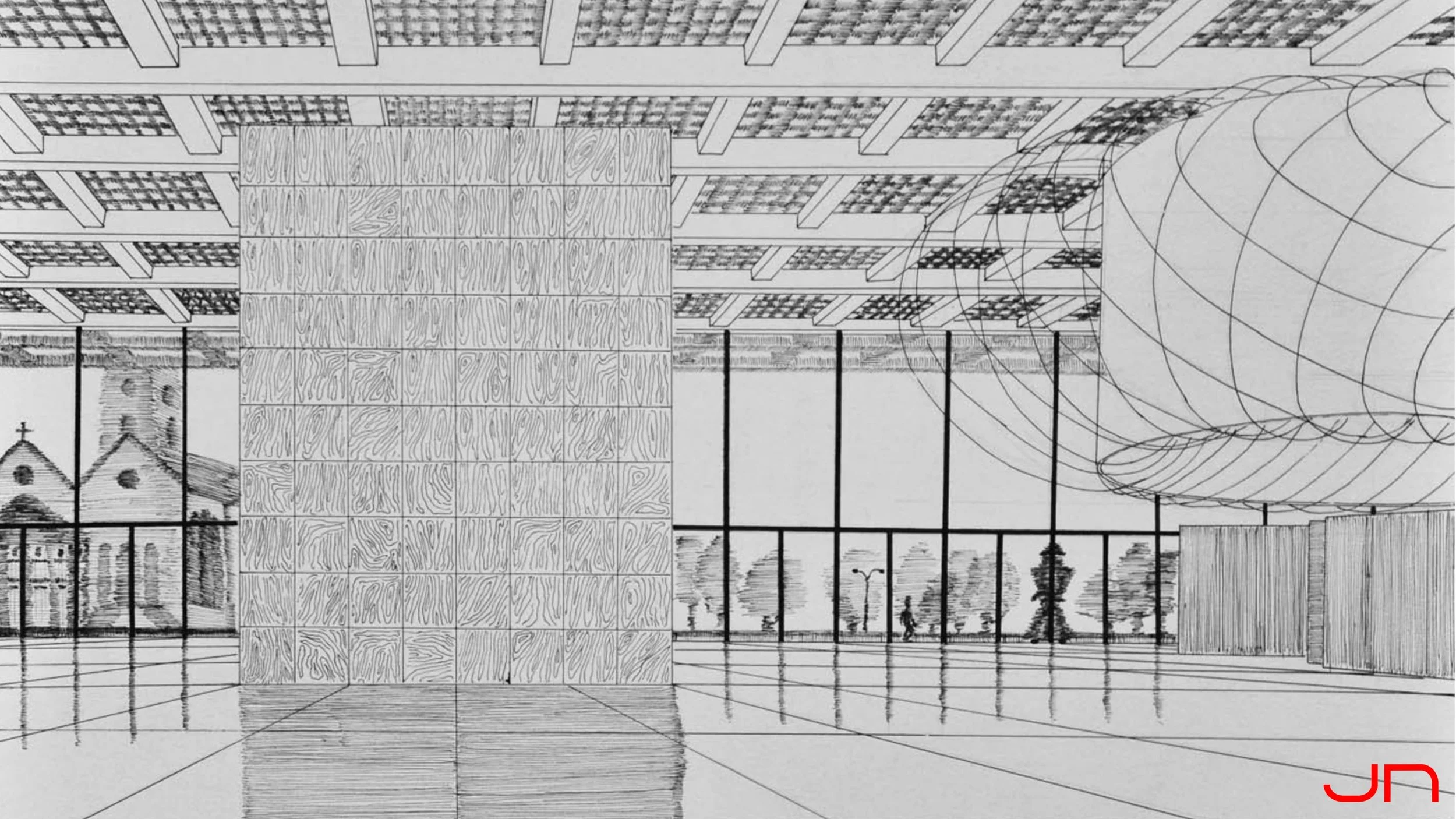
THE ARCHITECT’S MARK
Mark Mondays | Seeing, Thinking and Sketching by hand
There are tools that help us design, and then there are tools that shape the way we think.
For architects, the simplest and most sacred of these is the hand-drawn line.
We live in a world where software is fast, AI is accelerating, and entire buildings can be modeled before a pencil ever touches paper. It’s efficient, powerful, and essential. But in this rush toward the digital, something quieter—but foundational—is slipping away:
The art of hand-marking.
That first intuitive gesture on a page.
That quick, imperfect line that reveals how you see.
That moment where thought and hand move at the same speed.
Hand-marking is not nostalgia. It’s literacy.
Why the Hand Still Matters in an AI World
Ask any architect you admire: long before their projects became icons, their ideas lived as tiny marks inside sketchbooks. Those marks trained their eyes, their instincts, their sense of proportion and space.
Hand-marking does three critical things no software can replace:
1. It strengthens perception.
A freehand sketch forces you to truly see—shadow, proportion, void, rhythm, balance.
Your hand becomes an extension of your eye.
2. It sharpens decision-making.
A line has direction. A gesture has intent.
You learn to commit, adjust, refine—developing confidence with each mark.
3. It slows the mind down just enough.
In architecture, slowness is not inefficiency.
Slowness is discernment.
A chance to absorb, understand, and interpret space with clarity.
Hand-marking is less about the drawing itself and more about the designer it builds.
Europe, Sketchbooks, and the Practice of Seeing
During my Europe study abroad program, I filled entire sketchbooks with drawings. Churches, courtyards, narrow streets, fragments of facades—each captured quickly, quietly, instinctively.
I wasn’t trying to make them perfect.
I was trying to make them true.
Those sketches taught me more about architecture than hours of lectures:
The weight of stone in a Romanesque arch.
The rhythm of a colonnade in Florence.
The way morning light slides across a Berlin facade.
The humility of a doorway in a small German town.
The pause before stepping into a public square.
Travel sharpened my senses, but sketching trained my mind to hold onto the moments that mattered.
Looking back, those drawings were not souvenirs.
They were exercises in presence—my earliest “instruments of service.”
Why Architects Must Keep Hand-Marking Alive
We risk losing something vital if we stop teaching young architects how to draw by hand—not for beauty, but for clarity.
Hand-marking:
• reconnects architects to the fundamentals of space
• anchors the design process in observation rather than shortcuts
• strengthens the connection between imagination and articulation
• makes ideas personal, embodied, and human
A hand-drawn line carries intention, memory, and emotion.
It carries you.
Digital tools make us efficient.
Hand-marking makes us authors.
Both are needed.
But only one builds the quiet confidence of knowing that your mind, hand, and eye are in conversation.
The Mark as Threshold
Every sketch—no matter how small—marks a threshold.
A moment where something unseen becomes possible.
A spark of an idea becoming form.
Keeping the art of hand-marking alive is not a sentimental act.
It’s a commitment to the craft, the discipline, and the way architects learn to think.
In a future shaped by screens, the soul of architecture may still be shaped by the hand.
So on this Mark Monday, here’s an invitation:
Pick up a pen. Make a mark.
Draw what you see. Draw what you feel.
Draw—not to impress, but to understand.
Your hand still remembers how to see.
Let it speak.
Atelier DIARIES 001 - THE FIRST MARK
Mark Mondays | A quiet beginning. A rhythm set in motion.
A line on paper can hold weight — the suggestion of a wall, a threshold, a beginning.
This diary begins with such a line.
A Practice of Noticing
Atelier Diaries is my monthly ritual — a week of creative entries shared from inside my studio, beginning on the first Monday of every month.
Seven days. Seven creative gestures.
Each one a way of noticing what surrounds me — and what moves through me — in the act of making.
It’s a way of shaping my creative practice.
A rhythm I can return to.
A living record of my process — marks, materials, memories, meanings.
Why I Started This
We live with a constant need for speed.
Fast content, fast commentary, fast consumption.
But architecture — and creativity — aren’t built that way.
They need stillness.
They need time.
So I made a structure to hold that time.
A scaffold for attention.
Atelier Diaries is how I remember to slow down.
To shape, not just produce.
To process, not just present.
The Shape of the Week
Each month, beginning on the first Monday, I post seven entries — one per day. Each post builds on the facets of a creative practice :
• Mark Monday — gesture marks a beginning
• Tactile Tuesday — the body of memory
• WIP Wednesday — process over polish
• Threshold Thursday — liminal moments
• Feature Friday — finding a voice
• Studio Saturday — the work behind the work
• Story Sunday — the quest for meaning
Together, these entries become a visual zine of sorts.
A sketchbook.
A diary in blueprint.
Atelier Diaries 001: The first mark.
The first issue is an invitation.
A soft landing.
A pause before movement.
I don’t expect this series to explain anything. Only to offer a way of looking — and being — a quiet glimpse into my creative process.
Atelier Diaries is not chronological. Its intuitive.
This first mark is both literal and symbolic.
A gesture toward a slower practice.
This diary is how I strive to stay connected to the core of my work —
the part that doesn’t rush.
The part that listens.
If you are curious - Join the Rhythm
View the full series on Instagram → @architecturespeaksvolumes
Or subscribe to my newsletter receive a new studio diary each month.
A new diary begins the first Monday of every month.
I hope you’ll follow along or return to the diary when you need a slower moment.
Until then, I leave you with this:
Which day of the week speaks to you this month?
I’d love to know.
Leave me a comment on instagram → @architecturespeaksvolumes
Architecture Speaks Volumes
August 2025