
THE ASV BLOG
— by JANICE NINAN

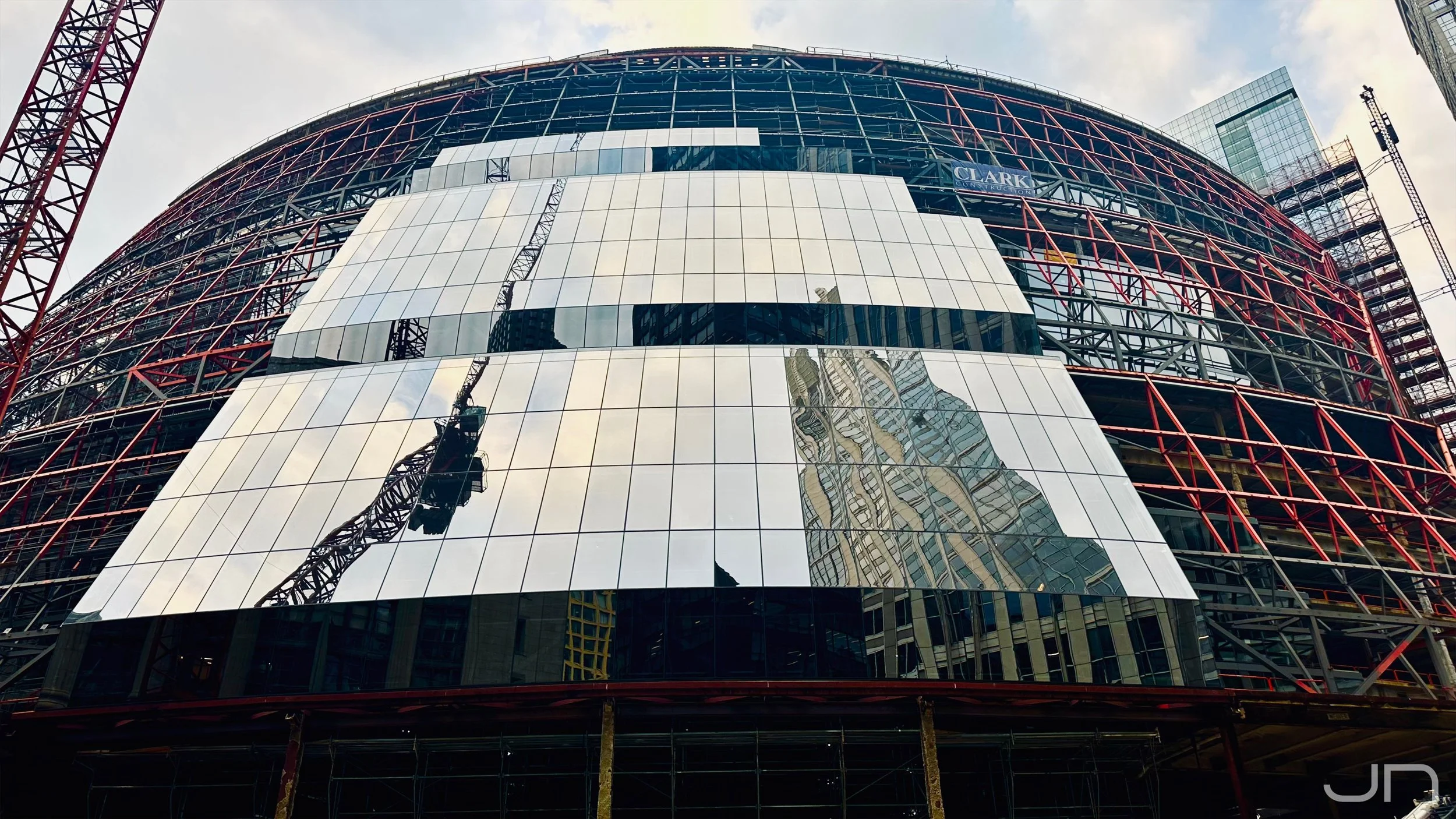
A NEW SKIN FOR A POSTMODERN ICON
WIP Wednesdays | Watching the Thompson Center’s Evolution
The James R. Thompson Center in Chicago has always been a bold statement in postmodern architecture. Designed by Helmut Jahn and completed in 1985, the building is known for its vast atrium, curved glass façade, and futuristic ambition. Now, decades later, it’s undergoing a dramatic transformation — not just as a renovation, but as a reinvention.
The Transition
When Google purchased the building, the future of the Thompson Center shifted. No longer just a government hub, it’s being reimagined as a workplace for one of the world’s most innovative companies. This shift reflects larger conversations in architecture: adaptive reuse, sustainability, and the challenge of preserving iconic design while updating it for modern use.
Façade Work in Progress
Standing outside the site today, you can literally see the building shedding its old skin. Panels of the glass façade are being carefully removed, replaced, and prepared for an upgraded envelope that will improve energy efficiency while maintaining the building’s recognizable form. The mirrored glass that once symbolized transparency and openness is giving way to a refreshed vision of the future.
Jahn’s Legacy in Dialogue
The renovation is being overseen by Jahn, the architectural firm founded by the late Helmut Jahn himself. This creates a fascinating dialogue: the original designer’s vision is now being interpreted and updated by the very studio he established. It’s less about erasing history and more about writing a new chapter with respect to its origin.
Reflections
Watching this work-in-progress, I’m reminded that buildings, like cities, are never static. The Thompson Center is not disappearing — it’s evolving. Its story of transformation mirrors Chicago’s own spirit: bold, experimental, and always forward-looking.
Closing
I’ll be following this renovation closely and documenting its changes as part of my WIP Wednesday series. What do you think — should iconic buildings be preserved as-is, or reimagined to fit new lives and uses? Leave your comments below.