
THE ASV BLOG
— by JANICE NINAN

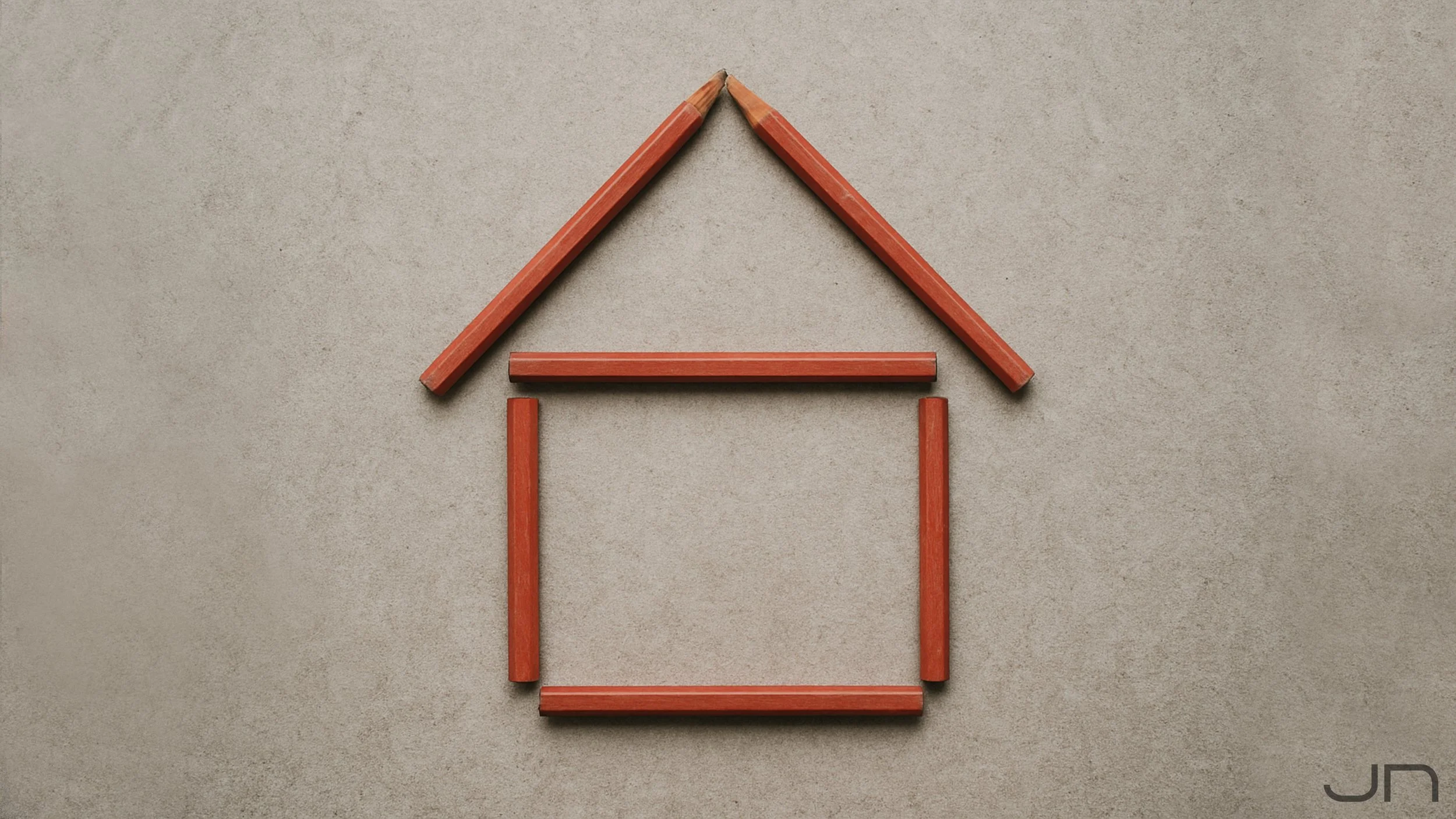
MATERIALITY OF A BUILDING IS CODE, TOO
Tactile Tuesdays | On durability, disaster, and why material choices of core and shell matter.
We often think of code in architecture as something abstract — a checklist of fire ratings, egress paths, and accessibility clearances.
But there’s another kind of code, one that speaks directly to the body, the land, and the climate: material.
Material is code, too.
And it’s time we start treating it that way.
What Are We Really Building For?
Architects are taught that our foremost responsibility is to ensure the health, safety, and welfare of the public.
It’s written into building codes, ethics guidelines, and design handbooks.
But I keep coming back to a deeper question:
What are we really building for — and for how long?
As flash floods, hurricanes, wildfires, and rising tides disrupt lives across the U.S., I’m struck by the disconnect between our codes and our materials.
Why do we speak of resilience in abstract terms while continuing to build with wood studs and gypsum board in regions repeatedly devastated by water, wind, or fire?
We wouldn’t accept seat belts made of cardboard in our cars.
So why are we okay with homes that buckle under the same storms that return every decade?
Materiality of a Home
A structure’s core and shell — its bones and skin — aren’t just aesthetic or budget-driven decisions. They are life-safety choices.
They determine whether a space survives, breathes, protects, or collapses. They define thermal comfort, structural integrity, water resistance, and even emotional security in times of crisis.
When flash floods drown neighborhoods, when hurricanes strip roofs to rafters, when wildfires turn towns to ash — the material story becomes painfully clear:
wood frame construction simply isn’t enough anymore.
Not in coastal zones. Not in floodplains. Not in wildfire belts.
Durability Is Safety
In architecture school, we often talk about “100-year buildings” — structures that stand the test of time both physically and culturally.
Yet this mindset rarely extends to the everyday home.
In the U.S., the dominant model for residential construction remains light wood framing — fast, inexpensive, and standardized.
But it’s also vulnerable.
To rot. To termites. To wind shear. To fire. To time.
Not all wood, however, performs the same way.
Heavy timber construction — using large, solid wood members like columns and beams — tells a different story.
When exposed to flames, its outer layer chars, forming a protective barrier that insulates the core. This slow, predictable burn rate means the structural core often remains intact far longer than steel, which can lose strength rapidly under heat.
Beyond fire, heavy timber offers mass, thermal stability, and longevity. Its volume resists warping, absorbs and releases moisture gradually, and regulates interior temperature through natural insulation. It’s a material that breathes with its environment — and ages gracefully within it.
Light-frame homes may meet code, but they don’t necessarily meet the moment — a moment defined by climate volatility and recurring disaster.
Durable materials — whether reinforced concrete, precast panels, masonry, structural steel, or heavy timber — have long been proven in seismic zones, flood-prone regions, and dense urban cores.
The question is not whether they work, but why we aren’t using them more widely, especially in housing where the stakes are personal and perpetual.
The Cost Question
The answer, of course, is cost — or at least, perceived cost.
Wood framing is cheap to install, fast to assemble, and deeply embedded in American building culture. Developers prioritize margins. Municipalities prioritize code minimums. And homeowners often don’t know what questions to ask.
But initial cost shouldn’t be the only metric.
What about life cycle value?
What about the cost of rebuilding, again and again, after every storm season?
Yes, concrete emits carbon.
But so does rebuilding entire subdivisions every time a hurricane levels stick-built homes.
Shouldn’t we be calculating the environmental cost of repeated loss?
Is “cheap” construction really affordable if it has to be replaced every decade?
Code Is Not Enough
Building code should be the floor — not the ceiling.
It tells us what we’re allowed to do, not what we ought to do.
The climate is changing.
Our material habits must evolve with it.
As architects and designers, we are responsible not just for meeting code, but for reading context — climate, geography, time, and memory.
And in the face of rising sea levels, record-breaking heat waves, and billion-dollar weather disasters, material choices are no longer aesthetic or economic preferences.
They are ethical decisions.
What if we began to treat materiality as a civic duty?
What if we honored the land by building for its cycles — not against them?
Building for Generations
We admire centuries-old structures for their endurance — their ability to stand as testaments to both material and cultural longevity.
We must start holding our homes to the same standard.
If we value sustainability, care, and cultural continuity, our buildings should be designed not for the duration of a mortgage, but for generations.
Because every material we choose doesn’t just support a structure —
It tells a story.
It carries memory.
Durable homes are sustainable homes.
They are safer, more equitable, and more resilient homes.
They speak to a future that values care over convenience.
So What Can We Do?
As architects, designers, and citizens:
🚩 Advocate for stronger material standards in vulnerable zones.
🚩 Educate clients about the long-term value of durable construction.
🚩 Question when “value engineering” starts to mean “short-term thinking.”
🚩 Design for repair, not just replacement.
Let’s Build Like the Land Matters
Architecture Speaks Volumes is founded on the belief that design is not just shelter — it’s storytelling.
It holds memory, intention, and presence.
When we choose materials with integrity — when we design with durability, context, and care — we’re not just protecting buildings.
We’re protecting lives.
We’re protecting the stories those lives carry.
Let’s build with care.
Let’s build with memory.
Let’s build like the land matters.
Because material is code, too.
And we have the tools to choose better.
THE PLEIN AIR STUDIO
Studio Saturdays | Architecture lessons from Travel.
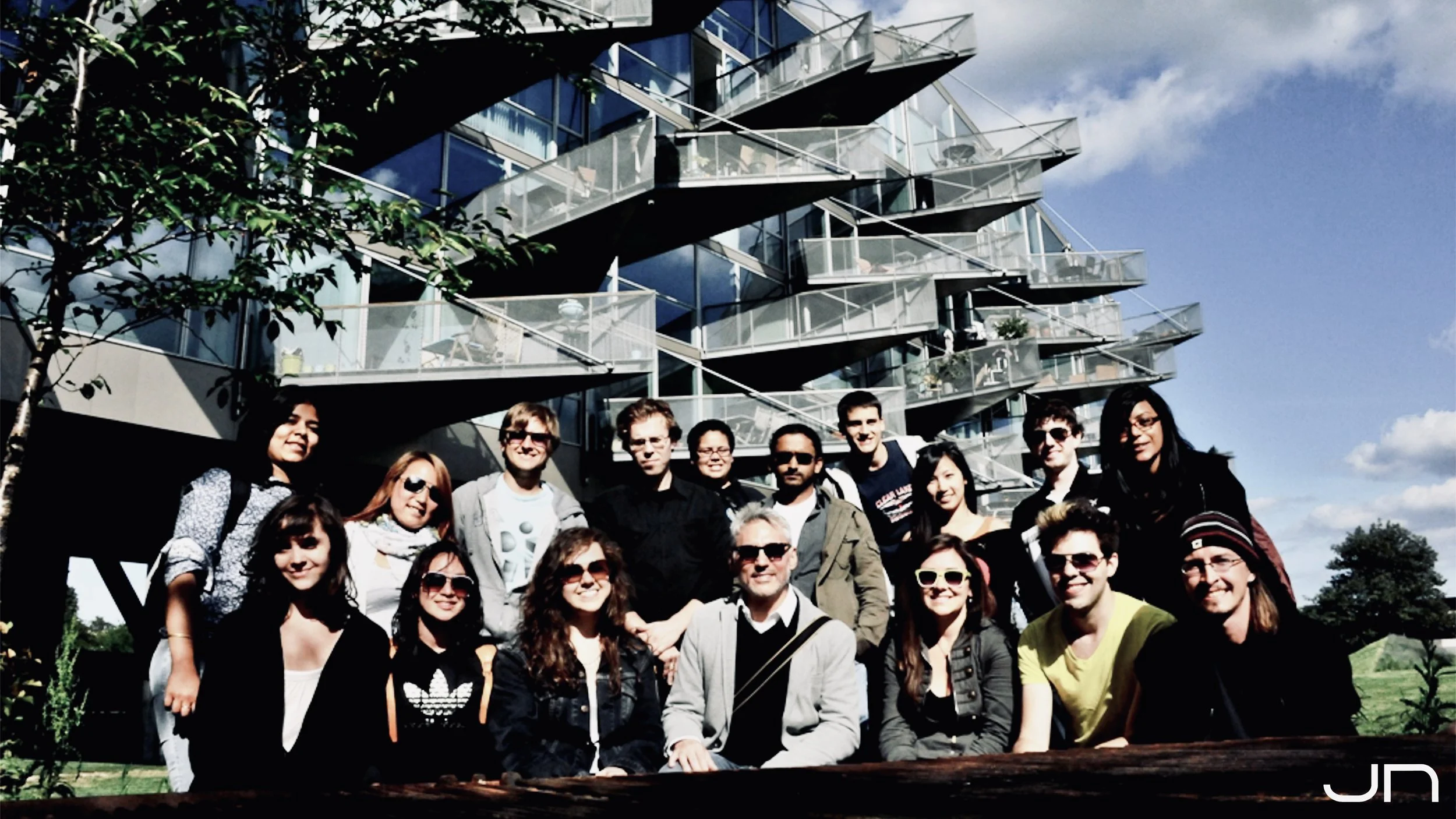
For architecture students, the city is the most profound classroom. Its buildings, streets, and public spaces hold lessons no model or textbook can fully capture. This is why traveling studios and study abroad programs are so transformative—they immerse us in both the artistry and the mechanics of design, while teaching us to read the architecture that speaks volumes.
Drawing as a Way of Reading
In my European travel studio, one of our courses was devoted entirely to sketching. Armed with pencils, ink, charcoal, pastel, and watercolors, we spent our days on site, translating cities into marks on paper. Each medium became a different voice: the precision of ink, the softness of charcoal, the immediacy of watercolor.
Sketching trained us to read architecture like a text—the rhythm of windows, the weight of stone, the cadence of light across a façade. Each line became a sentence; each shadow, a paragraph. To sketch was to enter into dialogue with buildings, to discover how architecture speaks if we slow down enough to listen.
Technology as Translation
Running parallel to sketching, our second course explored building technologies. Here, we learned to decode the structural and material systems behind the spaces we admired: masonry vaults, thermal mass, glazing, spans. If sketching taught us to hear the poetry, technology revealed the grammar—the framework that makes meaning possible.
This dual focus—art and science, hand and detail—reminded us that architecture is both language and logic, expression and execution.
Learning in Context
The studio experience extended beyond coursework. Traveling together through unfamiliar cities, we learned collaboration in its most organic form: critiquing sketches at café tables, passing charcoal across a piazza, or discussing systems and spans on a train ride between stops. Each city became a new chapter to interpret, each sketchbook page a translation of what we saw and felt.
Why It Endures
Traveling studios teach us that architecture is not abstract—it is lived narrative. To sketch by hand is to hear its voice; to study technologies is to understand how that voice is carried. Together, these courses revealed that the built environment is never silent. If you know how to look, every building, every street, every material speaks.
When I look back at our final presentation—a plethora of mixed media sketches distilled from weeks of travel—I see more than drawings. I see the first attempts at fluency in the very language that defines my practice: Architecture Speaks Volumes.
A Call to Future Architects
If the chance comes to join a traveling studio, take it. You will return not only with a sketchbook and technical knowledge, but with the ability to read architecture as text, as voice, as memory.
Because architecture does not whisper. Architecture Speaks Volumes.