
THE ASV BLOG
— by JANICE NINAN

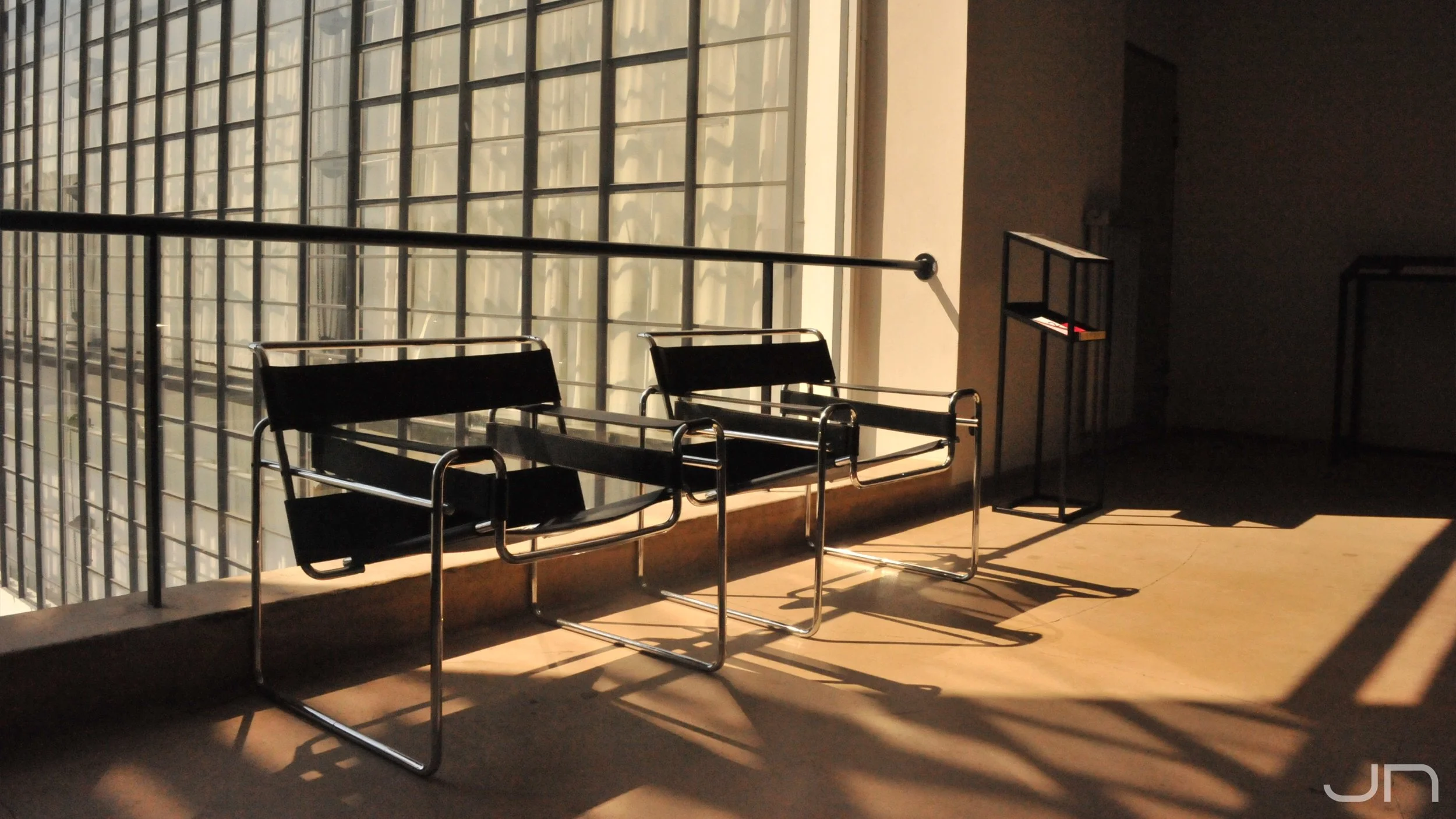
STEEL, SHADOWS AND SILENCE
Feature Fridays | A Moment with the Wassily Chair at Bauhaus Dessau
I graduated from IIT Chicago, where I spent three formative years studying inside S.R. Crown Hall, a temple of steel and glass designed by Ludwig Mies van der Rohe. I didn’t realize it then, but spending that much time within such disciplined space — stripped to its essence — would shape how I move through the world, how I see, and how I design.
In my final semester, I joined a month-long study abroad program across Europe in 2011. One of our stops was Bauhaus Dessau, the birthplace of an ideology — the Bauhaus movement — that would ripple through time, continents, and cities like Chicago. It was there that I encountered, in person, an icon I had only known through books: the Wassily Chair by Marcel Breuer.
⸻
Seeing the Chair in Its Element
The moment was quiet.
Afternoon light slanted through the glass block wall, casting soft, diffused shadows across the concrete floor. There, against the rhythm of translucent geometry, sat the Wassily Chair — lean, self-contained, unapologetically modern.
It didn’t ask for attention. It simply was.
Its tubular steel frame, its taut leather straps — all so precise, so resolved. Designed in 1925, this chair wasn’t trying to be beautiful in a traditional sense. It was built to be logical. And in that logic, it became something profound.
⸻
What Makes the Wassily Chair Significant?
The Wassily Chair — originally known as the Model B3 — was designed by Marcel Breuer while he was at the Bauhaus. He was inspired by the frame of a bicycle, captivated by the possibilities of tubular steel, a material not yet used in residential furniture at the time.
Its significance lies in what it represents:
• Material Innovation: Breuer took an industrial material — chromium-plated steel tubing — and introduced it to domestic interiors. This was radical. The steel was strong, light, hygienic, and modern.
• Bauhaus Principles Embodied: The chair represents everything the Bauhaus stood for — honesty in materials, the merging of art and industry, and the pursuit of pure form and function. Nothing is decorative. Everything serves a purpose.
• Transparency + Structure: Unlike the heavy upholstered furniture of the past, the Wassily Chair feels almost like a line drawing in space. It’s open, it breathes. It frames the human body instead of engulfing it.
• Timeless Relevance: A century later, the chair still feels contemporary. It doesn’t age, because it’s not rooted in fashion — it’s rooted in intention.
Breuer later said: “I thought that perhaps I could design chairs that would be built on the same principle as bicycles.” That line has stayed with me. It reframes design as engineering, poetry, and vision — all at once.
⸻
From Dessau to Chicago, from Breuer to Mies
Standing in that room at Dessau, I was struck by the continuity. I had spent years immersed in Miesian clarity, working and sketching beneath the floating roof of Crown Hall. And here I was, at the source — surrounded by the work of Breuer, Gropius, Kandinsky — the very figures who laid the foundation that Mies would later refine and export.
The Wassily Chair felt like a kind of bridge.
It connected art to function, Europe to America, past to present, and material to idea. It reminded me that architecture doesn’t exist in isolation. It lives through objects, through spaces, through moments of stillness where design simply speaks.
⸻
What This Moment Taught Me
Design doesn’t have to shout to be powerful.
Sometimes, the most enduring work is the most restrained — the kind that’s been reduced to only what’s essential, nothing more. The Wassily Chair is not just a chair. It’s a manifesto in steel and leather. A quiet rebellion against ornament. A declaration that beauty can be engineered.
It’s the kind of object that asks you to look closer. To notice the way materials come together. To think about how things are made — and why.
That’s why this chair, this space, and this moment are my Feature Friday.
⸻
Photo taken at Bauhaus Dessau, Germany — 2011.
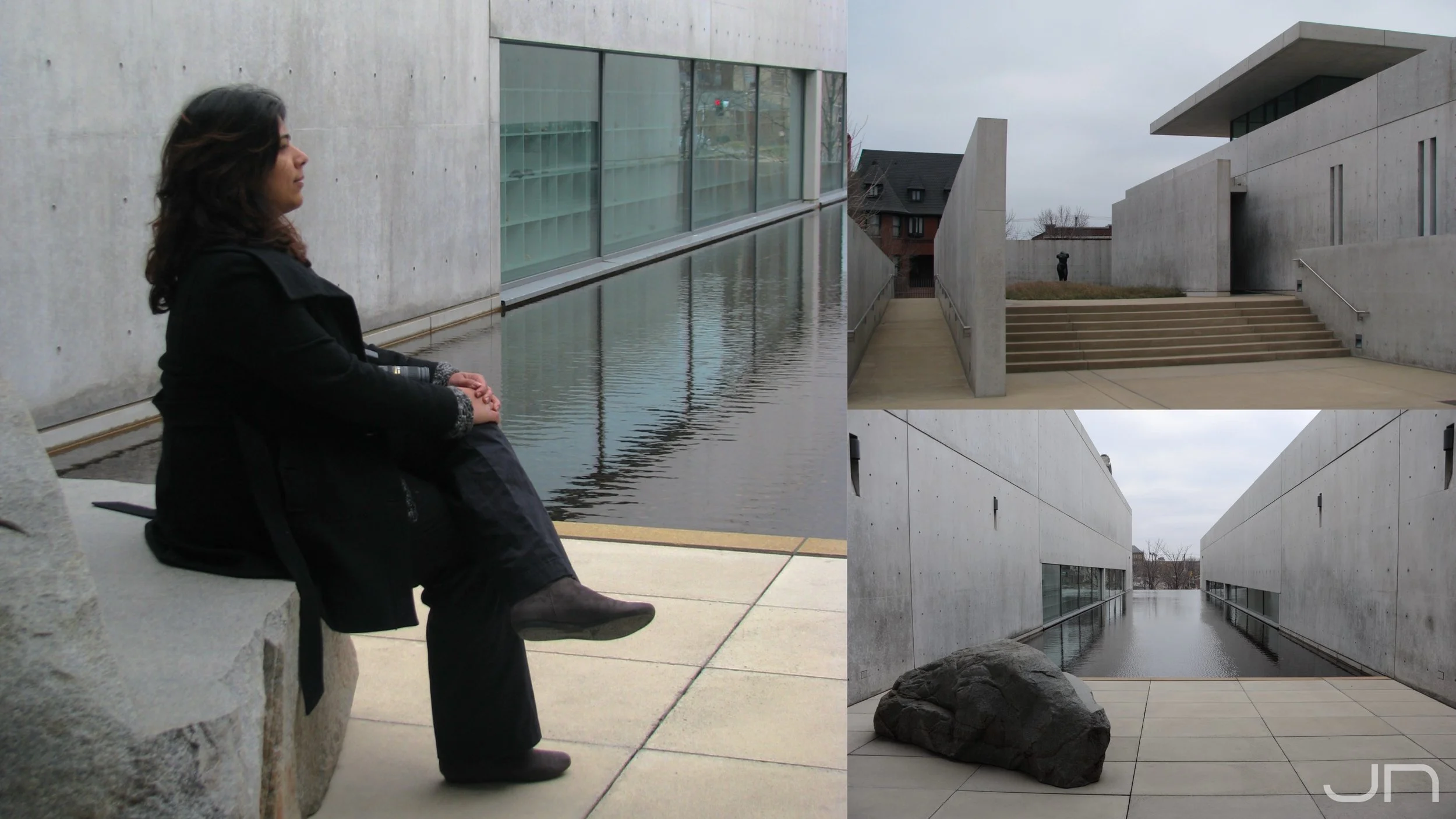
Concrete, Stilled: Tactile Encounters at the Pulitzer Foundation
Tactile Tuesdays | The Atelier Diaries
There are buildings that impress, and then there are buildings that quiet you. The Pulitzer Foundation for the Arts in St. Louis — designed by Tadao Ando — is the latter. I visited it not for spectacle, but for stillness. Ando gave me both.
The architecture doesn’t scream. It breathes. And its primary language is concrete.
The Weight of Silence
The moment I stepped inside, the world slowed. What struck me first wasn’t the form or function — it was the weight of the quiet. Ando’s concrete isn’t brutish or cold. It’s monastic. Still. Thoughtful.
Each ply-formed surface reads like a fossilized imprint of craft — a record of time, pressure, labor, and intention. The material holds memory in its grain. It receives light in a way that feels deeply human.
Concrete as Skin
This isn’t the concrete of parking garages and freeways. This is concrete made tactile — not to be touched, but to touch you.
In the Pulitzer’s galleries and corridors, the concrete walls glow under filtered daylight, their surfaces softened by shadow. The edges are precise, but the experience is sensory. I didn’t just see the concrete. I felt it in the way it held space.
It reminded me that materiality is not just a question of aesthetics or durability — it’s an emotional register. A medium of mood.
A Material Lesson
As a designer, I’m always looking for how materials speak. At the Pulitzer, the concrete didn’t shout. It whispered. It invited stillness. Reflection. Reverence.
Ando’s approach reaffirmed something I return to again and again in my own work: the power of restraint. That space doesn’t always need to explain itself. Sometimes, it just needs to hold you — gently, firmly, silently.
Closing Reflection
Tactile Tuesday is about more than surface. It’s about experience. And this one stayed with me.
“You don’t touch the concrete — not literally. But it touches you.”
— Architecture Speaks Volumes
Have you visited a space that made you feel something — not for how it looked, but how it held you? I’d love to hear.
Leave me a comment on instagram → @architecturespeaksvolumes