
THE ASV BLOG
— by JANICE NINAN
When Water Has Nowhere to Go
Texas Floods and the Urgency of Porous Design
Texas Floods and the Urgency of Porous Design
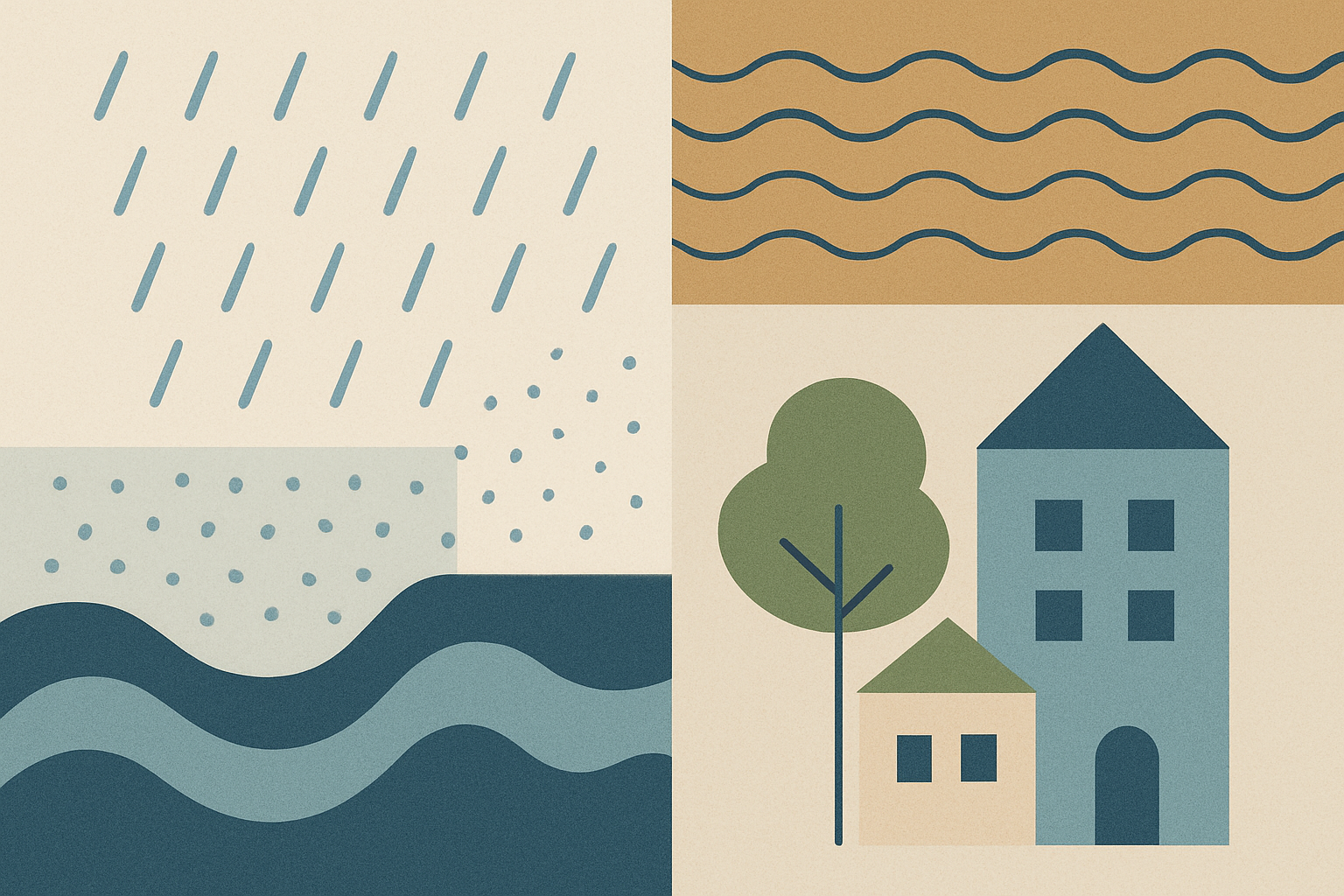
This past week, parts of Texas saw water rise faster than the land could hold it. Flash floods turned roads into rivers, submerged homes, and forced families to evacuate with little warning. These kinds of images have, unfortunately, become familiar. We call them “natural disasters”—but in truth, many are shaped and intensified by the way we build.
Flooding is a natural event, yes. But the disaster part? That’s often man-made.
The Hard Truth About Hard Surfaces
We’ve paved over so much of our world that when the rain comes, it has nowhere to go. Concrete, asphalt, and other impermeable materials block the earth’s natural ability to absorb water. Instead, water rushes over these surfaces, gaining speed and volume until it overwhelms drainage systems, floods streets, and threatens lives.
In many Texas cities, rapid development has outpaced thoughtful planning. Subdivisions sprawl. Parking lots multiply. Natural wetlands and open ground are erased. The more we harden our environment, the less capacity it has to receive the water that falls.
Porosity: The Quiet Hero
In architecture and landscape design, porosity is the ability of a material or a site to let water pass through. It’s the soft spaces between the hard ones. The unbuilt within the built. Porosity slows water down. It absorbs shock. It protects.
When cities integrate porosity into their design, they become resilient.
When they ignore it, they become brittle.
Consider:
• Permeable paving that allows rain to soak through
• Green roofs that absorb rainfall before it runs off
• Bioswales that collect and filter water through vegetation
• Setback requirements that preserve unbuilt land
• Even simple gravel paths and unpaved driveways can make a difference
The most successful examples are “sponge cities”—urban environments that are designed to absorb, retain, and reuse rainwater. Cities in China are leading in this area, investing in green infrastructure to adapt to their own climate crises. Singapore, New York and Toronto are few other urban cities leading the conversation in the adoption and implementation of ‘sponge city principles’ in their urban planning and development projects.
We Need to Design With The Elements in Mind
This isn’t about aesthetics. It’s about survival. The effects of climate change are here. Rain is heavier. Storms are more intense. And the built environment must adapt.
Whether you’re a designer, a homeowner, or simply someone who cares about the place you live, ask:
Where does the water go?
And more importantly: Where can it go, if we make room?
Porosity isn’t just a technical solution—it’s a design ethic. It’s humility in built form. It’s a willingness to leave space for the forces bigger than us.
At ASV, We Believe the Land Should Breathe
Architecture Speaks Volumes exists at the intersection of materiality, aesthetic design, ecology, and care. We’re not just designing objects or buildings—we’re designing relationships: between water and land, built and unbuilt, human and environment.
Flash floods don’t have to be inevitable.
But they will be—if we keep sealing off the very earth that’s trying to save us.
Let’s build differently.
Let’s build with softness, with space, with porosity.
With intention,
Janice Ninan
Founder | Creative Director
Architecture Speaks Volumes
JAPAN, 2011 - AND THE ECHO I FEEL TO THIS DAY
Story Sundays | When memory, myth, and the ground beneath us converge.
When memory, myth, and the ground beneath us converge
Some memories are so visceral, they never leave the body. They live in the bones, in the breath, in the quiet moments before something shifts again.
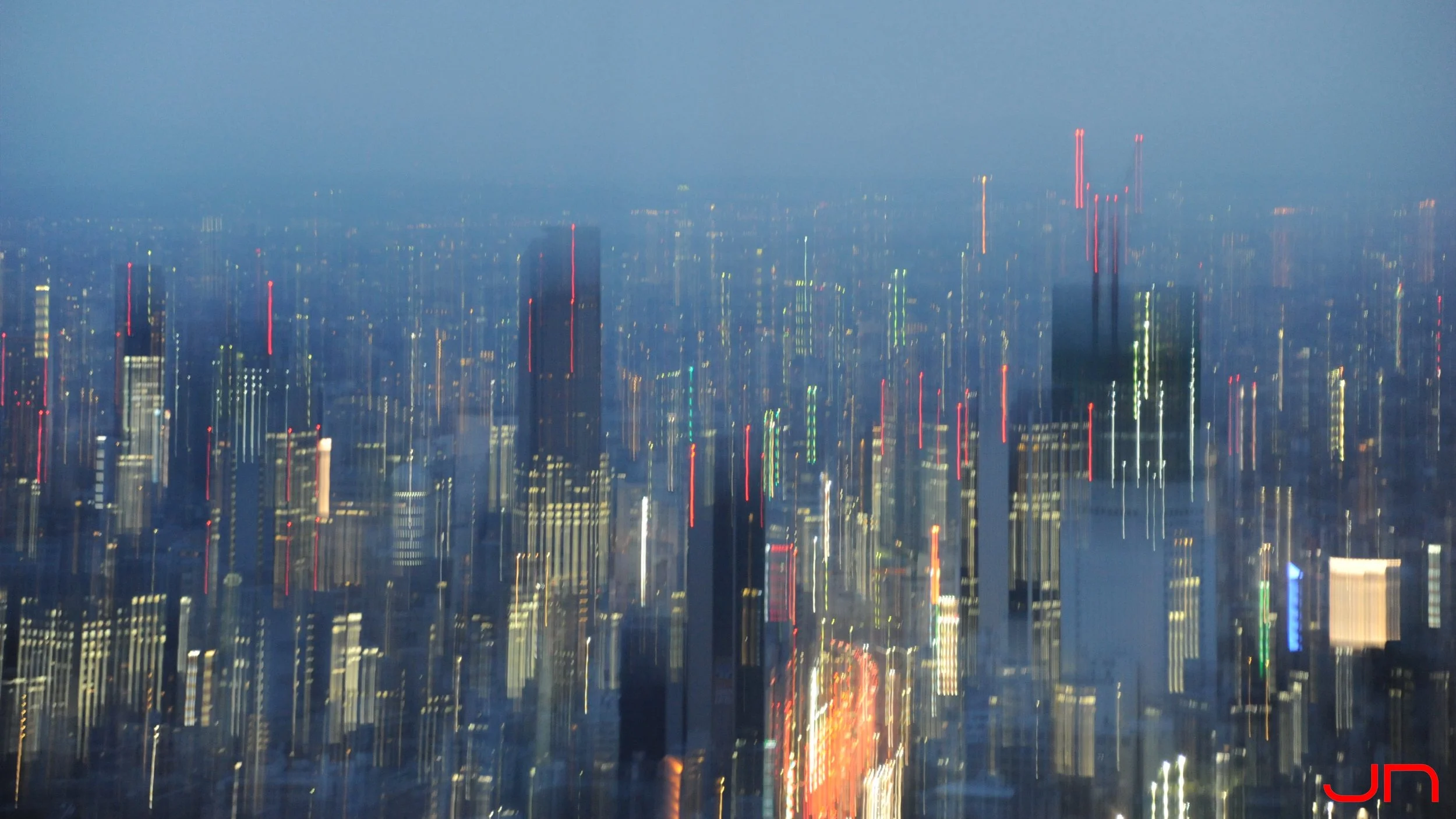
On March 11, 2011, I was in Tokyo, walking temple grounds just before the Sakura Festival. The air was cool, expectant—cherry blossoms just beginning to stir in their buds. White tents dotted the paths between wooden towers and shrines, vendors preparing their wares for the coming season of celebration. I had just made a purchase and was stepping into one of those tents to collect my item when the ground began to move.
At first, I thought it was a chariot passing by. That’s how smooth the rumble was at the start—low, rolling, like a procession approaching. But then I saw the expression on the vendor’s face. He looked at me, eyes wide, mouth slightly open. He didn’t speak English, but fear needs no translation. He motioned for me to step out of the tent. I did.
And that’s when it hit.
The Ground Moved Like Water
The towering wooden structures of the temple began to sway—elegantly, rhythmically, and terrifyingly, like trees in a storm. Their bells rang, not from any human hand, but from the sheer violence of the earth shifting beneath us.
People emerged from the tents, silent. Phones in hand, they began recording, not out of detachment but perhaps as a way of witnessing, of proving: yes, this is happening. No one was running. But we were all holding on—some to railings, some to one another. The earth felt like a boat at sea, rocking without rhythm, refusing to settle.
We couldn’t stand still. The tremors went on and on. And through it all, I kept thinking: This shouldn’t be happening. But it was.
July 5th, 2025
I woke to headlines about a manga artist’s prediction—a tsunami, forecast for today. It stirred something I hadn’t felt in a long time. Not fear exactly, but an echo. A bodily memory. The uneasy stillness before a wave.
There may be nothing to it. A prediction. A coincidence. A media cycle feeding on myth. But something about the prediction won’t let go of me.
I find myself back in Tokyo, standing beneath those temple towers, watching them bend but not break. I remember the way beauty and terror coexisted—bells ringing over fear, spring blossoms refusing to pause their bloom.
The Architecture of Memory
I founded Architecture Speaks Volumes not just because I love buildings or design. I founded it because I believe space carries memory. Because architecture is not just structure—it’s story. And some stories shake us. Some never stop reverberating.
That earthquake changed how I understood space. It taught me that permanence is an illusion, and that even sacred ground can move. But it also taught me the resilience of stillness. The steadiness in strangers. The way culture, craft, and human connection hold us up—when the earth won’t.
If July 5th Felt Strange to You Too…
…you’re not alone.
Maybe it’s the power of suggestion. Or maybe we’re just more tuned in than we think. But whether anything happens today or not, I’m remembering what it’s like to stand in the middle of still-moving ground and feel time split in two: before and after.
This post is just one piece of a larger memoir I’m writing—a story of place, loss, stillness, and what came next.
Thank you for reading. For remembering. For standing still with me.
With care,
Janice Ninan
Founder | Creative Director
Architecture Speaks Volumes
📖 A memoir-in-progress, unfolding in chapters here.
✉️ Subscribe to be the first to read the next piece.
Birthing a Design Practice with Many Voices
Studio Saturdays | Janice’s vision for Architecture Speaks Volumes
It didn’t begin with a business plan.
It began with a feeling.
A quiet realization that the work I wanted to do — the architecture I wanted to practice — wouldn’t quite fit into the molds that already existed. I wasn’t just trying to start a firm. I was trying to build something that could carry more than drawings and deadlines. I wanted to create a design practice that could speak in multiple voices — through space, through story, through objects — and still feel like one clear, resonant truth.
This is how Architecture Speaks Volumes was born.
Listening for a New Kind of Practice
As a trained architect, I’ve spent years learning how to think spatially — how to listen to a site, a material, a brief. But what school never quite teaches you is how to listen to yourself, or how to design a life that feels as intentional as the buildings you create.
I began to sense that I wanted more than project cycles and client calls. I wanted a practice that could carry personal memory, cultural complexity, and emotional resonance. I wanted space to write, to reflect, to share. I wanted a studio where slow design, sensory experience, and story were just as central as structure and form.
That’s where the weaving began — between design thinking, entrepreneurship, and personal storytelling.
Scaling with Intention
Too often, the idea of “scaling” a business is reduced to growth for growth’s sake — more clients, bigger teams, higher fees. But for me, scaling meant deepening, not just expanding.
That’s why I structured Architecture Speaks Volumes as a practice with multiple distinct but connected voices:
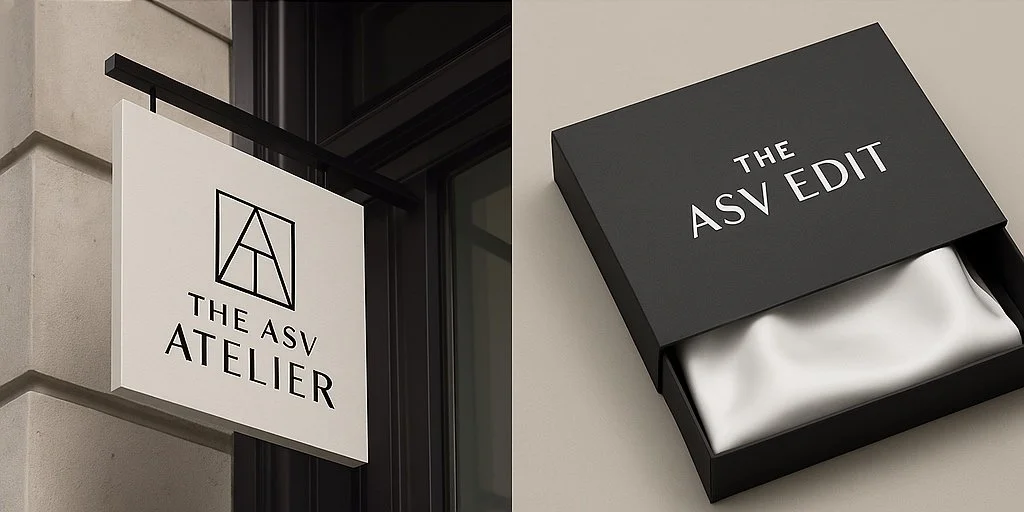
• The ASV Atelier: My design studio — where I work on design projects grounded in slowness, care, and material storytelling.
• The ASV Edit: A boutique for designed objects, scarves, and photographs — each item an archive of memory and meaning.
• ASV blogs & Podcasts: A space for memoir, design writing, and reflections — where I can explore the edges of architecture, culture, and emotion.
Each branch is its own channel, but together, they speak to a shared belief: that architecture is not just built — it is felt, remembered, experienced and expressed.
The Need for Multiple Streams — Not Just for Profit
In today’s world, many of us are waking up to the fact that a single stream of income is no longer sustainable — especially for creatives. But I didn’t create The ASV Edit just to diversify revenue. I created it to give form to ideas that couldn’t live inside floor plans.
Sometimes a scarf carries more meaning than a structure. Sometimes a photograph captures more memory than a model. The boutique allows me to share fragments of my design language in tactile, intimate ways. It also invites those who may never commission a building to still be part of this story — to wear, hold, or gift a piece of the practice.
In this way, income and impact become intertwined. Not in a transactional sense, but in a meaningful exchange of value and vision.
Building a Community that Listens
The real reason I built ASV in this way — across multiple modes — is because I didn’t want to simply launch a brand. I wanted to build a community.
A community of thinkers, feelers, makers, and quiet rebels. People who believe that the built environment is never neutral. People who notice the curve of a stair, the softness of a wall, the stillness in a courtyard. People who understand that architecture is never just structure — it is memory, language, and care.
I write for them. I design for them. I edit for them.
And I share my stories — including the difficult ones — because I believe that vulnerability is part of architecture too. We build from who we are.
In Closing: Architecture Speaks Volumes
What does it mean to birth a design practice in this moment?
For me, it means resisting narrow definitions. It means allowing architecture to speak through drawings, yes — but also through short film, curated objects, essays, poems, materiality, vision and small moments of shared wonder. It means embracing the many voices that live inside me — the architect, the writer, the daughter, the wife,the witness — and letting them all have a place in the room.
Because I still believe that architecture speaks.
And if we listen carefully enough,
it speaks volumes.
The Art of the ‘Throw-Down’
Studio Saturdays | Building community one sketch at a time.
There’s a certain kind of magic in sketching on location — the kind you can’t replicate in the studio, no matter how sharp your pencil or how big your desk.
I first felt it during my study abroad program in Europe. Our professor, John DeSalvo, would take us to a piazza, a cathedral square, or a tucked-away alley framed by centuries-old stone. The instructions were simple:
“Here’s the architectural subject.
Pick your spot.
You have 30 minutes.
Go.”
We’d scatter — some gravitating toward the front steps of a church, others to the cool shadow of a colonnade or a cafe bench beneath a tree. We had half an hour to capture the subject given, to draw whatever caught our eye: the physical or ephemeral; the macro or micro.
When time was up, the real magic happened.
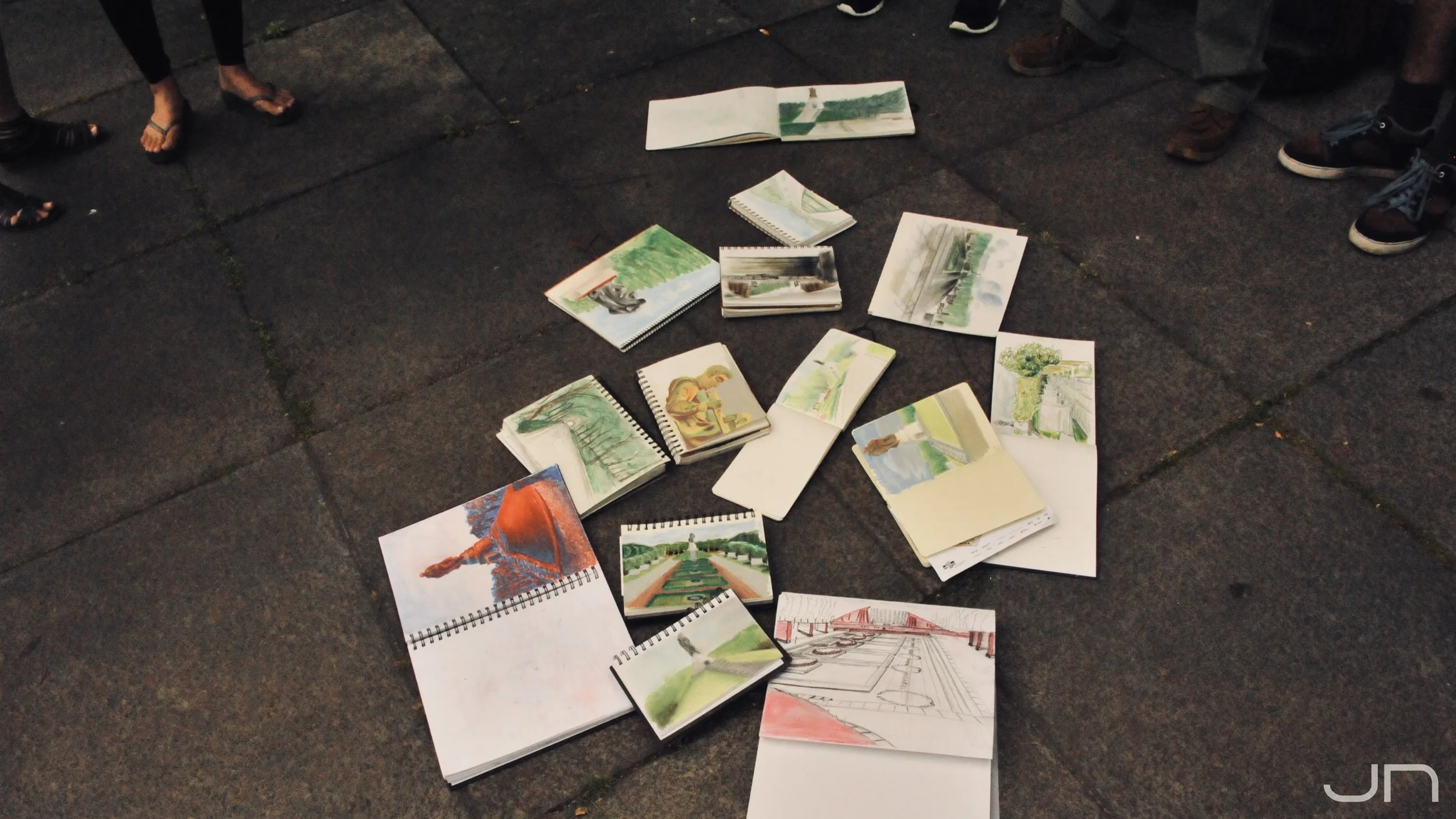
We’d gather in a circle, standing right there on site, and open our sketchbooks for what we called a sketchbook throw-down.
The Throw Down Ritual
The throw down was never a competition — it was a celebration. We’d lay our sketchbooks open so everyone could see: watercolors still damp, pastels and ink lines still smudging if you weren’t careful.
The beauty was in the variety. Twelve people could stand in the same space and come away with twelve completely different interpretations of the same architectural subject. Some sketches were all about precision; others captured atmosphere. A few honed in on details you hadn’t even noticed. It was a reminder that architecture isn’t just about what’s there, it’s about what each person sees.
Why Travel Sketching Matters
Looking back, those 30-minute sessions shaped me as a designer in ways I’m still grateful for. Here’s why I believe travel sketching is a practice worth keeping — whether you’re an architect, artist, or just a curious traveler:
1. It Sharpens Observation
When you’re sketching, you’re not just glancing — you’re studying. You notice lines, edges, proportions, materials and patterns you’d otherwise walk past.
2. It Trains Speed and Confidence
Thirty minutes is just enough time to make decisions but not enough to second-guess every line. You learn to commit and move forward.
3. It Captures Memory Differently
A photograph records what’s in front of you. A sketch records how you experienced it — what you chose to include, what you left out, how the colors felt.
4. It Builds Community
The throw down itself is a shared act. It’s about seeing through each other’s eyes, and realizing how diverse creative vision can be.
From Piazza to Present: Thursday Throw-Downs
Those circles of sketchbooks, held open to the sun, have stayed with me. They’re a tradition I want to bring into my work today — not just for nostalgia, but because I believe the throw down is a powerful way to connect people through creativity.
That’s why I’m building a new ASV community initiative called Thursday Throw-Downs.
The idea is simple:
• Once a week, people across the world will take 30 minutes to sketch — a building, a space, a corner of their own street.
• We’ll share our work together, online or in person, just like we did in the piazzas.
• It’s open to anyone, from seasoned architects to first-time sketchers.
Some weeks, I’ll host online sketch prompts so we can all work on the same theme. Other weeks, I’ll gather a local group for an on-site throw-down, where we can stand in that familiar circle, pages open, seeing what each other saw.
Why Thursday?
Because Thursdays are the perfect almost-weekend energy. Enough time to pause, make something, and connect — and still carry that creative spark into the weekend.
Travel sketching taught me that design is not just about buildings — it’s about perception, patience, and sharing your way of seeing the world. Thursday Throw-Downs will be a space for exactly that: fast lines, fresh perspectives, and a circle of people who understand that the best sketches are never perfect — they’re alive.
Stay tuned or the first Thursday Throw-Down announcement here on Architecture Speaks Volumes. I hope you’ll join me, with your choice of medium in hand.

WHY ‘ARCHITECTURE SPEAKS VOLUMES’?
The story behind the studio, the vision, and the name.
Some buildings whisper. Some shout.
But the ones that matter—speak volumes.
Architecture Speaks Volumes was born from that idea: that spatial design isn’t just about structures or style—it’s about memory, movement, silence, and story. It’s about how space makes us feel, what it helps us remember, and what it says about who we are.
This is my corner on the www to speak that language with purpose.
A Voice Through Design
I’ve spent almost two decades immersed in architecture—drawing, building, teaching, wandering. I’ve walked streets emptied by earthquakes, sat under trees older than empires, stood still in rooms where light alone told the story. These moments have shaped how I see space, and why I believe it’s never just background. Its presence.
After years of holding this vision quietly, I launched Architecture Speaks Volumes LLC DBA Design Speaks Volumes to give it form. This is more than a design studio—it’s a way of thinking, a way of creating, and a way of connecting.
What Lives Here
ASV is made of many parts, each with its own voice:
• Design Speaks Volumes : A creative services wing of Architecture Speaks Volumes LLC that is dedicated to thoughtful, intentional design projects.
• The ASV Vlogs | Where is Janice? : Visual stories about travel, design, space, and creative process.
• The ASV Edit: A boutique featuring scarves, photographs, and curated objects.
• The ASV Blog: This space—a place for ideas, reflections, and untold stories.
• The Book: A memoir in progress, shaped by my time in Japan during the 2011 earthquake and tsunami.
Together, these threads form a practice that values design as storytelling—and storytelling as a kind of design tool.
What to Expect From This Blog
Here, I’ll share thoughts on spatial design, place, and materiality—sometimes poetic, sometimes practical. You might find travel stories. Sketches. Design musings. Reflections on silence, sound, memory, and form. Maybe even fragments from the book I’m writing.
This isn’t just a blog. It’s a journal. A window. A conversation.
Let’s Build This Together
Thank you for being here at the beginning. Whether you’re a fellow creative, a design enthusiast, or someone who just believes that space matters—I’m glad you’ve arrived.
There’s more to come, and I hope you’ll stay a while.
Subscribe, reach out, share a thought. Let’s see where this story leads.
Because when architecture speaks volumes,
it’s not just my voice—it’s ours.
Welcome to ASV.
Janice Ninan
Founder | Creative Director
Architecture Speaks Volumes