
THE ASV BLOG
— by JANICE NINAN

LESSONS THAT OUTLAST STUDIO
Studio Saturdays | What we carry forward from Architecture school isn’t just technique - it’s a way of seeing the world.
Architecture school ends long before architecture leaves you.
Degrees are framed, studios are cleared out, and life moves on — into offices, job sites, solo practices, or parallel creative paths. But long after the final jury, there are things we carry forward quietly. Not resumes or portfolios, but habits of mind, ways of seeing, and deeply ingrained rituals that continue to shape how we work and how we live.
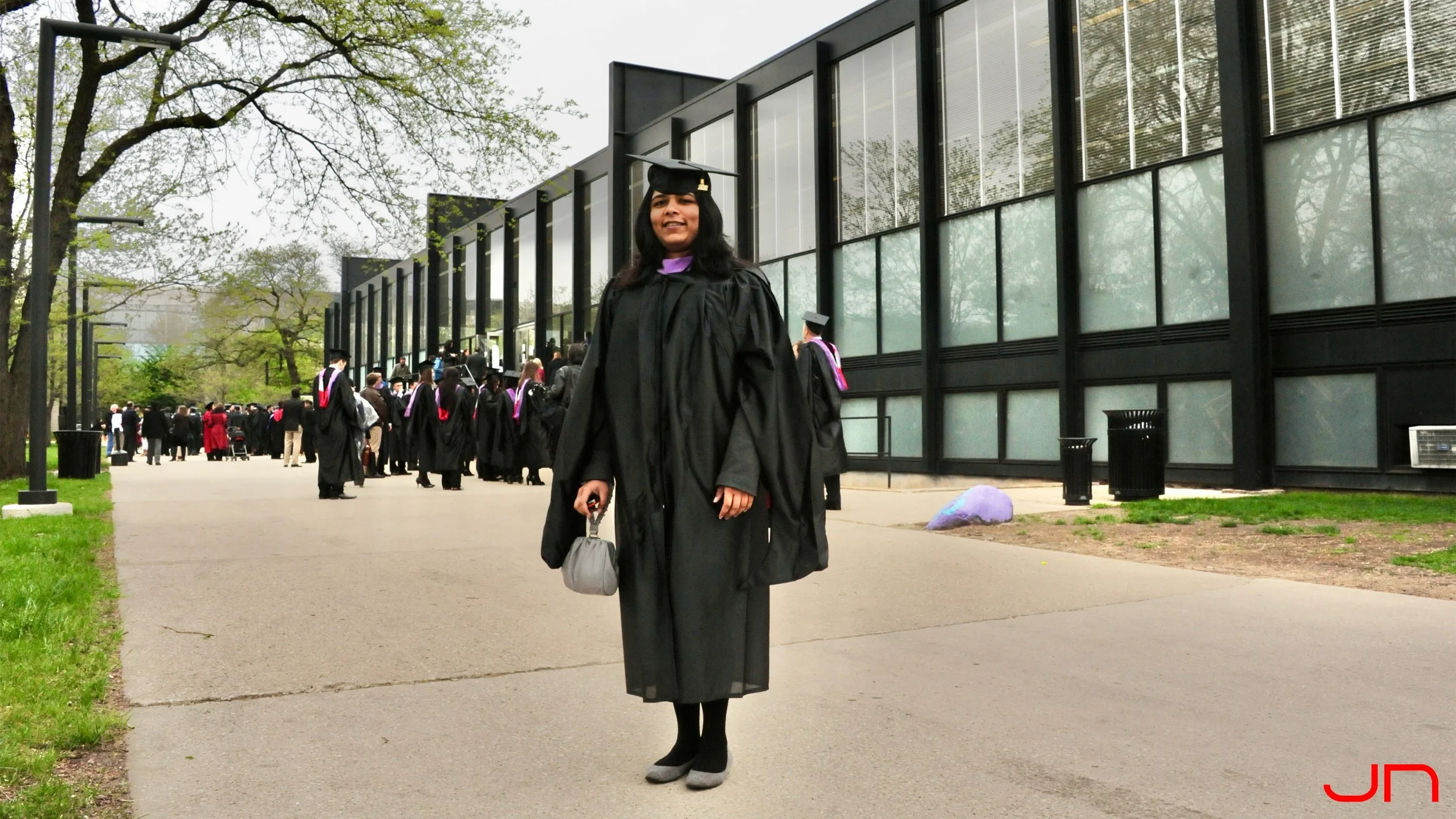
I earned my Bachelor of Architecture at MSRIT, Bangalore, and later my Master of Architecture at IIT Chicago. Two different continents, cultures, climates, and pedagogies — yet remarkably similar studio truths. What I carry forward from architecture school has less to do with buildings, and everything to do with practice.
1. The Discipline of Showing Up
Architecture school teaches you to show up — even when you’re tired, uncertain, or uninspired. Studio doesn’t wait for perfect conditions. Deadlines arrive whether the idea is ready or not.
That discipline stays with you.
It becomes the quiet ability to sit down and begin. To open the sketchbook. To draft the first imperfect line. To return to the work again and again, trusting that clarity emerges through engagement, not avoidance.
2. Seeing Before Solving
Before architecture school, I thought design was about answers. School taught me it’s about questions.
At MSRIT, site visits trained my eye to context — climate, material, scale, human movement. At IIT Chicago, studying within the rigor of Crown Hall sharpened my understanding of structure, logic, and spatial discipline. Together, they instilled a habit of looking deeply before responding.
This way of seeing extends beyond architecture. You start noticing how light enters a room, how people occupy space, how cities reveal their histories in fragments. Observation becomes instinct.
3. Comfort with Critique
Few experiences shape you like a studio critique.
Standing beside your work while others dissect it teaches resilience, humility, and discernment. You learn that critique is not rejection — it’s conversation. You learn how to listen without collapsing, how to defend ideas without ego, and how to extract value even from difficult feedback.
That ability to separate yourself from your work becomes invaluable — in practice, collaboration, and life.
4. The Power of Process Over Perfection
Architecture school rewards thinking out loud. Sketches, diagrams, trace overlays, models — all evidence of a mind at work.
What stays with you is the understanding that the process matters as much as the final outcome. That unfinished drawings can be more revealing than polished renders. That iteration is not failure, but fluency.
This belief becomes grounding in a world obsessed with finished images. You learn to value the work-in-progress.
5. Time Pressure as a Creative Tool
Studio deadlines are unforgiving — and oddly transformative.
Under time pressure, you learn to prioritize. To let go of unnecessary complexity. To trust intuition. Those late nights train you to make decisions with incomplete information — a skill essential to real-world practice.
Even today, I often return to timed sketching and constrained exercises. Not as nostalgia, but as a way to reconnect with creative clarity.
6. Community as Catalyst
Architecture school is never a solitary experience.
From all-nighters to site visits, shared meals to shared panic before juries — studio creates a unique form of collective learning. You grow not just from your own work, but from watching others struggle, experiment, and succeed.
That sense of creative community is something I consciously seek to recreate today — through initiatives like Studio Saturdays and Thursday Throw Downs. Architecture thrives in circles, not silos.
7. A Lifelong Relationship with Learning
Perhaps the most enduring thing architecture school teaches you is that you will never finish learning.
Every project introduces new constraints, materials, regulations, and human needs. School doesn’t prepare you with all the answers — it prepares you to keep asking better questions.
That mindset stays with you whether you remain in traditional practice or forge your own path.
Carrying It Forward
What we carry forward from architecture school isn’t just technique — it’s temperament.
The patience to observe.
The courage to iterate.
The discipline to show up.
The humility to listen.
The belief that design is a form of service.
These are the invisible tools that continue to shape my work through Architecture Speaks Volumes and The ASV Atelier — long after graduation ceremonies have faded into memory.
Architecture school may end, but studio never really does.
THE PLEIN AIR STUDIO
Studio Saturdays | Architecture lessons from Travel.
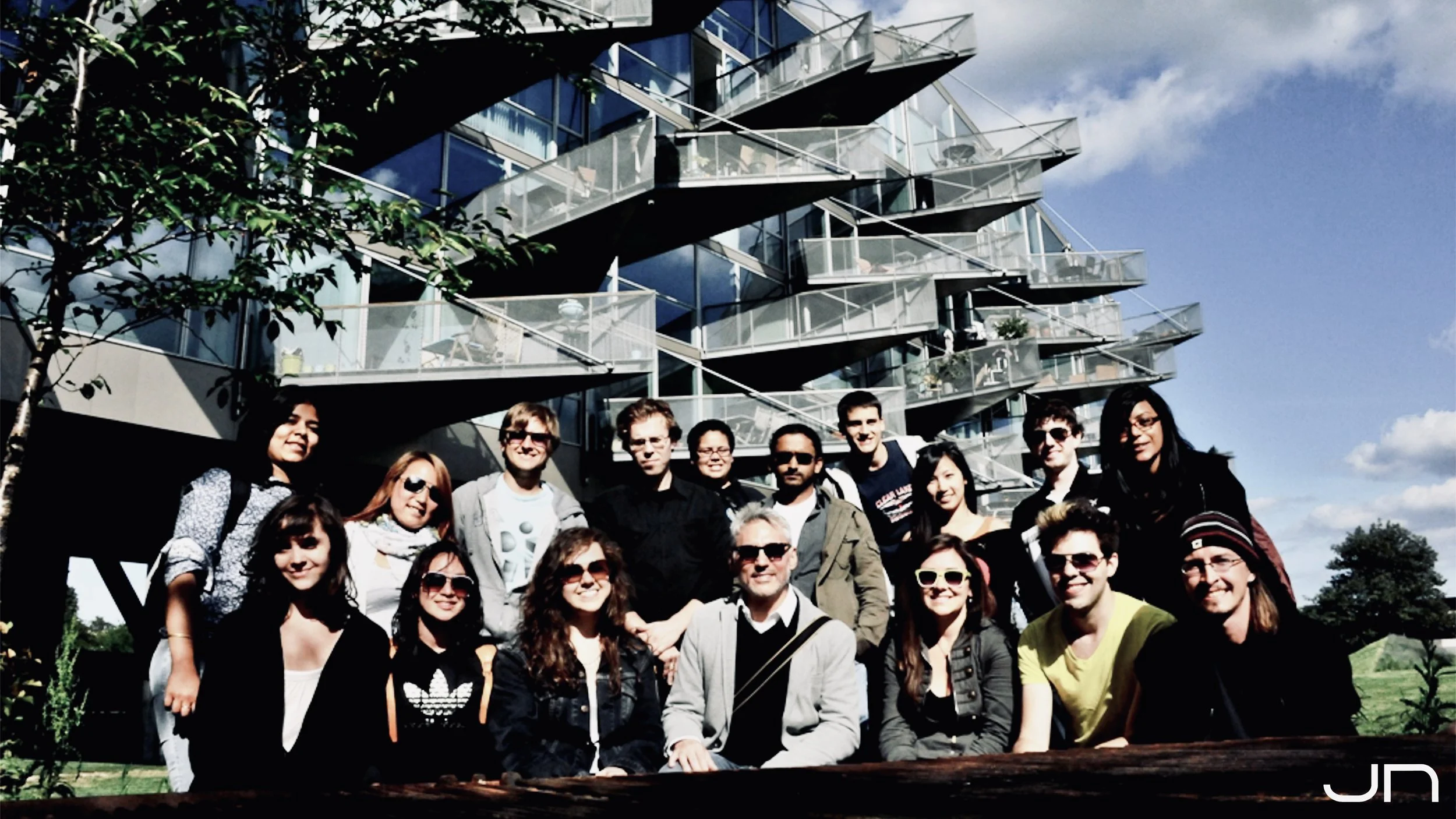
For architecture students, the city is the most profound classroom. Its buildings, streets, and public spaces hold lessons no model or textbook can fully capture. This is why traveling studios and study abroad programs are so transformative—they immerse us in both the artistry and the mechanics of design, while teaching us to read the architecture that speaks volumes.
Drawing as a Way of Reading
In my European travel studio, one of our courses was devoted entirely to sketching. Armed with pencils, ink, charcoal, pastel, and watercolors, we spent our days on site, translating cities into marks on paper. Each medium became a different voice: the precision of ink, the softness of charcoal, the immediacy of watercolor.
Sketching trained us to read architecture like a text—the rhythm of windows, the weight of stone, the cadence of light across a façade. Each line became a sentence; each shadow, a paragraph. To sketch was to enter into dialogue with buildings, to discover how architecture speaks if we slow down enough to listen.
Technology as Translation
Running parallel to sketching, our second course explored building technologies. Here, we learned to decode the structural and material systems behind the spaces we admired: masonry vaults, thermal mass, glazing, spans. If sketching taught us to hear the poetry, technology revealed the grammar—the framework that makes meaning possible.
This dual focus—art and science, hand and detail—reminded us that architecture is both language and logic, expression and execution.
Learning in Context
The studio experience extended beyond coursework. Traveling together through unfamiliar cities, we learned collaboration in its most organic form: critiquing sketches at café tables, passing charcoal across a piazza, or discussing systems and spans on a train ride between stops. Each city became a new chapter to interpret, each sketchbook page a translation of what we saw and felt.
Why It Endures
Traveling studios teach us that architecture is not abstract—it is lived narrative. To sketch by hand is to hear its voice; to study technologies is to understand how that voice is carried. Together, these courses revealed that the built environment is never silent. If you know how to look, every building, every street, every material speaks.
When I look back at our final presentation—a plethora of mixed media sketches distilled from weeks of travel—I see more than drawings. I see the first attempts at fluency in the very language that defines my practice: Architecture Speaks Volumes.
A Call to Future Architects
If the chance comes to join a traveling studio, take it. You will return not only with a sketchbook and technical knowledge, but with the ability to read architecture as text, as voice, as memory.
Because architecture does not whisper. Architecture Speaks Volumes.
STEEL, SHADOWS AND SILENCE
Feature Fridays | A Moment with the Wassily Chair at Bauhaus Dessau
I graduated from IIT Chicago, where I spent three formative years studying inside S.R. Crown Hall, a temple of steel and glass designed by Ludwig Mies van der Rohe. I didn’t realize it then, but spending that much time within such disciplined space — stripped to its essence — would shape how I move through the world, how I see, and how I design.
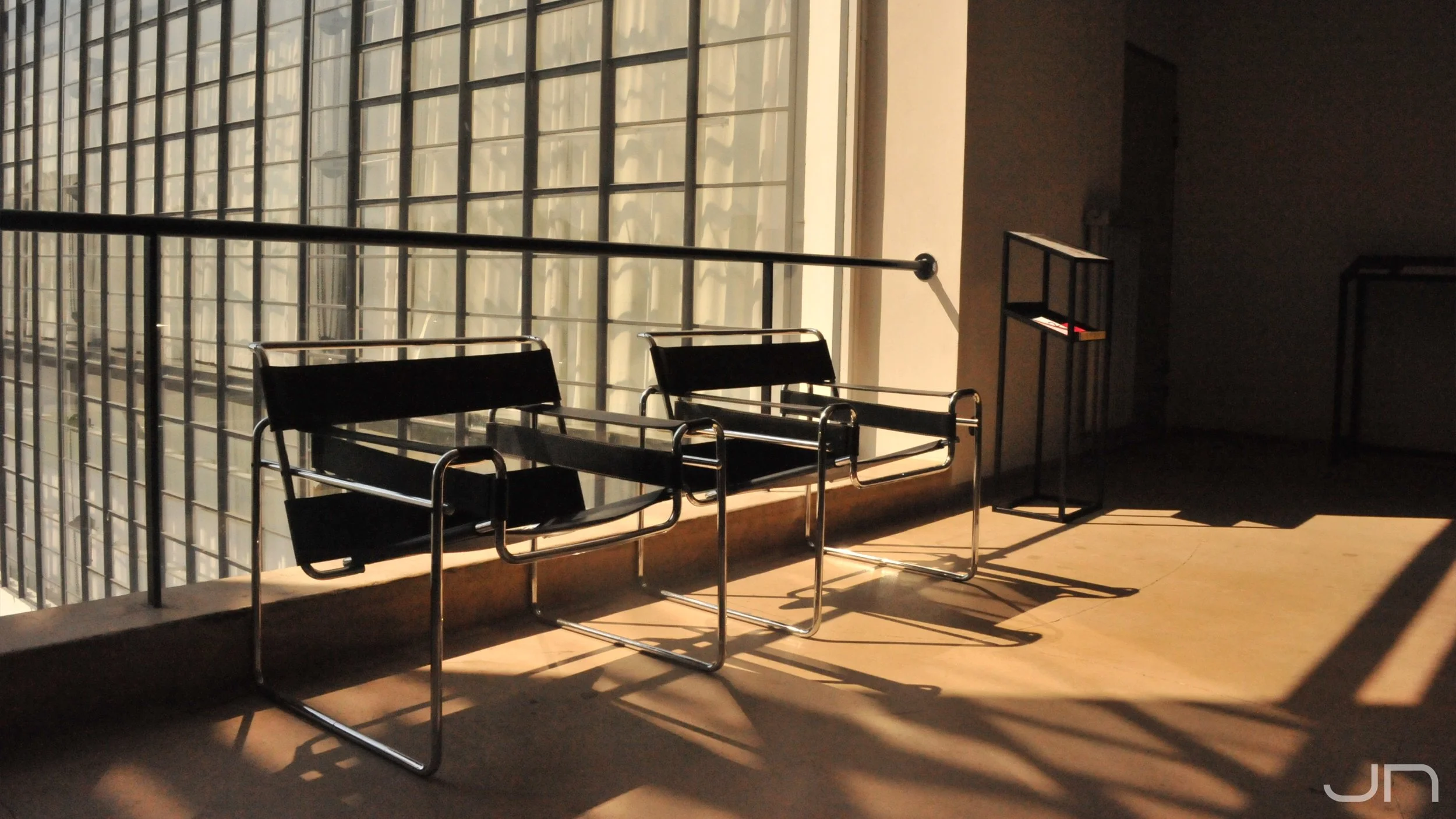
In my final semester, I joined a month-long study abroad program across Europe in 2011. One of our stops was Bauhaus Dessau, the birthplace of an ideology — the Bauhaus movement — that would ripple through time, continents, and cities like Chicago. It was there that I encountered, in person, an icon I had only known through books: the Wassily Chair by Marcel Breuer.
⸻
Seeing the Chair in Its Element
The moment was quiet.
Afternoon light slanted through the glass block wall, casting soft, diffused shadows across the concrete floor. There, against the rhythm of translucent geometry, sat the Wassily Chair — lean, self-contained, unapologetically modern.
It didn’t ask for attention. It simply was.
Its tubular steel frame, its taut leather straps — all so precise, so resolved. Designed in 1925, this chair wasn’t trying to be beautiful in a traditional sense. It was built to be logical. And in that logic, it became something profound.
⸻
What Makes the Wassily Chair Significant?
The Wassily Chair — originally known as the Model B3 — was designed by Marcel Breuer while he was at the Bauhaus. He was inspired by the frame of a bicycle, captivated by the possibilities of tubular steel, a material not yet used in residential furniture at the time.
Its significance lies in what it represents:
• Material Innovation: Breuer took an industrial material — chromium-plated steel tubing — and introduced it to domestic interiors. This was radical. The steel was strong, light, hygienic, and modern.
• Bauhaus Principles Embodied: The chair represents everything the Bauhaus stood for — honesty in materials, the merging of art and industry, and the pursuit of pure form and function. Nothing is decorative. Everything serves a purpose.
• Transparency + Structure: Unlike the heavy upholstered furniture of the past, the Wassily Chair feels almost like a line drawing in space. It’s open, it breathes. It frames the human body instead of engulfing it.
• Timeless Relevance: A century later, the chair still feels contemporary. It doesn’t age, because it’s not rooted in fashion — it’s rooted in intention.
Breuer later said: “I thought that perhaps I could design chairs that would be built on the same principle as bicycles.” That line has stayed with me. It reframes design as engineering, poetry, and vision — all at once.
⸻
From Dessau to Chicago, from Breuer to Mies
Standing in that room at Dessau, I was struck by the continuity. I had spent years immersed in Miesian clarity, working and sketching beneath the floating roof of Crown Hall. And here I was, at the source — surrounded by the work of Breuer, Gropius, Kandinsky — the very figures who laid the foundation that Mies would later refine and export.
The Wassily Chair felt like a kind of bridge.
It connected art to function, Europe to America, past to present, and material to idea. It reminded me that architecture doesn’t exist in isolation. It lives through objects, through spaces, through moments of stillness where design simply speaks.
⸻
What This Moment Taught Me
Design doesn’t have to shout to be powerful.
Sometimes, the most enduring work is the most restrained — the kind that’s been reduced to only what’s essential, nothing more. The Wassily Chair is not just a chair. It’s a manifesto in steel and leather. A quiet rebellion against ornament. A declaration that beauty can be engineered.
It’s the kind of object that asks you to look closer. To notice the way materials come together. To think about how things are made — and why.
That’s why this chair, this space, and this moment are my Feature Friday.
⸻
Photo taken at Bauhaus Dessau, Germany — 2011.