
THE ASV BLOG
— by JANICE NINAN
A NEW SKIN FOR A POSTMODERN ICON
WIP Wednesdays | Watching the Thompson Center’s Evolution
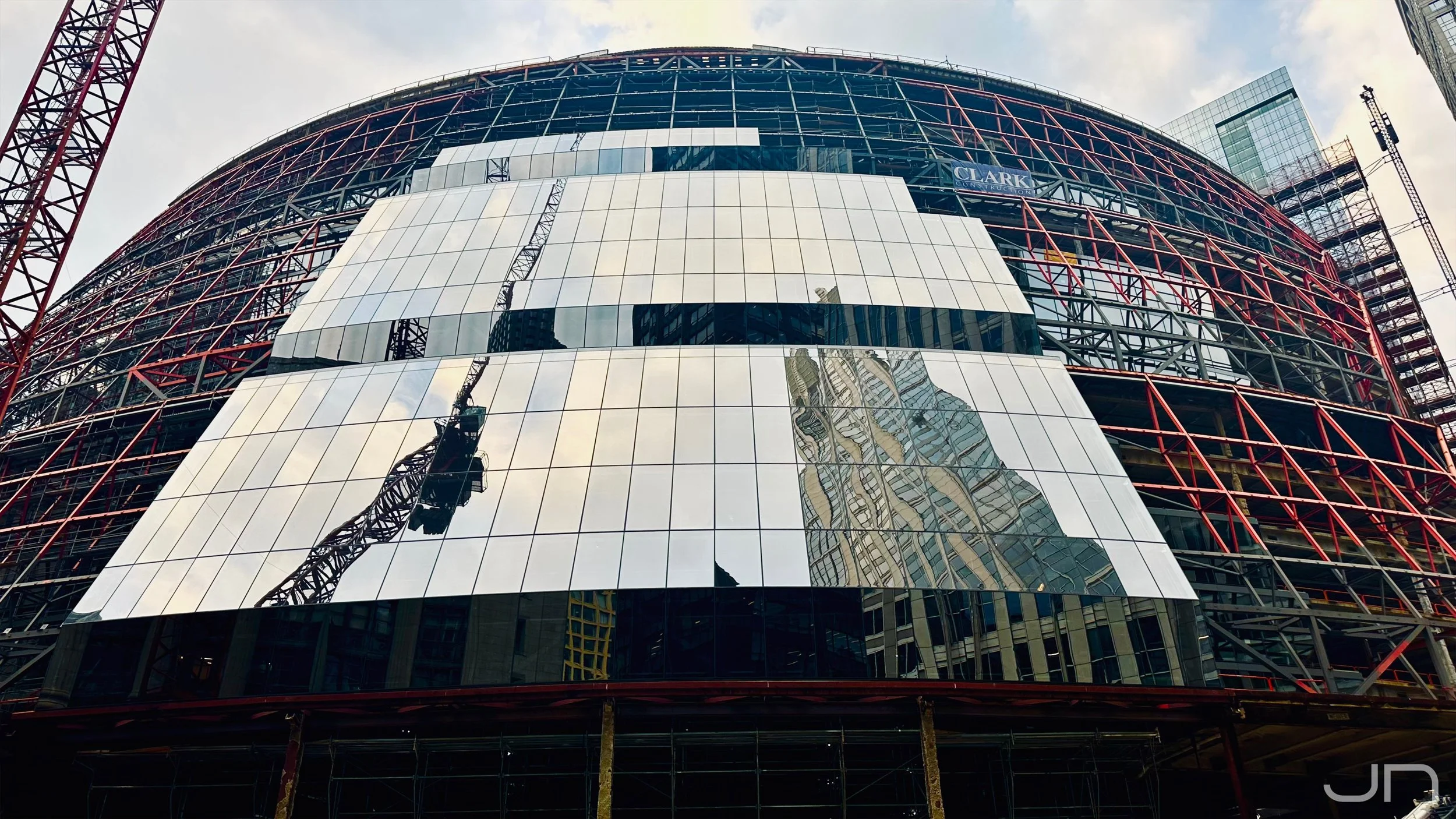
The James R. Thompson Center in Chicago has always been a bold statement in postmodern architecture. Designed by Helmut Jahn and completed in 1985, the building is known for its vast atrium, curved glass façade, and futuristic ambition. Now, decades later, it’s undergoing a dramatic transformation — not just as a renovation, but as a reinvention.
The Transition
When Google purchased the building, the future of the Thompson Center shifted. No longer just a government hub, it’s being reimagined as a workplace for one of the world’s most innovative companies. This shift reflects larger conversations in architecture: adaptive reuse, sustainability, and the challenge of preserving iconic design while updating it for modern use.
Façade Work in Progress
Standing outside the site today, you can literally see the building shedding its old skin. Panels of the glass façade are being carefully removed, replaced, and prepared for an upgraded envelope that will improve energy efficiency while maintaining the building’s recognizable form. The mirrored glass that once symbolized transparency and openness is giving way to a refreshed vision of the future.
Jahn’s Legacy in Dialogue
The renovation is being overseen by Jahn, the architectural firm founded by the late Helmut Jahn himself. This creates a fascinating dialogue: the original designer’s vision is now being interpreted and updated by the very studio he established. It’s less about erasing history and more about writing a new chapter with respect to its origin.
Reflections
Watching this work-in-progress, I’m reminded that buildings, like cities, are never static. The Thompson Center is not disappearing — it’s evolving. Its story of transformation mirrors Chicago’s own spirit: bold, experimental, and always forward-looking.
Closing
I’ll be following this renovation closely and documenting its changes as part of my WIP Wednesday series. What do you think — should iconic buildings be preserved as-is, or reimagined to fit new lives and uses? Leave your comments below.
RAMMED EARTH AND REMEMBERANCE
Tactile Tuesdays | Tactility as memory. Clay as reconciliation. Architecture as dialogue with the past.
Architecture of the Church of Reconciliation, Berlin
On Bernauer Strasse in Berlin, architecture and memory meet in a profound way. Here, the Church of Reconciliation stands as both a spiritual space and a physical reminder of the city’s fractured past. The original church, trapped between the barriers of the Berlin Wall, was destroyed in 1985. Its absence became an emblem of division, but its rebirth in 2000 gave the city a new symbol—one rooted in healing.
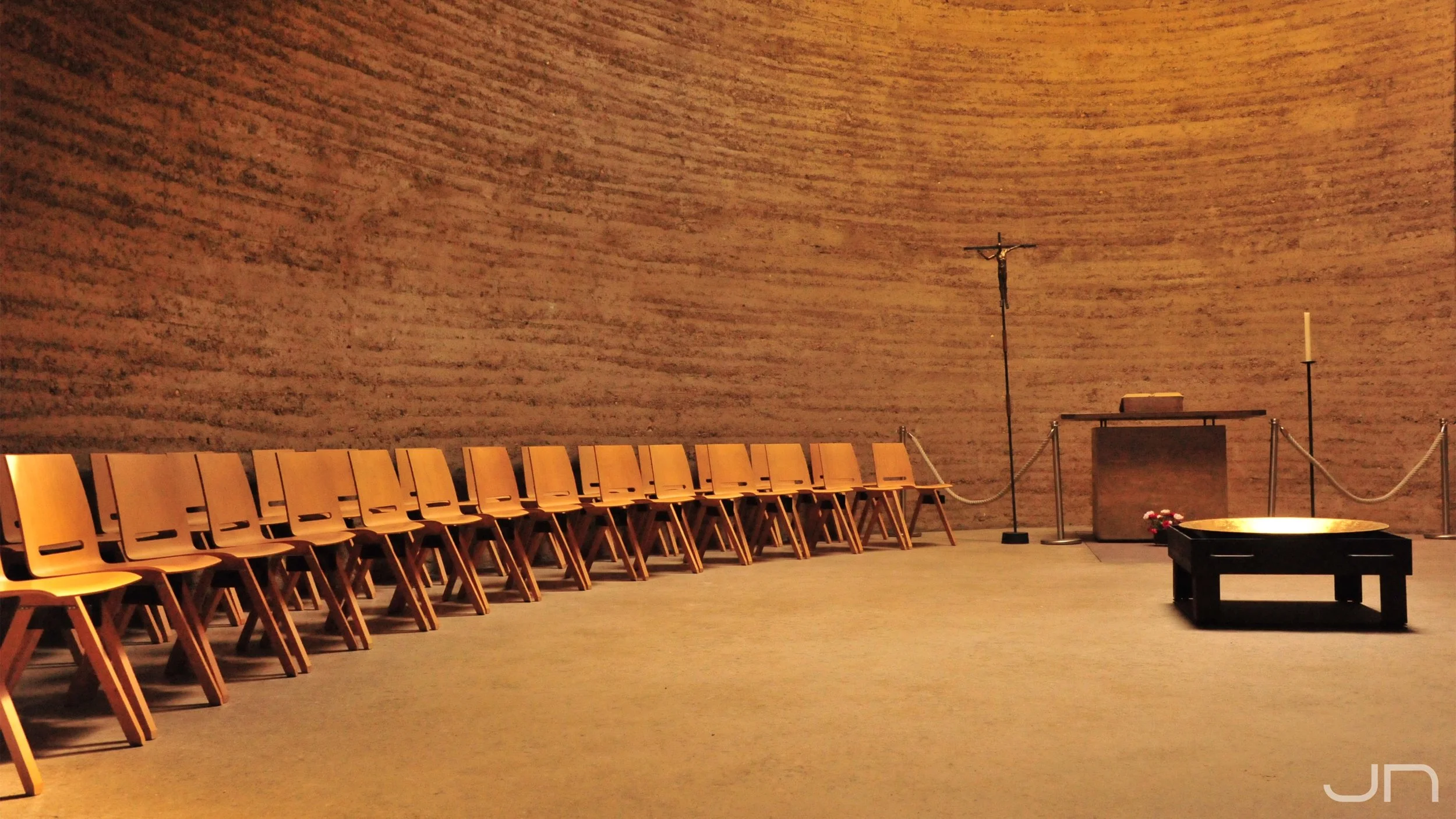
What makes the new structure remarkable is not only its circular form or its contemplative presence, but the choice of material: rammed earth walls made from clay gathered directly from the site of the former Berlin Wall. In this act, soil once synonymous with separation was transformed into a vessel of unity and reconciliation.
Clay is not a neutral material. It holds warmth, absorbs moisture, and reveals texture in a way that concrete or steel never can. Inside the chapel, the tactility of the walls changes the experience of space. Light is absorbed softly rather than reflected harshly. Sounds are muffled, giving the interior an almost hushed intimacy. The walls, layered by hand and pressure, display striations of earth that feel both fragile and timeless.
To press your hand against the clay is to feel its porosity, its roughness, its grounding presence. It makes history tangible. The wall is not polished smooth, not distanced from touch, but instead invites the visitor to physically engage with it. In doing so, one confronts both the pain of division and the possibility of reconciliation—quite literally embedded in the earth.
The use of clay here is more than a sustainable material choice. It is an ethical and poetic gesture: memory made tactile, history rebuilt into a place of peace. The Church of Reconciliation shows us how architecture can hold space for healing—not only through form and light, but through the direct materiality of touch.
My First ARE Milestone
Mark Mondays | Marking my first ARE pass - the beginning of the final leg toward becoming a licensed architect.
Hallelujah! I’ve passed my very first ARE exam — Practice Management (PcM). It feels like marking the first notch in the final leg of a long but rewarding path toward licensure. From completing my Bachelor’s degree and getting licensed in India to immigrating to the USA, earning my Master’s in Architecture, and working in various firms to gain experience and complete my AXP hours — every step has led me to this moment, finally eligible to sit for the ARE exams in Illinois.
Navigating personal and professional hurdles over the years, this provisional pass feels like the start of conquering the last stretch of an arduous process.
⸻
The Mindset Shift
In the past, the ARE exams felt overwhelming. I would often run out of time, get stuck on case studies, and leave questions unanswered. What changed this time was not just my studying, but my mindset - thanks to my coaches Eric and David!
The night before PcM, I made a conscious choice to prepare my mind as much as my notes. I went to bed early. The next morning, I started with some Wim Hof breathing and meditation. I reread mindset notes from my coaching program that reminded me: control your mind, stay present, and trust yourself.
Even on the train ride to the testing center, I kept my nerves in check by listening to music. Instead of spiraling into anxiety, I felt centered — like an athlete heading into a big game.
⸻
Strategy in Action
Once inside the exam, my approach was disciplined and deliberate:
• Time management: I aimed for 20 questions in 20 minutes as advised by my coaches and strived to do this for every increment of 20 questions. Breaking the exam into increments kept me on pace and prevented me from lingering too long on one question.
• Highlighting for focus: I diligently used the highlighter tool to underline key words and clues. This helped me avoid second-guessing and stay attentive to what was really being asked.
• Presence over panic: I reminded myself constantly to take it one question at a time. Not the next 80. Not the case studies waiting at the end. Just the question in front of me.
For the first time, I finished an ARE exam without leaving a single question blank. That alone felt like a victory.
⸻
Tackling the Achilles Heel
Case studies have always been my stumbling block. In previous attempts, I’d run out of energy, lose focus, and fall behind. This time, I treated them differently.
Before starting the case studies, I took my scheduled break. I stepped away, did some box breathing, and reframed my mindset: This is not my weakness. This is just another section I am capable of solving.
When I returned, I paced myself and worked through the two case studies steadily. I didn’t let them control the outcome. When I finally clicked “Submit,” my heart raced. Then I saw it: Provisional Pass!
Tears welled up. I felt relief, disbelief, and gratitude all at once.
⸻
The Power of the First Mark
Passing PcM is one of six final steps toward licensure. On paper, it’s just a fraction. But symbolically, it’s the hardest one — the first mark etched into the journey.
Like the first line on a blank drawing, this milestone gives shape to what comes next. It proves that the effort, the mindset, and the strategies work. It’s the mark that transforms hope into momentum.
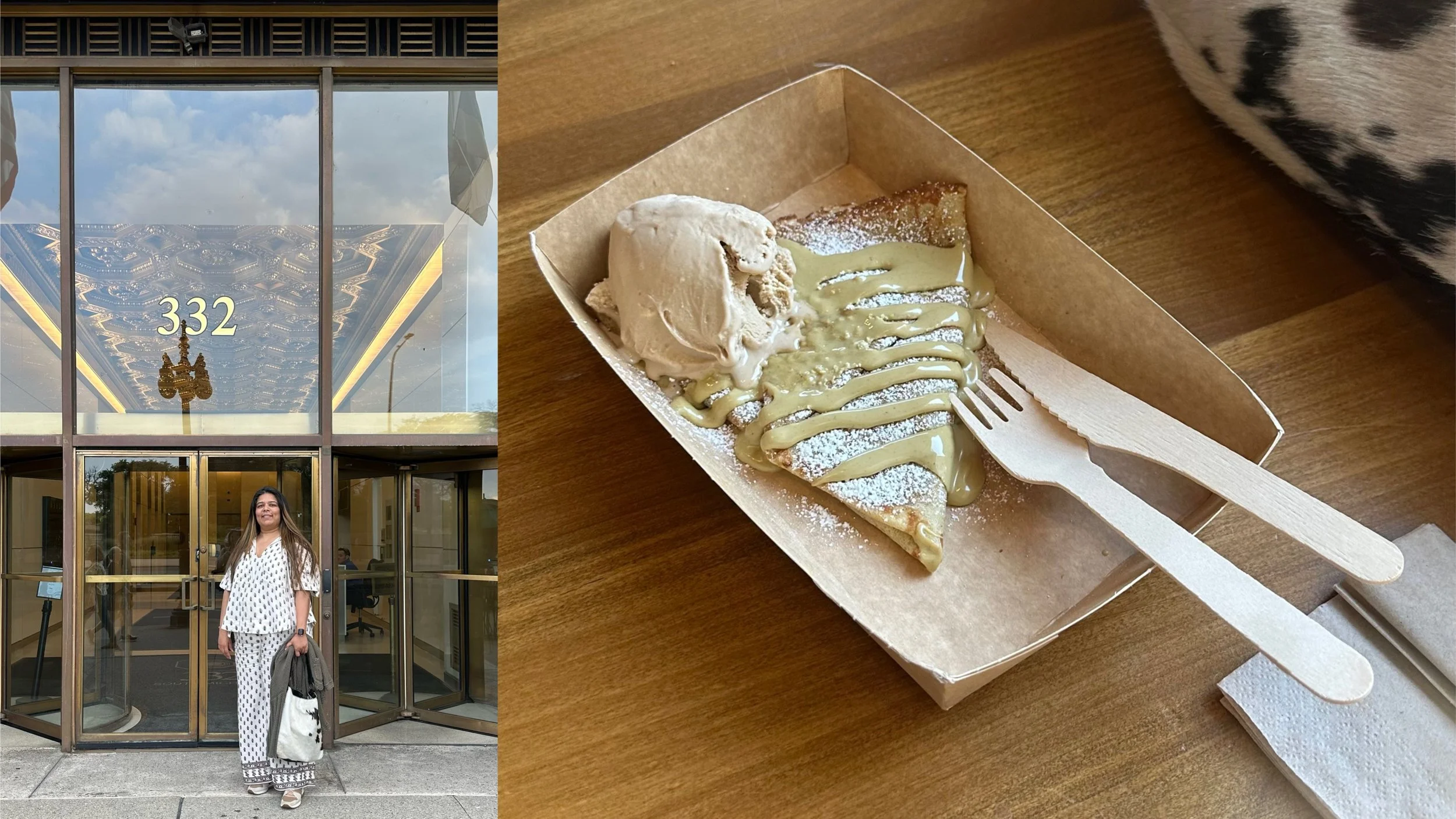
I walked out of the testing center exhausted, but victorious. I grabbed ice cream as a treat — the kind of small ritual that made the achievement feel real. One down. Five to go.
⸻
Lessons for Fellow Test-Takers
If you’re on the ARE path, here are the strategies that helped me turn the corner:
1. Prioritize mindset as much as study time. Anxiety management, sleep, and breathing techniques matter as much as practice questions.
2. Break the exam into chunks. Setting a pace gave me structure and confidence.
3. Use the tools. Highlighting key words kept me from missing details or overthinking.
4. Don’t fear the case studies. Take a break before them, reset your mind, and approach them with focus, not dread.
5. Celebrate the wins. Even one pass is proof of capability. Use that momentum to fuel the next.
⸻
Looking Ahead
This provisional pass in PcM is my first ARE milestone, and I’m choosing to mark it boldly. It’s not the end of the journey, but it’s the beginning of believing I can finish it.
Each exam ahead will bring its own challenges, but now I know: with the right mindset, the right strategy, and the right support, I can cross them one by one.
One mark down. Five to go.
And yes, the ice cream was worth it. 🍦
Skylines in Motion
Story Sundays | When the City joins the Show
The first time I photographed the Chicago Air & Water Show from North Avenue Beach, I didn’t just watch the planes — I watched the city respond.
It was August 2011. The day was bright, already warm when I woke up. I dressed quickly, slung my Nikon D700 over my shoulder, and began packing my camera bag: extra lenses, lens hoods, memory cards, sunscreen and just enough water and snacks to last the day.
Outside, the city felt charged. I caught the CTA bus, then the train, then another bus, watching Chicago’s steel and glass slide by in the windows. The closer I got to the lake, the more the streets swelled with people — sunglasses on, folding chairs in hand, beach bags slung over shoulders. Everyone seemed to be moving in the same current.
After stepping off at North Avenue, I crossed the pedestrian bridge over Lake Shore Drive. The blue sweep of Lake Michigan opened before me — glittering under the late-summer sun. The hum of the crowd mingled with the first distant rumble of jet engines. On the sand, I moved slowly, weaving between sunbathers and swimmers, searching for a clear spot — somewhere my gear would stay dry and my sight-lines would stay wide.
The sand was hot, the lake sparkling, and the air thick with anticipation. I found myself a spot on the boardwalk where photographers- both professional and novice had already staked claim on prime positions for an uninterrupted view. From here, the city was not just the backdrop — it was a participant.
Rooftops and terraces had transformed into grandstands, their railings lined with leaning bodies, the skyline itself alive with spectators. Out on the water, boats clustered together, their bows facing back toward the shore. The anticipation was a tangible thing.
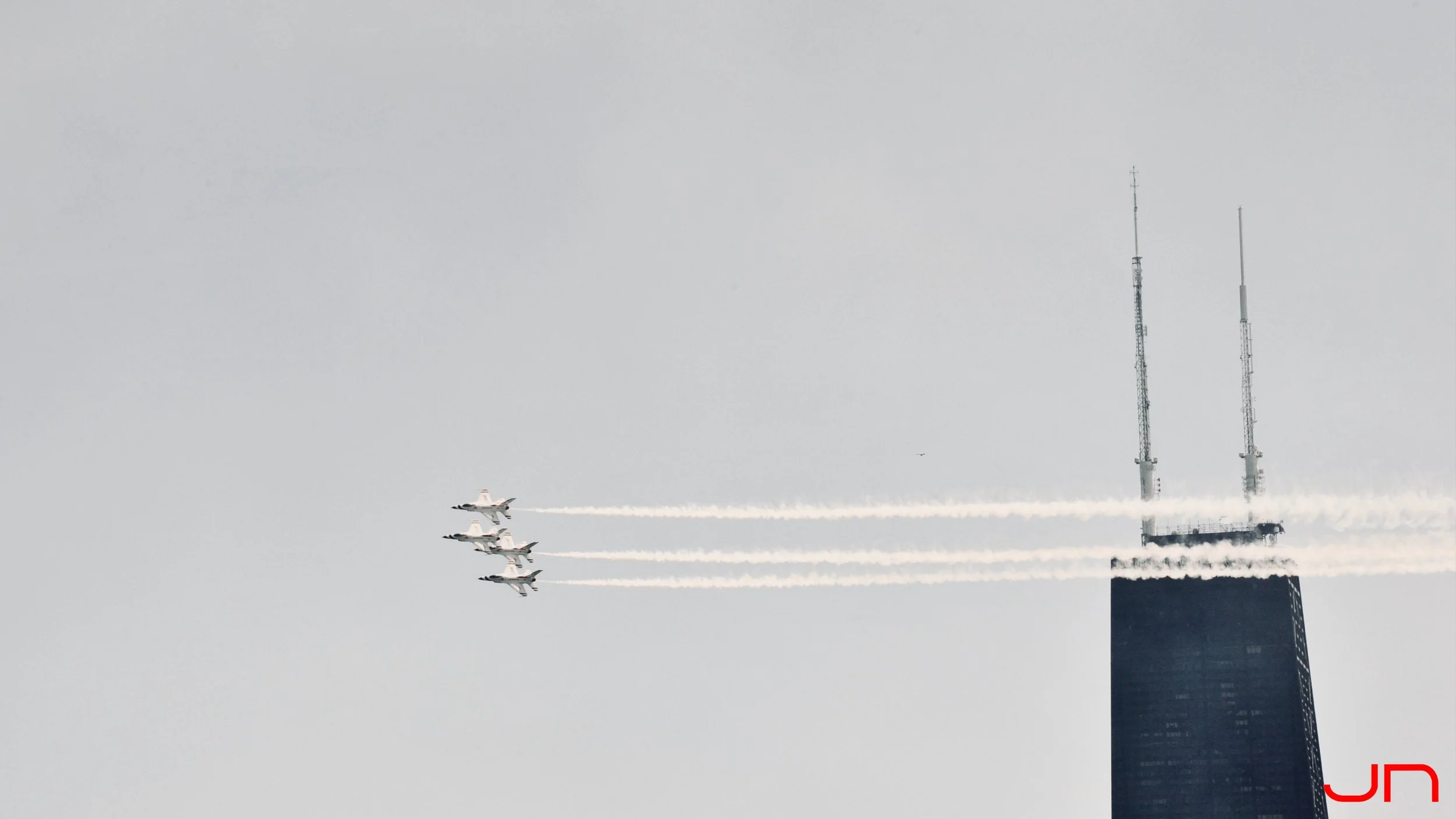
Then — the roar. Somewhere behind me, a child squealed as the first jets thundered in. Crowds leaned back in unison as the U.S. Air Force Thunderbirds streaked across the sky in tight formation, their white contrails carving patterns against the deep summer blue. At times, the planes shattered the sound barrier, their sharp cracks bouncing between the lake and the skyscrapers.
Some of the most dramatic moments came when the jets veered toward the Chicago skyline and the architecture seemed to lean into the performance. Pilots threaded their paths past vertical landmarks with astonishing precision, making glass and steel seem momentarily alive. The John Hancock Center, its black steel frame catching the sunlight, stood like a sentinel as the jets sliced past. For a moment, glass and steel felt alive, part of the choreography. I caught them in frame as they swept past the Hancock’s black steel frame, its windows shimmering with the planes’ passing. In that instant, architecture wasn’t just a backdrop — it was part of the choreography.
From the beach, you see the sweep of the lakefront — Chicago as a grand stage where water meets steel. From the rooftops, you feel the intimacy — the rush of a jet passing at eye level. From the boats, you see the city from a distance, its architecture and crowds united under one vast summer sky.
Between aerial acts, the U.S. Navy SEALs and U.S. Army Golden Knights parachuted in, their canopies blooming with color as they spiraled toward the water. Civilian performers filled the sky with loops and rolls. Below, the Chicago Fire Department’s bright red boat sent shimmering arcs of water into the air, an aquatic encore.
Eventually, the engines quieted. The water cannons fell still. Rooftops emptied, boats dispersed, and the shoreline began returning to joggers and cyclists. The city exhaled after all the rush of adrenaline.
I packed my gear, crossed the bridge again, and walked back into the hum of the downtown. That day, I didn’t just see planes. I saw a skyline in motion — a city that, for a few hours, had joined the spectacle!
The Art of the ‘Throw-Down’
Studio Saturdays | Building community one sketch at a time.
There’s a certain kind of magic in sketching on location — the kind you can’t replicate in the studio, no matter how sharp your pencil or how big your desk.
I first felt it during my study abroad program in Europe. Our professor, John DeSalvo, would take us to a piazza, a cathedral square, or a tucked-away alley framed by centuries-old stone. The instructions were simple:
“Here’s the architectural subject.
Pick your spot.
You have 30 minutes.
Go.”
We’d scatter — some gravitating toward the front steps of a church, others to the cool shadow of a colonnade or a cafe bench beneath a tree. We had half an hour to capture the subject given, to draw whatever caught our eye: the physical or ephemeral; the macro or micro.
When time was up, the real magic happened.
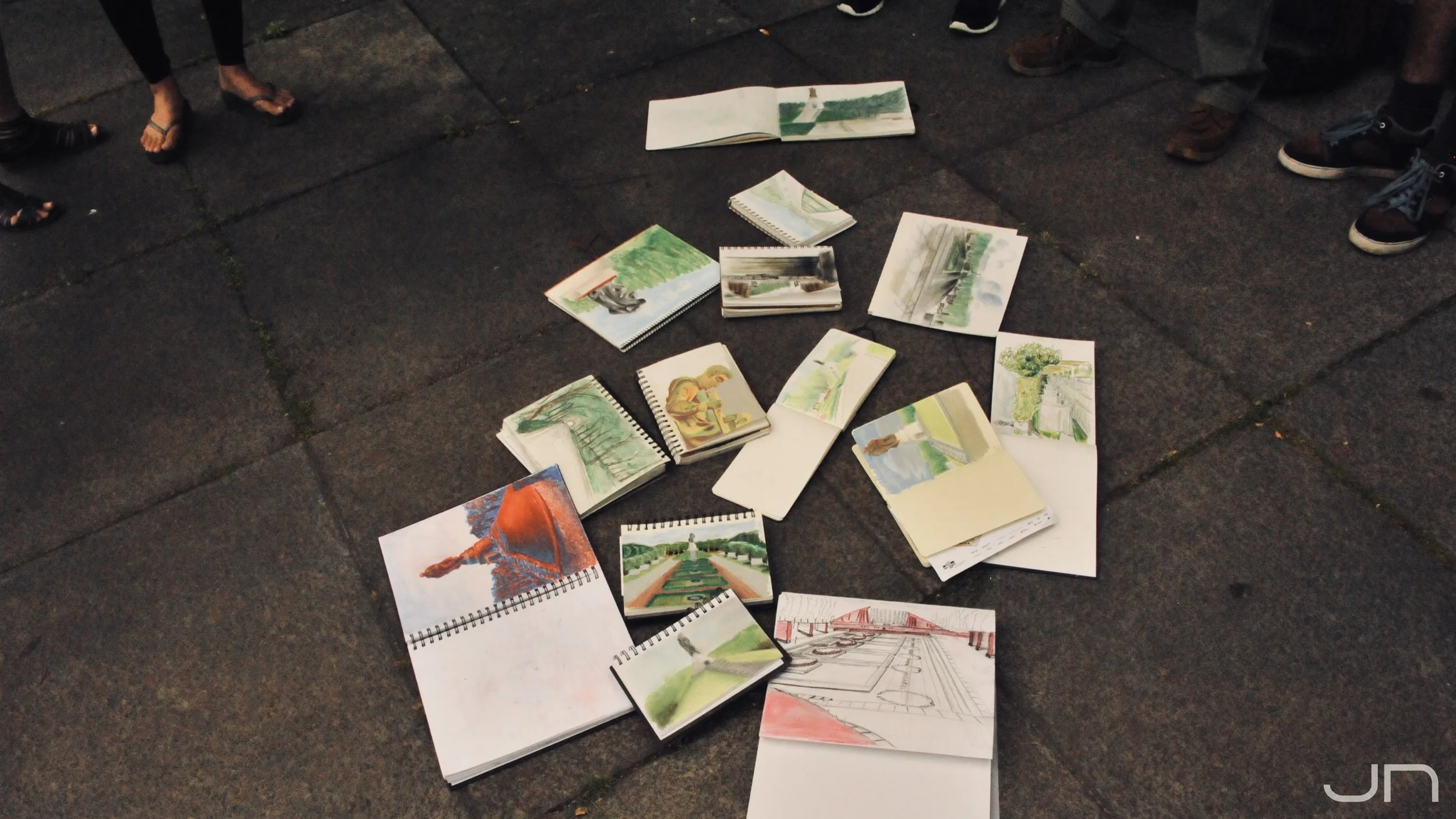
We’d gather in a circle, standing right there on site, and open our sketchbooks for what we called a sketchbook throw-down.
The Throw Down Ritual
The throw down was never a competition — it was a celebration. We’d lay our sketchbooks open so everyone could see: watercolors still damp, pastels and ink lines still smudging if you weren’t careful.
The beauty was in the variety. Twelve people could stand in the same space and come away with twelve completely different interpretations of the same architectural subject. Some sketches were all about precision; others captured atmosphere. A few honed in on details you hadn’t even noticed. It was a reminder that architecture isn’t just about what’s there, it’s about what each person sees.
Why Travel Sketching Matters
Looking back, those 30-minute sessions shaped me as a designer in ways I’m still grateful for. Here’s why I believe travel sketching is a practice worth keeping — whether you’re an architect, artist, or just a curious traveler:
1. It Sharpens Observation
When you’re sketching, you’re not just glancing — you’re studying. You notice lines, edges, proportions, materials and patterns you’d otherwise walk past.
2. It Trains Speed and Confidence
Thirty minutes is just enough time to make decisions but not enough to second-guess every line. You learn to commit and move forward.
3. It Captures Memory Differently
A photograph records what’s in front of you. A sketch records how you experienced it — what you chose to include, what you left out, how the colors felt.
4. It Builds Community
The throw down itself is a shared act. It’s about seeing through each other’s eyes, and realizing how diverse creative vision can be.
From Piazza to Present: Thursday Throw-Downs
Those circles of sketchbooks, held open to the sun, have stayed with me. They’re a tradition I want to bring into my work today — not just for nostalgia, but because I believe the throw down is a powerful way to connect people through creativity.
That’s why I’m building a new ASV community initiative called Thursday Throw-Downs.
The idea is simple:
• Once a week, people across the world will take 30 minutes to sketch — a building, a space, a corner of their own street.
• We’ll share our work together, online or in person, just like we did in the piazzas.
• It’s open to anyone, from seasoned architects to first-time sketchers.
Some weeks, I’ll host online sketch prompts so we can all work on the same theme. Other weeks, I’ll gather a local group for an on-site throw-down, where we can stand in that familiar circle, pages open, seeing what each other saw.
Why Thursday?
Because Thursdays are the perfect almost-weekend energy. Enough time to pause, make something, and connect — and still carry that creative spark into the weekend.
Travel sketching taught me that design is not just about buildings — it’s about perception, patience, and sharing your way of seeing the world. Thursday Throw-Downs will be a space for exactly that: fast lines, fresh perspectives, and a circle of people who understand that the best sketches are never perfect — they’re alive.
Stay tuned or the first Thursday Throw-Down announcement here on Architecture Speaks Volumes. I hope you’ll join me, with your choice of medium in hand.
Concrete, Stilled: Tactile Encounters at the Pulitzer Foundation
Tactile Tuesdays | The Atelier Diaries
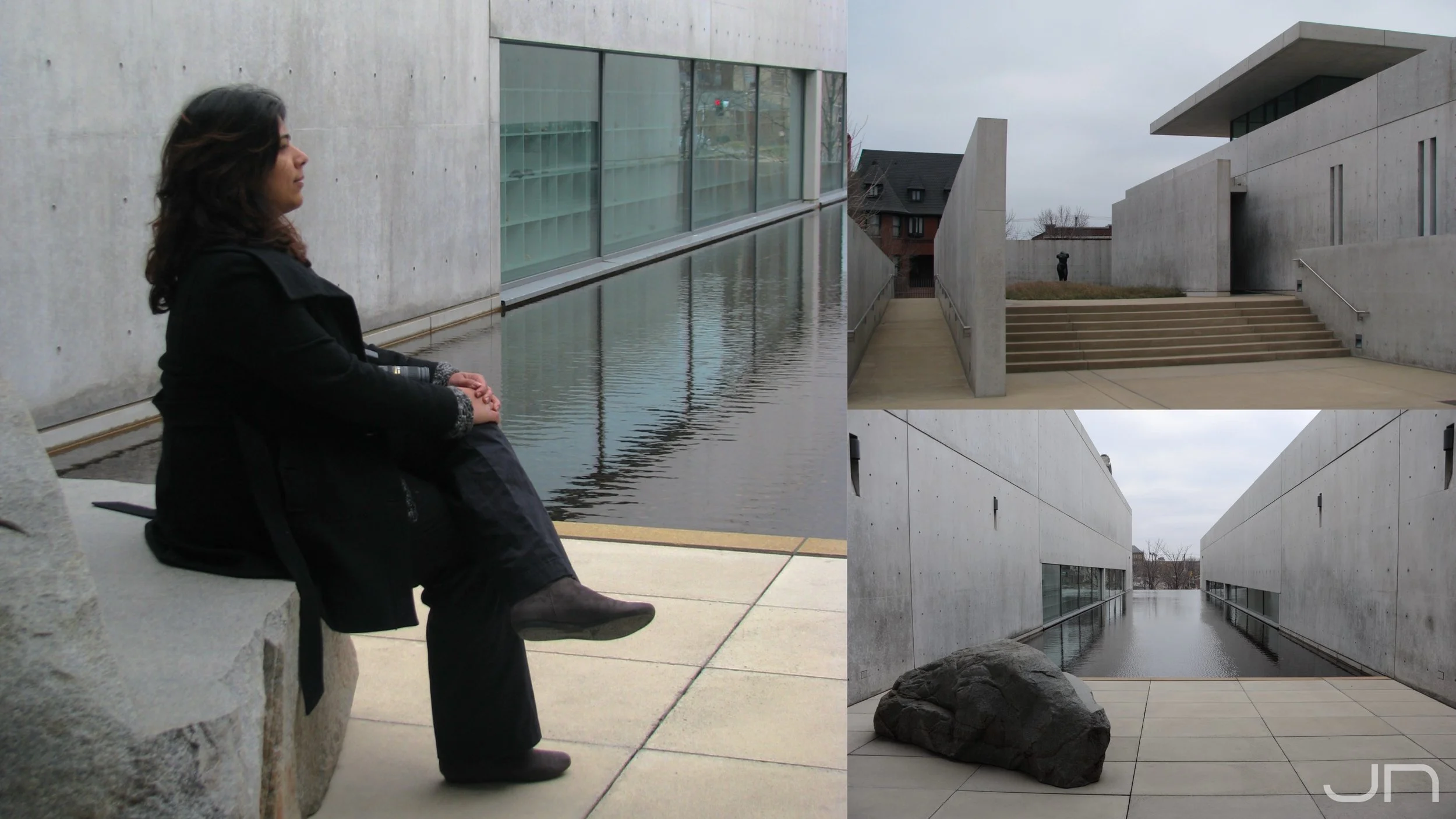
There are buildings that impress, and then there are buildings that quiet you. The Pulitzer Foundation for the Arts in St. Louis — designed by Tadao Ando — is the latter. I visited it not for spectacle, but for stillness. Ando gave me both.
The architecture doesn’t scream. It breathes. And its primary language is concrete.
The Weight of Silence
The moment I stepped inside, the world slowed. What struck me first wasn’t the form or function — it was the weight of the quiet. Ando’s concrete isn’t brutish or cold. It’s monastic. Still. Thoughtful.
Each ply-formed surface reads like a fossilized imprint of craft — a record of time, pressure, labor, and intention. The material holds memory in its grain. It receives light in a way that feels deeply human.
Concrete as Skin
This isn’t the concrete of parking garages and freeways. This is concrete made tactile — not to be touched, but to touch you.
In the Pulitzer’s galleries and corridors, the concrete walls glow under filtered daylight, their surfaces softened by shadow. The edges are precise, but the experience is sensory. I didn’t just see the concrete. I felt it in the way it held space.
It reminded me that materiality is not just a question of aesthetics or durability — it’s an emotional register. A medium of mood.
A Material Lesson
As a designer, I’m always looking for how materials speak. At the Pulitzer, the concrete didn’t shout. It whispered. It invited stillness. Reflection. Reverence.
Ando’s approach reaffirmed something I return to again and again in my own work: the power of restraint. That space doesn’t always need to explain itself. Sometimes, it just needs to hold you — gently, firmly, silently.
Closing Reflection
Tactile Tuesday is about more than surface. It’s about experience. And this one stayed with me.
“You don’t touch the concrete — not literally. But it touches you.”
— Architecture Speaks Volumes
Have you visited a space that made you feel something — not for how it looked, but how it held you? I’d love to hear.
Leave me a comment on instagram → @architecturespeaksvolumes
Atelier DIARIES 001 - THE FIRST MARK
Mark Mondays | A quiet beginning. A rhythm set in motion.
A line on paper can hold weight — the suggestion of a wall, a threshold, a beginning.
This diary begins with such a line.
A Practice of Noticing
Atelier Diaries is my monthly ritual — a week of creative entries shared from inside my studio, beginning on the first Monday of every month.
Seven days. Seven creative gestures.
Each one a way of noticing what surrounds me — and what moves through me — in the act of making.
It’s a way of shaping my creative practice.
A rhythm I can return to.
A living record of my process — marks, materials, memories, meanings.
Why I Started This
We live with a constant need for speed.
Fast content, fast commentary, fast consumption.
But architecture — and creativity — aren’t built that way.
They need stillness.
They need time.
So I made a structure to hold that time.
A scaffold for attention.
Atelier Diaries is how I remember to slow down.
To shape, not just produce.
To process, not just present.
The Shape of the Week
Each month, beginning on the first Monday, I post seven entries — one per day. Each post builds on the facets of a creative practice :
• Mark Monday — gesture marks a beginning
• Tactile Tuesday — the body of memory
• WIP Wednesday — process over polish
• Threshold Thursday — liminal moments
• Feature Friday — finding a voice
• Studio Saturday — the work behind the work
• Story Sunday — the quest for meaning
Together, these entries become a visual zine of sorts.
A sketchbook.
A diary in blueprint.
Atelier Diaries 001: The first mark.
The first issue is an invitation.
A soft landing.
A pause before movement.
I don’t expect this series to explain anything. Only to offer a way of looking — and being — a quiet glimpse into my creative process.
Atelier Diaries is not chronological. Its intuitive.
This first mark is both literal and symbolic.
A gesture toward a slower practice.
This diary is how I strive to stay connected to the core of my work —
the part that doesn’t rush.
The part that listens.
If you are curious - Join the Rhythm
View the full series on Instagram → @architecturespeaksvolumes
Or subscribe to my newsletter receive a new studio diary each month.
A new diary begins the first Monday of every month.
I hope you’ll follow along or return to the diary when you need a slower moment.
Until then, I leave you with this:
Which day of the week speaks to you this month?
I’d love to know.
Leave me a comment on instagram → @architecturespeaksvolumes
Architecture Speaks Volumes
August 2025

WHY ‘ARCHITECTURE SPEAKS VOLUMES’?
The story behind the studio, the vision, and the name.
Some buildings whisper. Some shout.
But the ones that matter—speak volumes.
Architecture Speaks Volumes was born from that idea: that spatial design isn’t just about structures or style—it’s about memory, movement, silence, and story. It’s about how space makes us feel, what it helps us remember, and what it says about who we are.
This is my corner on the www to speak that language with purpose.
A Voice Through Design
I’ve spent almost two decades immersed in architecture—drawing, building, teaching, wandering. I’ve walked streets emptied by earthquakes, sat under trees older than empires, stood still in rooms where light alone told the story. These moments have shaped how I see space, and why I believe it’s never just background. Its presence.
After years of holding this vision quietly, I launched Architecture Speaks Volumes LLC DBA Design Speaks Volumes to give it form. This is more than a design studio—it’s a way of thinking, a way of creating, and a way of connecting.
What Lives Here
ASV is made of many parts, each with its own voice:
• Design Speaks Volumes : A creative services wing of Architecture Speaks Volumes LLC that is dedicated to thoughtful, intentional design projects.
• The ASV Vlogs | Where is Janice? : Visual stories about travel, design, space, and creative process.
• The ASV Edit: A boutique featuring scarves, photographs, and curated objects.
• The ASV Blog: This space—a place for ideas, reflections, and untold stories.
• The Book: A memoir in progress, shaped by my time in Japan during the 2011 earthquake and tsunami.
Together, these threads form a practice that values design as storytelling—and storytelling as a kind of design tool.
What to Expect From This Blog
Here, I’ll share thoughts on spatial design, place, and materiality—sometimes poetic, sometimes practical. You might find travel stories. Sketches. Design musings. Reflections on silence, sound, memory, and form. Maybe even fragments from the book I’m writing.
This isn’t just a blog. It’s a journal. A window. A conversation.
Let’s Build This Together
Thank you for being here at the beginning. Whether you’re a fellow creative, a design enthusiast, or someone who just believes that space matters—I’m glad you’ve arrived.
There’s more to come, and I hope you’ll stay a while.
Subscribe, reach out, share a thought. Let’s see where this story leads.
Because when architecture speaks volumes,
it’s not just my voice—it’s ours.
Welcome to ASV.
Janice Ninan
Founder | Creative Director
Architecture Speaks Volumes